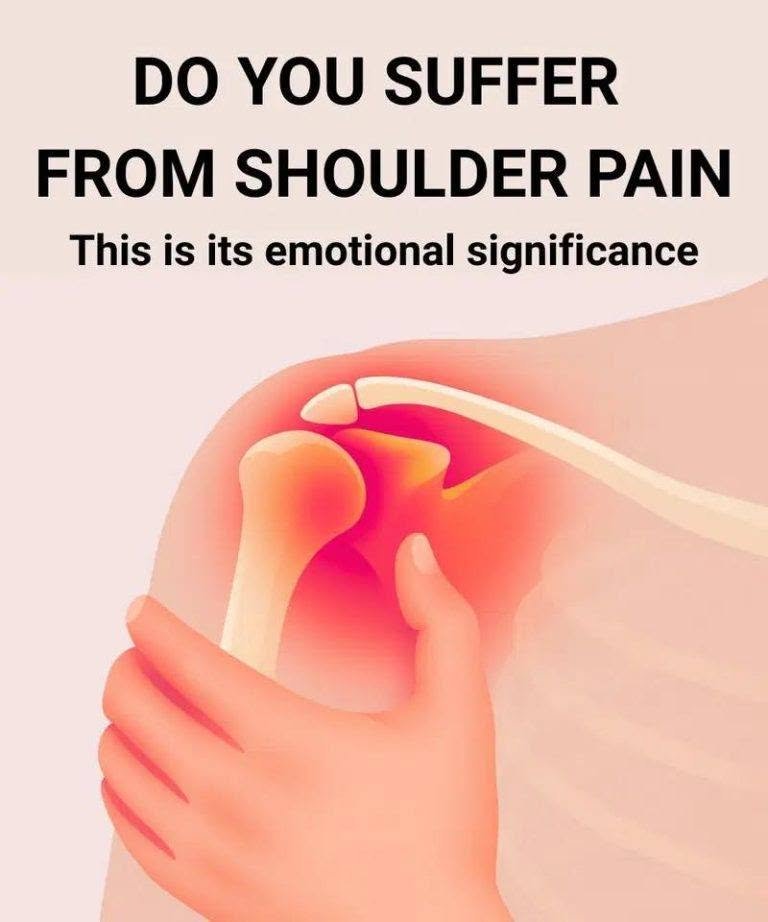
Shoulder pain is often given an emotional explanation on social media. You may have seen claims that shoulder pain means you are carrying too much responsibility, that the right shoulder represents work or obligations, or that the left shoulder represents sadness, relationships, or emotional burdens.
These ideas can be meaningful as metaphors, but they should not be confused with medical facts.
There is no scientifically established rule saying that a particular shoulder pain represents a particular emotion. Shoulder pain can have many physical causes, including muscle strain, tendon problems, bursitis, arthritis, frozen shoulder, nerve irritation, and injuries. Pain can also sometimes be referred from the neck, chest, or other parts of the body.
At the same time, emotions and physical pain are genuinely connected. Stress can increase muscle tension, influence sleep, change movement habits, and affect the way the nervous system processes pain. So the relationship between emotional well-being and shoulder pain is real—but it is much more complicated than saying that one emotion is “stored” in one shoulder.
Can Stress Cause Shoulder Pain?
Stress produces real physical changes in the body.
When a person experiences stress, the body activates its stress response. Muscles can tense, breathing can change, heart rate can increase, and the body becomes more alert. When stress continues for a long period, these physical effects can contribute to a variety of symptoms and may make existing pain harder to manage.
The shoulders are particularly vulnerable because many people unconsciously tighten them when they are worried or under pressure.
Think about what happens when you receive upsetting news. You may immediately notice your shoulders rising, your jaw tightening, or your neck becoming stiff.
If that tension happens occasionally, it may disappear once the stressful situation passes.
But if someone spends weeks or months under pressure, they may repeatedly tighten the same muscles without realizing it. Over time, this can contribute to discomfort in the neck, upper back, and shoulders.
This doesn’t mean the pain is imaginary.
Stress-related pain is still real physical pain.
What Does “Carrying the Weight on Your Shoulders” Really Mean?
The phrase “carrying the weight of the world on your shoulders” has existed for a long time because the shoulders are naturally associated with carrying responsibilities.
Someone who is constantly thinking about:
Work
Money
Family
Children
Relationships
Household responsibilities
Personal problems
The future
may genuinely feel physically tense.
This is where the emotional interpretation can be useful—not as a diagnosis, but as a question for self-reflection.
Instead of saying:
“My shoulder hurts because I have unresolved emotional trauma.”
a healthier question might be:
“Have I been under unusual stress lately, and could that stress be affecting my body?”
That question leaves room for both physical and emotional causes.
The Connection Between Stress and Muscle Tension
When you’re stressed, your muscles may automatically become more tense.
You may not even notice it.
Some people repeatedly:
Raise their shoulders
Tighten their neck
Clench their jaw
Sit rigidly
Hold their arms close to their body
Stop moving normally
Spend long periods in one position
If these behaviors continue, muscles can become uncomfortable and movement may become more difficult.
Stress can also interfere with sleep. Poor sleep can make pain more difficult to tolerate, while pain can make sleep more difficult.
This can create a cycle:
Stress → muscle tension → pain → poor sleep → increased sensitivity to pain → more stress.
Breaking this cycle can sometimes help, especially when the underlying shoulder problem has already been evaluated.
Does Right Shoulder Pain Have a Different Emotional Meaning?