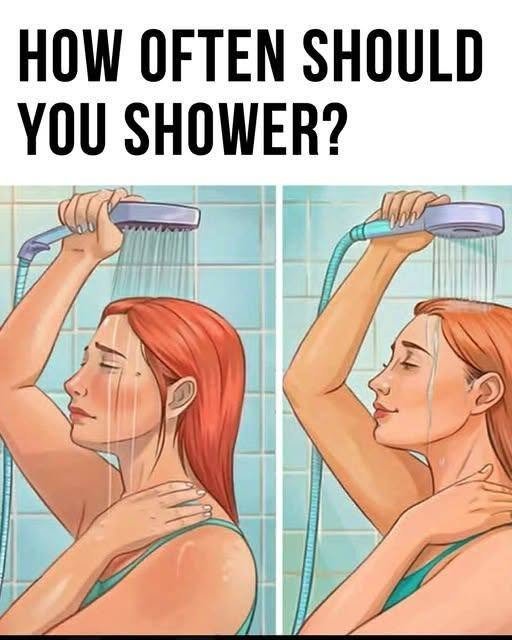
How Often Should You Really Shower? What Experts Want You to Know
Showering is one of those everyday habits that seems simple, but there is actually no single rule that applies perfectly to everyone.
Some people shower every morning. Others prefer showering at night. Some shower twice a day, especially when they exercise or work outdoors, while others may shower every other day or less often when their skin is dry and they are not sweating much.
So, how often should you really shower?
The surprising answer is that there is no universal number of showers that every person needs each week.
How often you should shower depends on your activity level, climate, sweating, skin type, occupation, age, personal preference, and whether you have particular skin conditions.
For many people, showering once a day is perfectly reasonable. For others, showering every other day may be enough, particularly when the weather is cool and they are not sweating heavily.
The most important thing is not simply counting showers. It is maintaining good personal hygiene without unnecessarily irritating or drying the skin.
Why Do We Shower in the First Place?
A shower serves several purposes.
It helps remove sweat, dirt, excess oil, dead skin cells, environmental pollutants, and microorganisms from the surface of the body.
It can also help reduce unpleasant body odor.
But showering does more than simply make us smell clean.
Washing can also remove substances that may irritate the skin, particularly after exercise, outdoor work, exposure to dust, or contact with certain chemicals.
At the same time, the skin has its own protective system.
The outer layer of the skin helps prevent excessive water loss and provides a barrier between the body and the outside environment.
Excessive washing, particularly with very hot water and strong cleansers, can interfere with that barrier.
That’s why more showering is not automatically better.
Is Showering Every Day Necessary?
For many people, showering once a day is a perfectly reasonable routine.
Daily showering can make sense if you:
Sweat heavily
Exercise regularly
Work outdoors
Live in a hot or humid environment
Have a physically demanding job
Are exposed to dust or dirt
Develop noticeable body odor
Simply feel more comfortable showering daily
But daily showering is not an absolute biological requirement for everyone.
Someone who spends most of the day indoors, does not sweat much, and has very dry or sensitive skin may find that showering less frequently is more comfortable.
The goal is to find a routine that keeps you clean while respecting your skin.
What Happens If You Shower Too Often?
One of the biggest misconceptions about hygiene is that washing more frequently is always healthier.
Very frequent showers can sometimes cause problems, especially when combined with hot water and strong soaps.
Your skin contains natural oils that help keep it moisturized and support the skin barrier.
Repeatedly washing away these oils can leave the skin feeling:
Dry
Tight
Itchy
Flaky
Irritated
Sensitive
People with naturally dry skin may notice these effects more quickly.
If your skin becomes tight or uncomfortable immediately after showering, your routine may be too harsh for your skin.
The problem may not necessarily be the number of showers alone. Water temperature, shower length, and the products you use can make a major difference.
Hot Showers Can Be Particularly Drying
A long, steaming-hot shower can feel wonderful, especially during cold weather.
However, very hot water can remove more of the skin’s natural oils and may worsen dryness or irritation.
You do not need freezing cold water either.
A warm or lukewarm shower is generally a more comfortable option for the skin.
If you love hot showers, try lowering the temperature slightly and shortening the time you spend under the water.
You may still get the relaxing feeling without subjecting your skin to excessive heat.
How Long Should a Shower Last?
You don’t need to spend half an hour in the shower to become clean.
For ordinary daily hygiene, a relatively short shower is usually sufficient.
Long showers expose your skin to water, heat, and cleansing products for a longer period.
If you enjoy longer showers occasionally, that is not necessarily a problem, but people with dry or sensitive skin may benefit from keeping routine showers shorter.
A practical shower can often be completed in just a few minutes.
Focus on cleaning areas that actually need attention rather than repeatedly washing every part of the body.
You Don’t Need to Scrub Your Skin Aggressively
Another common mistake is thinking that skin needs vigorous scrubbing to be clean.
Your skin is not a dirty floor.
Scrubbing aggressively with rough sponges, brushes, or exfoliating products can irritate the skin and damage its protective barrier.
For normal hygiene, gentle washing is generally sufficient.