Is Your Gas Stove Losing Power? How to Get a Strong, Steady Flame Again
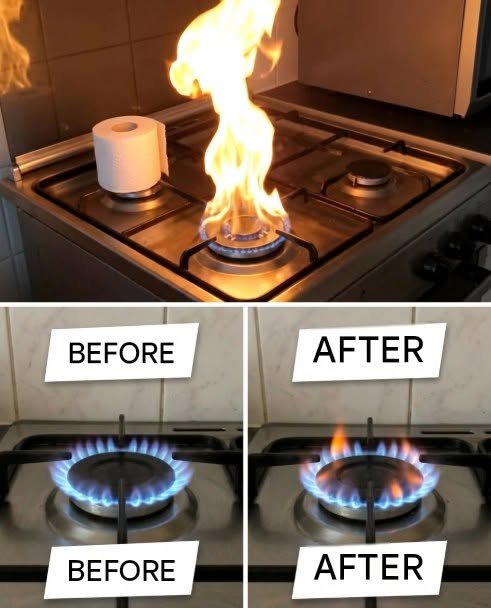
A gas stove should normally produce a steady, mostly blue flame that spreads evenly around the burner. When the flame becomes weak, uneven, yellow, orange, or only appears in a few places, it can be a sign that the burner needs cleaning or that something else is affecting combustion.
A dirty burner is one of the simplest possibilities. Food particles, grease, spilled liquids, and cleaning residue can clog the small openings through which the gas and air mixture reaches the flame. When those openings become partially blocked, the burner may no longer produce the strong, even flame you are used to.
However, there is an important safety point: a yellow or orange flame should not automatically be treated as something that can be fixed with a quick household trick. A persistent yellow or orange flame can indicate poor combustion or an appliance problem, and official gas-safety guidance recommends having the appliance checked when this happens. (London Fire Brigade)
So, before trying to “boost” the flame, it is important to understand what may be causing the problem and which cleaning steps are safe.
What a Healthy Gas Flame Should Look Like
For many ordinary household gas burners, a healthy flame is predominantly blue, steady, and evenly distributed around the burner.
You should normally see the flame coming through the burner openings in a fairly consistent pattern.
A flame that suddenly becomes:
Weak
Uneven
Flickering
Yellow
Orange
Noisy
Concentrated in only a few areas
deserves attention.
A small change immediately after a spill may simply mean the burner needs cleaning and drying. But if the abnormal flame continues after cleaning, the problem may be related to gas pressure, the burner assembly, the air supply, the gas type, or another appliance issue.
Gas-safety authorities specifically identify yellow or orange flames, soot or staining around an appliance, and frequently extinguishing pilot lights as warning signs that a gas appliance may not be operating correctly. (London Fire Brigade)
Why Does a Gas Burner Become Weak?
There are several possible causes.
1. Food and Grease
One of the most common causes is accumulated cooking residue.