Why Are Some Electrical Outlets Installed Upside Down?
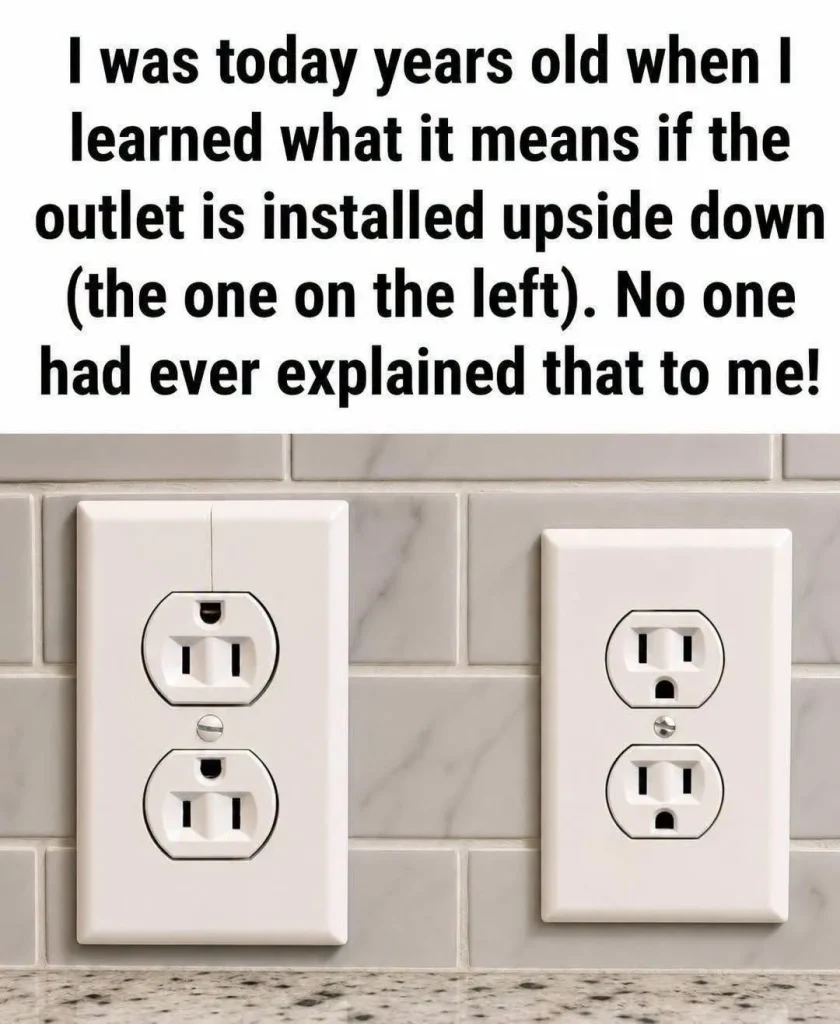
Have you ever noticed that some electrical outlets have their ground opening facing upward while others have it facing downward? At first glance, it may look like an installation mistake. However, there are several reasons why electrical outlets may be installed in different orientations.
The truth is that an upside-down electrical outlet is not necessarily installed incorrectly. In many cases, the orientation is intentional and may reflect an electrician’s safety considerations, local electrical practices, or the requirements of a particular installation.
Understanding the difference can help you recognize common electrical designs and know when an outlet deserves closer inspection.
1. The Ground Pin May Be Positioned Upward for Safety
One of the most common explanations for an outlet installed with the ground opening at the top is safety.
In the United States, standard three-prong outlets have two openings for the power conductors and a rounded or U-shaped opening for the grounding conductor.
When the outlet is installed with the ground opening facing upward, the grounding pin of a three-prong plug enters first.
Why might this matter?
Imagine that a partially inserted plug begins to work its way out of the outlet. If a conductive object falls onto the exposed prongs, an upward-facing ground pin may help reduce the chance that the object will bridge the energized contacts.
The grounding pin is longer than the other pins on many plugs, so it may remain connected while the other contacts are separating.
However, the actual level of protection depends on the plug design, the object involved, and the circumstances. An upward-facing ground pin does not eliminate electrical hazards.
2. It Can Help Prevent Certain Accidental Contact Hazards