5 Signs an Elderly Person May Be Approaching the End of Life
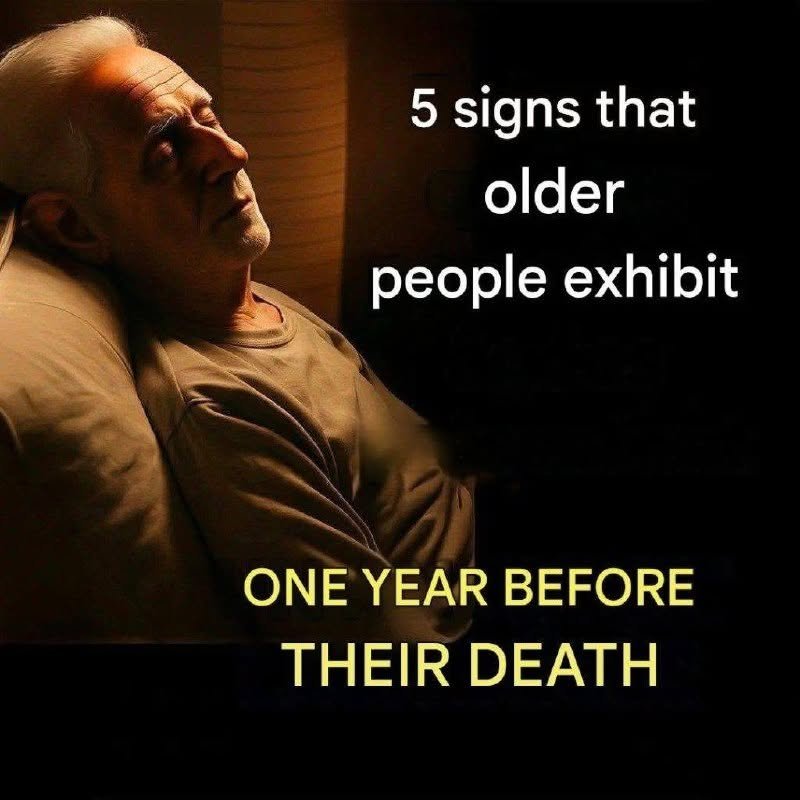
The headline in the image says that older people may show five signs a year before they die.
That wording is much more certain than medicine allows.
There is no reliable checklist that can tell a family that an older person has exactly one year left to live. People age very differently, and someone can have weakness, weight loss, poor appetite, or increased sleep for many reasons that are treatable or unrelated to dying.
However, when an older person already has a serious, progressive, or life-limiting illness, there are changes that can indicate that their health is deteriorating and that they may be entering the final months, weeks, or days of life.
Recognizing those changes isn’t about predicting an exact date of death. It is about noticing when someone may need more medical support, comfort, planning, and attention.
1. Increasing Weakness and Loss of Independence
One of the most important changes can be a gradual loss of physical strength and independence.
A person who once walked around the house easily may begin spending much more time sitting or lying down.
They may stop doing activities they previously enjoyed.
Simple tasks can become exhausting.
They may need help with:
Getting dressed
Bathing
Preparing food
Walking
Using the bathroom
Getting out of bed
Taking medications
Household activities
This kind of decline can occur gradually.
For example, an older adult might first stop gardening, then stop taking walks, then spend most of the day in a chair, and eventually need assistance getting from one room to another.
This doesn’t automatically mean death is approaching.
Arthritis, infections, anemia, medication side effects, heart problems, depression, poor nutrition, dehydration, and many other conditions can also cause weakness.
That’s why a new or rapidly worsening loss of mobility should be medically assessed rather than automatically interpreted as a sign that someone is dying.
Why functional decline matters
When a person with an advanced illness progressively loses the ability to perform everyday activities, it can be a sign that the illness is becoming more advanced.
Doctors often look at functional ability as part of understanding someone’s overall health and prognosis.
The important thing is the pattern over time, not one difficult day.
2. Losing Weight and Having Less Interest in Food
Another change that can occur in advanced illness is reduced appetite accompanied by weight loss.
A person who once enjoyed regular meals may begin saying:
“I’m not hungry.”
They may eat only a few bites.
They may prefer smaller portions.
They may lose interest in foods they previously loved.
Sometimes swallowing becomes difficult.
In serious illness, the body’s metabolism can change and the need for food can decrease as the body becomes weaker.
But unexplained weight loss and appetite loss should never automatically be interpreted as “the person is dying.”
There are many potentially treatable causes.
These include:
Dental problems
Medication side effects
Depression
Anxiety
Nausea
Constipation
Infection
Difficulty swallowing
Digestive problems
Poorly controlled pain
Changes in taste or smell
Cancer
Heart or lung disease
If an older person suddenly stops eating, loses significant weight, or struggles to swallow, a healthcare professional should evaluate the situation.
Don’t force someone to eat
When a person is genuinely approaching the final stage of life, appetite naturally decreases.
Families can find this extremely distressing.
Food is associated with caring, so relatives may feel that they are failing if they cannot get their loved one to eat.
But forcing food can sometimes cause discomfort, particularly when swallowing has become difficult.
At the end of life, comfort becomes the priority.
Small amounts of favorite foods or drinks may be offered if the person wants them and can safely swallow.
The care team can provide guidance about nutrition, swallowing, and mouth care.