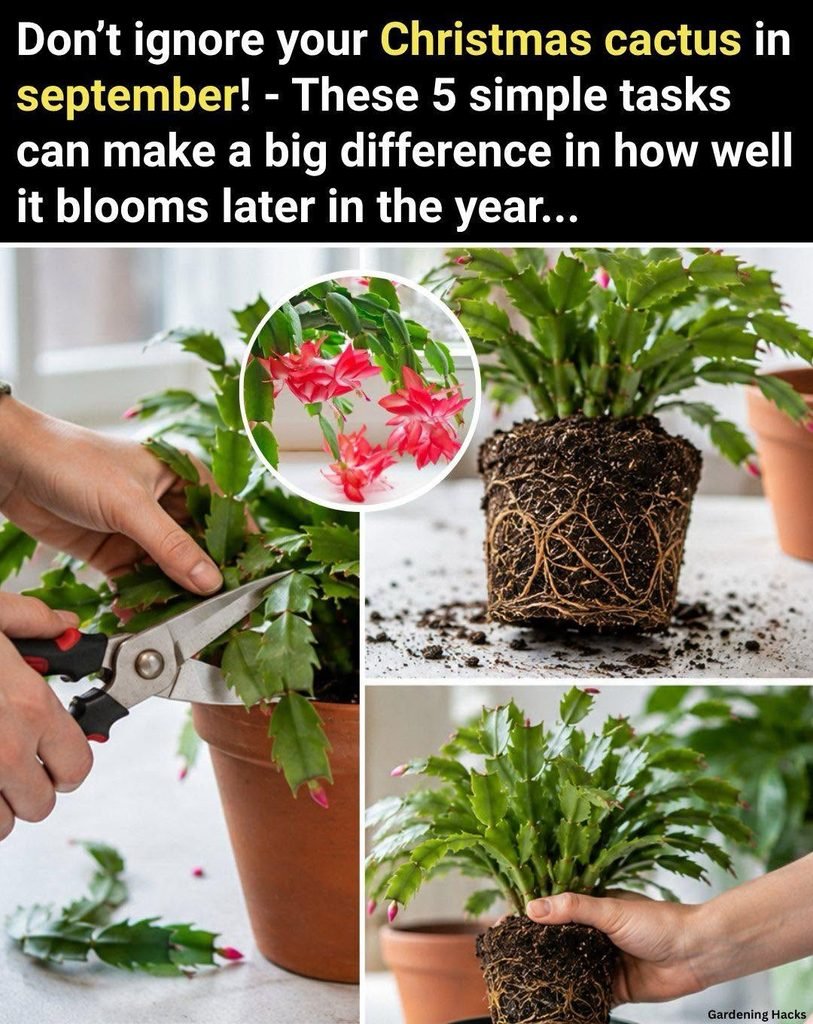
5 Things to Do With Your Christmas Cactus in September for Maximum Blooms
September can be an important month for a Christmas cactus. After spending much of the year producing new growth, the plant begins transitioning toward the conditions that encourage flower buds.
If your Christmas cactus has produced plenty of healthy green segments but rarely flowers, the problem may not be the plant itself. In many cases, it simply isn’t receiving the environmental signals it needs to switch from growing leaves to producing buds.
Christmas cactus, often sold under the botanical name Schlumbergera, is a little different from many ordinary houseplants. It doesn’t need constant feeding, intense sunlight, or frequent watering to bloom beautifully. In fact, giving it too much of these things at the wrong time can interfere with flowering.
September is a good opportunity to begin adjusting its care, particularly in the Northern Hemisphere where shorter days and cooler nights naturally begin approaching.
Here are five practical things you can do.
1. Start Paying Attention to Nighttime Darkness
One of the most important factors affecting Christmas cactus flowering is the length of the uninterrupted dark period.
As autumn approaches, natural nights become longer. This change in day length helps signal to the plant that it is time to prepare for flowering.
If your Christmas cactus is sitting in a room that remains brightly lit late into the evening, however, the plant may not receive the same signal.
This doesn’t mean you need to put your plant in a completely dark closet all day.
During the daytime, give it bright, indirect light.
At night, however, try to provide a consistently dark environment.
Artificial light from lamps, televisions, bright windows, or other sources can interfere with the natural night period if the plant is exposed to it for long periods.
A practical approach is to place your Christmas cactus somewhere that receives good natural light during the day but becomes naturally dark after sunset.
For gardeners trying to encourage flowering indoors, consistency is more important than constantly moving the plant around.
How Much Darkness Does It Need?
Christmas cactus generally responds well to long, uninterrupted nights during the period leading up to flowering.
Many growers use approximately 12–14 hours of darkness each night for several weeks as a way to encourage bud formation.
The exact response varies according to temperature, light intensity, plant variety, and growing conditions.
You don’t necessarily need to count every minute.
The important idea is simple:
Bright days + long, uninterrupted nights = a stronger flowering signal.
If your plant is sitting beside a bright lamp that stays on until midnight every evening, consider moving it.