8 Plants That May Help Repel Mice, Spiders & Other Insects Naturally
Many people love having fresh plants around the home, especially when those plants add a pleasant fragrance, brighten a room, or can be used in cooking. Some plants also contain natural aromatic compounds that certain insects and other pests may find unpleasant.
This has made plants such as mint, lavender, rosemary, basil, and eucalyptus popular among people looking for more natural ways to discourage unwanted visitors.
However, there is an important point to remember: no plant can guarantee that you will never see mice, spiders, ants, mosquitoes, or other insects again. A plant may help make a particular area less attractive to some pests, but it should not be considered a complete pest-control solution.
Pests enter homes for many reasons. They may be attracted by food, water, warmth, shelter, cracks around windows and doors, or places where they can hide. Keeping the home clean, sealing entry points, reducing standing water, and storing food properly are often much more important than any individual plant.
Still, adding strongly scented plants around your home can be a pleasant and potentially useful part of a broader pest-management routine.
Here are eight plants commonly associated with naturally discouraging certain pests.
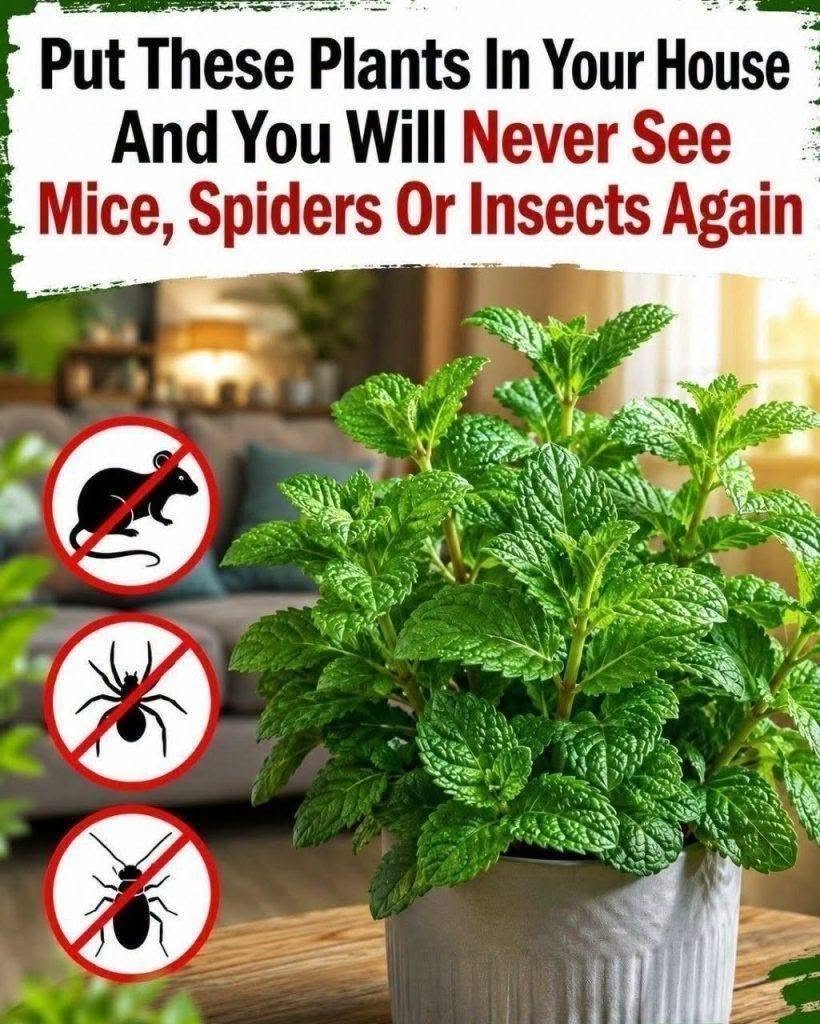
1. Peppermint
Peppermint is one of the most popular plants when people talk about natural pest deterrents.
Its strong, distinctive aroma comes largely from compounds such as menthol and menthone. The powerful scent can be unpleasant to some insects, which is why peppermint has long been used in household pest-control preparations.
Growing peppermint in pots near windows, doors, balconies, or other areas where you frequently notice insects can add a pleasant fragrance while potentially making the area less attractive to some pests.
Peppermint can also be grown indoors if it receives enough light.
Why people like peppermint
Peppermint has several advantages beyond its smell.
It is relatively easy to grow, spreads quickly, and can provide fresh leaves for culinary uses.
Because it spreads aggressively when planted directly in the ground, growing it in a container is often easier to manage.
You can place small pots near kitchen windows, entrances, or outdoor seating areas.
However, don’t expect a pot of peppermint to create an invisible barrier around your entire home.
If mice are entering through a hole in the wall, for example, simply placing peppermint nearby will not solve the underlying problem.
The most effective approach is to combine plants with physical exclusion and good household hygiene.
2. Lavender
Lavender is another popular plant with a powerful natural fragrance.
Many people love its relaxing scent, while certain insects may find strong aromatic compounds less appealing.
Lavender can be grown outdoors in sunny areas and can also be maintained in containers.
It is especially attractive because it serves multiple purposes.
It can make a garden or balcony look beautiful, attract pollinators, and provide a pleasant fragrance.
If you grow lavender near windows or outdoor sitting areas, you may enjoy its scent while potentially making the area less attractive to certain flying insects.
How to grow lavender successfully
Lavender generally prefers plenty of sunlight and soil that drains well.
One common mistake is watering it too frequently.
Lavender tends to tolerate relatively dry conditions once established, while constantly wet soil can cause problems with the roots.
Place containers where the plant receives plenty of light and avoid allowing water to remain trapped around the roots.
A healthy lavender plant can become a beautiful addition to a balcony, patio, garden, or sunny window.