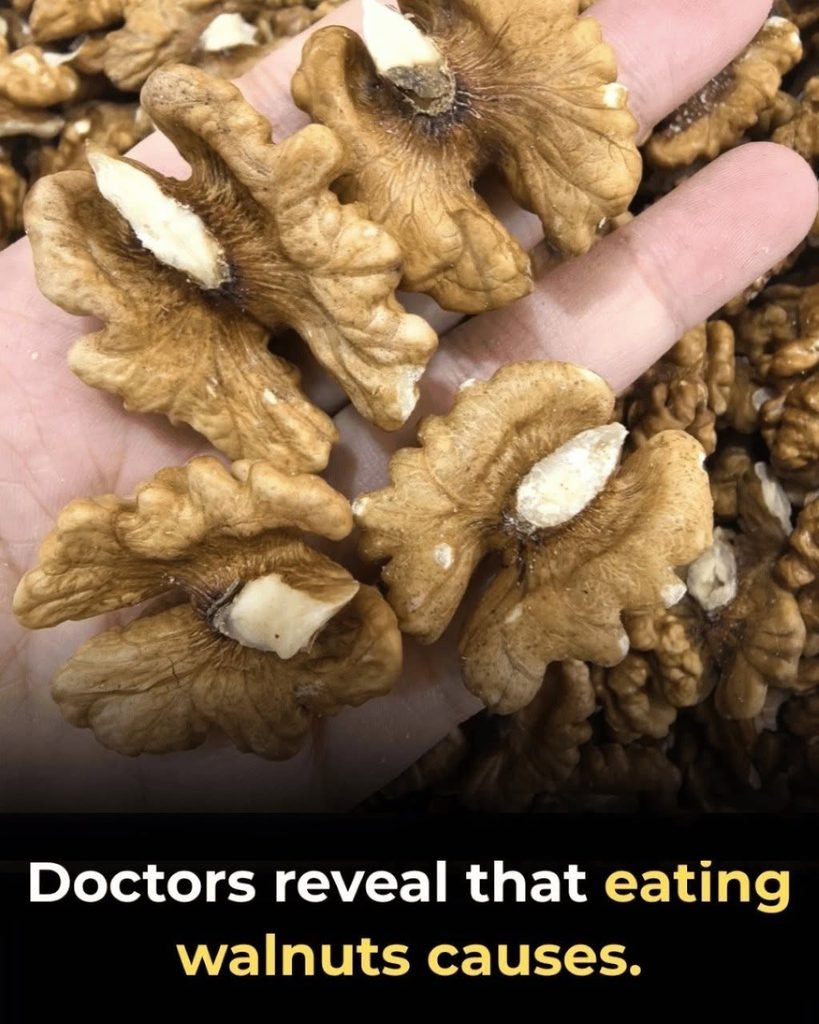
What Happens When You Eat Walnuts Every Day? 10 Potential Benefits You Should Know
Walnuts are one of those foods that may look simple, but they contain an impressive combination of healthy fats, plant protein, fiber, vitamins, minerals, and other naturally occurring compounds. Adding a modest portion of walnuts to your regular diet can be an easy way to make meals and snacks more nutritious.
The important point is that walnuts aren’t a miracle food, and eating more isn’t necessarily better. Their benefits are best understood as part of an overall balanced eating pattern.
Research has particularly examined walnuts in relation to cholesterol and cardiovascular health. In a two-year randomized study of healthy adults ages 63–79, people who added walnuts to their daily diet had modest reductions in LDL cholesterol and LDL particle numbers.
So, what exactly might happen when you eat walnuts regularly?
1. Your Diet Gets More Heart-Friendly Fats
Walnuts contain predominantly unsaturated fats, including the plant-based omega-3 fatty acid alpha-linolenic acid (ALA).
ALA is different from the omega-3 fats EPA and DHA found in fatty fish, but walnuts are still an important plant source of ALA. The American Heart Association lists walnuts among foods that provide this plant-based omega-3.
Replacing foods high in saturated fat with foods containing unsaturated fats is generally consistent with heart-healthy dietary patterns. The American Heart Association’s 2026 dietary guidance emphasizes choosing healthy sources of unsaturated fats in place of saturated-fat sources.
This means the most useful way to think about walnuts isn’t simply, “Walnuts are healthy, so I should eat as many as possible.”
Instead, consider using them in place of less nutritious snacks.
For example, a small portion of walnuts can replace chips, cookies, or other highly processed snack foods.
2. They May Help Support Healthy Cholesterol Levels
One of the more interesting areas of walnut research involves cholesterol.
In a two-year randomized controlled study involving 708 healthy adults between the ages of 63 and 79, participants who consumed about half a cup of walnuts each day experienced an average reduction in LDL cholesterol of approximately 4.3 mg/dL.
The walnut group also had reductions in the number of total LDL particles and small LDL particles.
LDL cholesterol is often called “bad cholesterol” because elevated levels are associated with cardiovascular disease risk.
The results don’t mean that eating walnuts will automatically correct high cholesterol. Individual responses vary, and the study involved a specific older population.
But the findings add to the broader evidence that incorporating nuts into a healthy eating pattern can be compatible with cardiovascular health.
If you have high cholesterol, walnuts should be considered part of your overall diet rather than a replacement for medical treatment prescribed by your healthcare professional.
3. Walnuts Provide Plant-Based Omega-3 ALA
One reason walnuts stand out among nuts is their ALA content.
Omega-3 fatty acids are a family of fats, and ALA is the main plant-based omega-3. Walnuts, flaxseed, chia seeds, and certain plant oils are among the foods that provide ALA.
The body can convert small amounts of ALA into EPA and DHA, although this conversion is limited.
That is one reason walnuts shouldn’t be viewed as nutritionally identical to oily fish.
Nevertheless, including walnuts in a varied diet is a practical way to increase your intake of plant-based omega-3 fatty acids.
4. You Get Fiber Along With Healthy Fats
Walnuts aren’t just a source of fat.
They also provide dietary fiber and plant-based protein, which can make them more satisfying than many highly processed snack foods.
This can be particularly useful when you’re trying to build meals and snacks that keep you satisfied between meals.
For example, instead of eating a handful of crackers alone, you could combine a modest portion of walnuts with fruit or plain yogurt.
The result is a snack containing several different nutrients rather than mostly refined carbohydrates.
5. They Can Make a Simple Meal More Nutritious
You don’t have to eat walnuts by themselves.
They can be added to many everyday foods without requiring a complicated recipe.
Try sprinkling chopped walnuts over:
Oatmeal
Greek yogurt
Fresh fruit
Salads
Roasted vegetables
Whole-grain cereal
Cottage cheese
Smoothie bowls
You can also incorporate them into homemade energy bites, muffins, breads, or savory dishes.
A small amount can provide a pleasant crunch and a rich, nutty flavor.