Purple Onion Remedy: What Red and Purple Onions Can Really Do for Your Health
Purple onions, also commonly called red onions, are more than just a colorful ingredient that makes salads and cooked dishes more flavorful. They contain fiber, vitamins, minerals, and naturally occurring plant compounds that have attracted considerable interest from nutrition researchers.
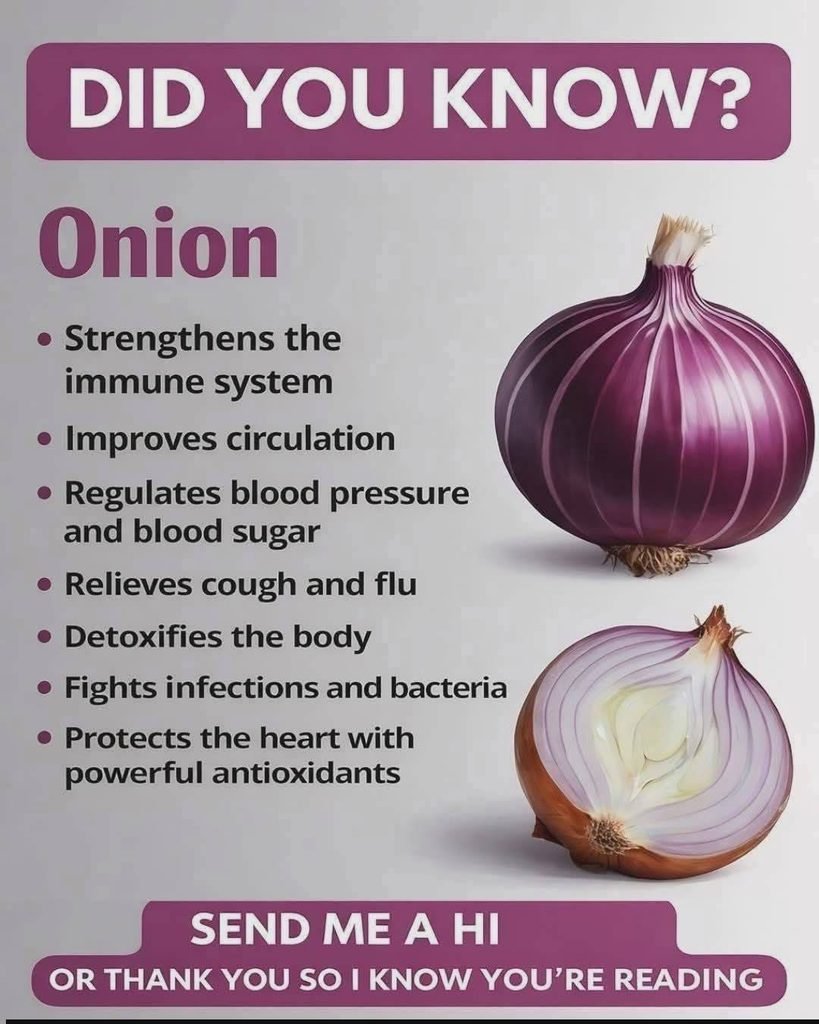
A popular image lists several impressive claims about purple onions, including supporting the immune system, improving circulation, regulating blood pressure and blood sugar, relieving coughs and flu, fighting bacteria, detoxifying the body, and protecting the heart.
Some of these ideas have a nutritional basis, while others are much stronger claims than the available evidence supports.
Purple onions can absolutely be part of a healthy diet, but they should not be considered a cure or replacement for medical treatment.
Let’s look at what happens when you regularly include onions in your diet and what the evidence actually suggests.
What Makes Purple Onions Special?
Purple onions get their characteristic color from plant pigments called anthocyanins.
Anthocyanins are antioxidant compounds found in many colorful fruits and vegetables, including berries, grapes, purple cabbage, and certain varieties of onions.
Purple onions also contain other sulfur-containing compounds and flavonoids, including quercetin.
These compounds contribute to the onion’s flavor, aroma, and biological activity.
The combination makes onions an interesting vegetable from a nutritional perspective.
But it’s important to remember that eating an onion doesn’t mean these compounds will automatically prevent or cure a disease.
Nutrition works through the overall dietary pattern.
1. Purple Onions Can Contribute to a Healthy Diet
One of the simplest benefits of onions is that they add flavor without requiring large amounts of calories.
A serving of onion provides relatively few calories while contributing small amounts of nutrients and dietary fiber.
This makes onions an easy way to make meals more flavorful while increasing the variety of plant foods in your diet.
You can add them to:
Salads
Soups
Stews
Omelets
Sandwiches
Rice dishes
Bean dishes
Roasted vegetables
Stir-fries
Homemade sauces
Rather than thinking of onions as a medicine, it is more useful to think of them as one nutritious component of a varied diet.
2. They Contain Antioxidant Plant Compounds
Purple onions are particularly interesting because of their colorful outer layers.
Their red-purple color comes partly from anthocyanins, while quercetin and other flavonoids contribute additional antioxidant activity.
Antioxidants help protect cells from oxidative damage caused by reactive molecules.
Your body already has its own antioxidant defense systems, and food provides additional compounds that participate in normal biological processes.
This is one reason nutrition experts encourage people to eat a wide variety of colorful vegetables and fruits.
However, the phrase “powerful antioxidant” should not be interpreted as meaning that eating purple onions can prevent every disease.
A food containing antioxidants is not automatically a medical treatment.
3. Purple Onions May Support Heart Health
A diet rich in vegetables is associated with better cardiovascular health, and onions can be part of that pattern.
The flavonoids found in onions, particularly quercetin, have been studied for their possible relationship with cardiovascular health.
Some research suggests that diets containing foods rich in flavonoids may be associated with healthier blood pressure and other cardiovascular markers.
But this doesn’t mean that eating raw purple onion will “clean your arteries.”
Arteries don’t become clean because of one particular food.
Heart health depends on many factors, including:
Blood pressure
Cholesterol
Physical activity
Smoking status
Body weight
Sleep
Genetics
Overall diet
Diabetes management
Adding onions to your meals is useful, but it should be part of a much bigger approach to cardiovascular health.