Just One Leaf of This Plant Is Worth a Gold Mine! The Truth About Euphorbia hirta
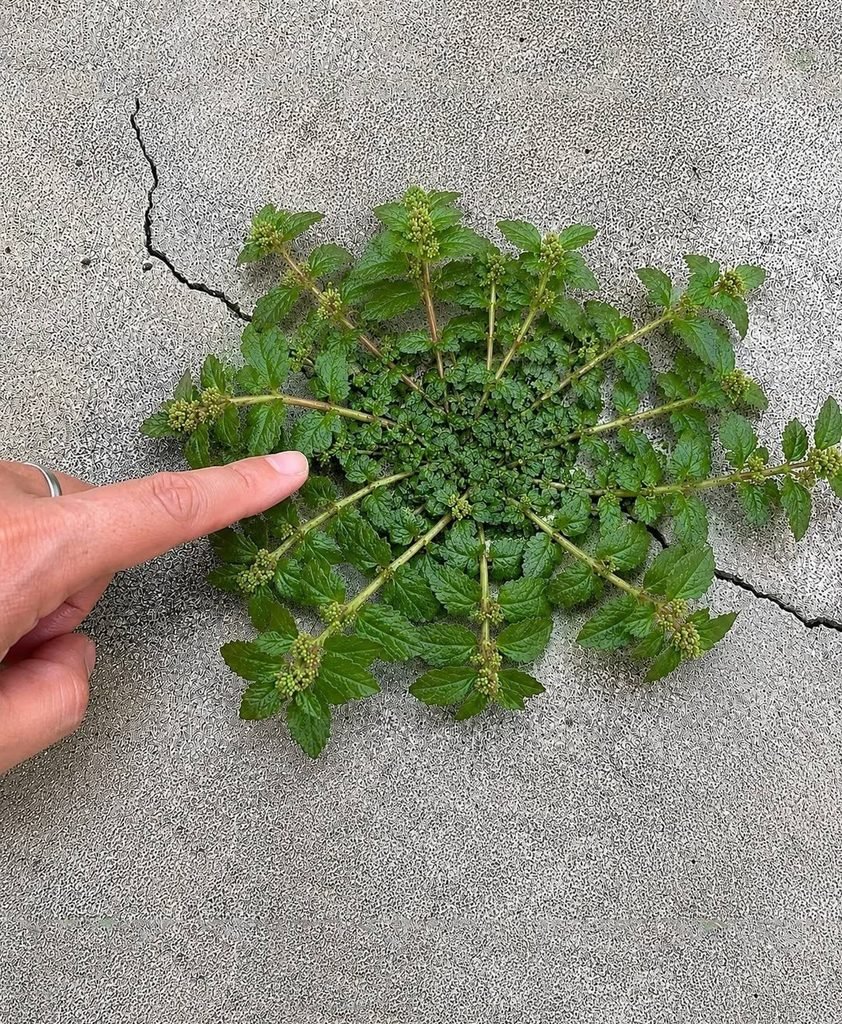
At first glance, the plant in the image may look like nothing more than a small weed growing between cracks in the ground. But this little plant has attracted a great deal of attention because of its long history in traditional herbal practices.
The plant appears to be Euphorbia hirta, commonly known as asthma weed, garden spurge, hairy spurge, or pillpod spurge. However, a photograph alone cannot guarantee a botanical identification, so anyone considering collecting or using a wild plant should have it positively identified first.
The phrase “Just one leaf is worth a gold mine” is best understood as a dramatic way of describing the plant’s traditional reputation. It does not mean that one leaf is literally worth a fortune, nor does it mean that one leaf can cure multiple diseases.
Euphorbia hirta is an interesting plant, but it also deserves caution.
What Is Euphorbia hirta?
Euphorbia hirta is a small annual herb belonging to the spurge family, Euphorbiaceae. It commonly grows close to the ground, although its stems can also become somewhat upright.
The plant has several characteristics that can help with identification.
Its stems are often reddish or purplish and covered with fine hairs. The leaves grow in opposite pairs and generally have toothed or serrated edges. Small flower structures occur in clusters around the leaf axils.
Another characteristic feature of many Euphorbia species is the milky latex that comes out when the stem is damaged or broken.
This white sap is one of the reasons caution is important when handling the plant.
Euphorbia hirta originated in tropical and subtropical regions of the Americas and has spread to many other parts of the world, including parts of Africa and Asia. It can grow in disturbed soils, roadsides, gardens, lawns, and cracks in pavement.
In other words, the fact that it grows easily does not mean it is rare.
Why Is It Called “Asthma Weed”?
One of the most famous traditional associations of Euphorbia hirta is with respiratory problems.
For generations, traditional practitioners in different regions have used preparations made from the plant for complaints involving coughing, breathing difficulties, and other respiratory symptoms.
This historical use is believed to be one reason the plant became known as asthma weed.
However, traditional use and proven medical treatment are not the same thing.
A plant can have a long history of traditional use while still requiring modern scientific research to determine whether it is safe and effective for a particular disease.
Asthma is especially important in this regard.
Asthma can cause airway narrowing and inflammation and can become life-threatening. Someone experiencing wheezing, chest tightness, difficulty breathing, or an asthma attack should not rely on a homemade plant preparation instead of appropriate medical treatment.
Does One Leaf Really Have Extraordinary Healing Power?
This is where the viral headline becomes misleading.
A single leaf does contain naturally occurring plant chemicals, but there is no scientific basis for saying that one leaf is a universal medicine or that it can replace conventional treatment.
Researchers have investigated Euphorbia hirta because it contains a variety of biologically active compounds. These include different flavonoids, tannins, terpenoid compounds, and other phytochemicals.
Such compounds are interesting to researchers because they can show biological activity in laboratory experiments.
But laboratory activity does not automatically mean that eating the plant will produce the same effect in humans.
There is an important difference between:
a chemical showing activity in a laboratory experiment,
an extract producing an effect in an animal study,
a traditional preparation being used for generations,
and a treatment being proven safe and effective in well-designed human clinical trials.
Those categories should not be treated as interchangeable.
Traditional Uses of Euphorbia hirta
Different traditional medical systems have used Euphorbia hirta for a wide variety of purposes.
Historical uses have included preparations intended for:
Coughs
Respiratory discomfort
Digestive complaints
Diarrhea
Stomach discomfort
Skin problems
Minor inflammatory complaints
Urinary complaints
Fever-related discomfort
The exact preparation and traditional use can vary considerably between countries and communities.
Some people have prepared the plant as an infusion or decoction, while others have used plant material externally.
The fact that many different cultures have used the plant is interesting from an ethnobotanical perspective. It shows how traditional knowledge can preserve information about plants for generations.
But traditional knowledge should be approached with both respect and caution.