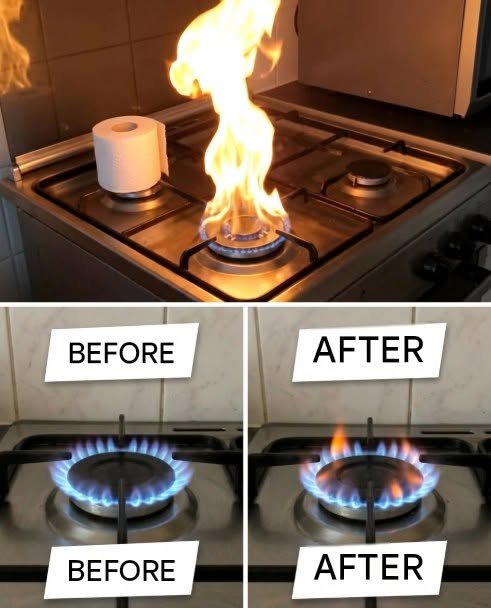
The Kitchen Habit Many People Overlook: Why Keeping a Towel on the Oven Door Can Matter
A kitchen towel hanging from an oven handle seems like one of the most ordinary things in a kitchen. It is convenient, easy to reach, and useful for drying hands, wiping counters, handling dishes, or grabbing a warm pan.
But the habit deserves a little more attention than it usually gets.
The viral message suggesting that you should “never” hang a kitchen towel on an oven door handle is too absolute. There is nothing inherently dangerous about every towel hanging from every oven handle. The safety depends on the design of the appliance, the temperature around the door and handle, what the towel is being used for, and how close it is to flames or other heat sources.
However, there are several good reasons to think carefully about where kitchen towels are placed.
A towel can become contaminated, remain damp for long periods, transfer bacteria between surfaces, or potentially come into contact with a hot cooking area. In certain kitchens, it can also become a fire hazard if it gets too close to an exposed flame or heating element.
Understanding these risks can help you develop safer and more hygienic kitchen habits.
Why Do People Hang Towels on Oven Handles?
The oven handle is simply convenient.
It is usually located at a comfortable height, directly in front of the person cooking, and provides an obvious place to hang a towel.
A towel on the oven handle can be used for:
Drying hands
Drying clean dishes
Wiping spills
Holding cookware
Protecting hands from warm surfaces
Cleaning countertops
Handling kitchen equipment
Because the towel is always visible and accessible, people often leave it there throughout the day.
The problem isn’t necessarily the handle itself.
The bigger question is what the towel is being exposed to while it hangs there.
A Kitchen Towel Can Become a Germ Carrier
One of the biggest overlooked issues with kitchen towels is that they are frequently used for multiple purposes.
Someone may dry their hands with the towel, wipe a countertop, touch a cabinet handle, dry a dish, and then use the same towel again.
Each use can transfer microorganisms and food particles to the fabric.
If the towel stays damp, microorganisms can multiply more easily.
This is particularly relevant when a towel has been used around raw meat, poultry, seafood, eggs, or unwashed produce.
For example, imagine preparing raw chicken.
You touch the chicken, wash your hands, and dry them with a kitchen towel.
If the towel is then used to wipe the counter or dry a clean plate, microorganisms can potentially be transferred to those surfaces.
The towel itself becomes part of the chain of contamination.
Moisture Makes the Problem Worse
A completely dry towel isn’t necessarily sterile, but a damp towel generally provides a more favorable environment for microorganisms than a dry one.
This is why towels that are repeatedly used without being washed can develop an unpleasant smell.
A towel may appear clean while still containing microorganisms from previous uses.
Leaving a damp towel hanging over an oven handle doesn’t automatically make it dangerous, but repeatedly using the same damp towel for days is poor kitchen hygiene.
Allowing towels to dry completely between uses and washing them regularly is a much better practice.
Don’t Use the Same Towel for Everything
One of the simplest improvements you can make is to give different towels different jobs.
For example, you can have one towel primarily for drying clean hands and another for handling or cleaning kitchen surfaces.
You can also use disposable paper towels for particularly messy contamination-prone tasks when appropriate.
Most importantly, a towel used to clean up raw meat juices shouldn’t subsequently be used to dry clean dishes or hands.
The more functions a single towel performs, the more opportunities there are for cross-contamination.