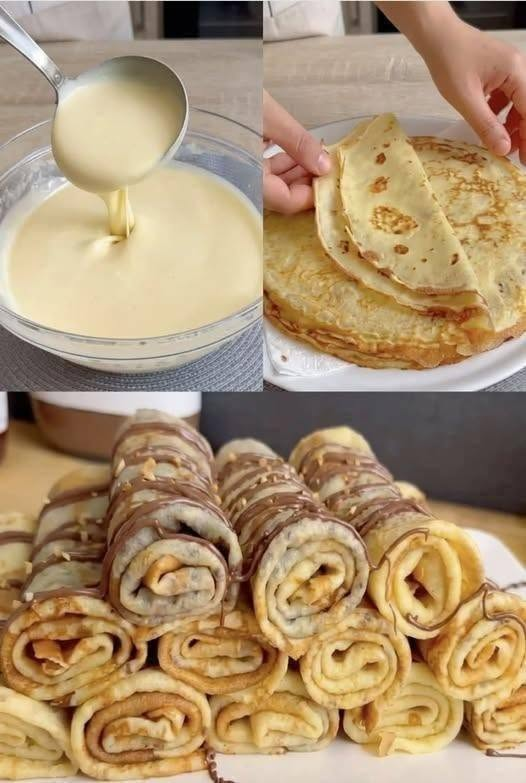
Zero-Carb Crepes Recipe: Thin, Soft, and Delicious Crepes With Almost No Carbs
If you love crepes but want to reduce your carbohydrate intake, these zero-carb crepes may be worth trying. Thin, tender, and easy to roll, they can be served with sweet or savory fillings for breakfast, lunch, or a light dinner.
Traditional crepes are usually made with flour, milk, and eggs. Although delicious, the flour contributes most of their carbohydrates. By changing the ingredients, you can make a crepe-style alternative that contains very few carbohydrates.
However, there is one important detail: not every recipe advertised as “zero-carb” is literally free of carbohydrates. Eggs, cheese, cream, and other ingredients may contain small amounts. The actual nutritional content depends on the recipe and the products used.
This version focuses on a simple, low-carbohydrate crepe made without wheat flour or added sugar.
Why You’ll Love These Low-Carb Crepes
Low in carbohydrates: They contain no traditional wheat flour or added sugar.
Simple ingredients: You only need a few basic ingredients.
Quick preparation: The batter comes together in minutes.
Versatile: Fill them with cheese, chicken, eggs, or other ingredients.
Easy to roll: When cooked properly, they can be folded or rolled for serving.
Suitable for many meals: Enjoy them for breakfast, lunch, or dinner.
Ingredients
For approximately 6 small crepes:
3 large eggs
4 tablespoons cream cheese, softened
2 tablespoons heavy cream
1 tablespoon melted butter, plus extra for the pan
A small pinch of salt
Optional: Add a little vanilla extract and your preferred low-carbohydrate sweetener if you want a sweeter version.
These ingredients produce a low-carbohydrate crepe-style pancake rather than a traditional flour-based French crepe. They will have a slightly different texture, but they can still be thin, flexible, and delicious.
Instructions
Step 1: Prepare the Batter
Place the eggs, softened cream cheese, heavy cream, melted butter, and salt in a blender.
Blend for approximately 20–30 seconds, or until the mixture becomes smooth and uniform.
Scrape down the sides if necessary and blend again briefly.
The batter should be relatively thin and pourable. If it seems unusually thick, add a small amount of cream or water and blend again.
Allow the batter to rest for about five minutes so that some of the bubbles can settle.
Step 2: Heat the Pan
Choose a good nonstick skillet, preferably one approximately 8–10 inches in diameter.
Place it over medium-low heat and lightly grease the surface with butter.
The pan should be warm enough to cook the batter, but not so hot that the crepes brown before they have set.
If the pan is too hot, the crepes may become brittle or develop dark spots before the center cooks properly.
Step 3: Pour the Batter
Pour a small amount of batter into the center of the skillet.
Immediately tilt and rotate the pan so that the batter spreads into a thin, even circle.
Because this batter contains no wheat flour, it may behave differently from traditional crepe batter. Spread it gently and avoid making the layer too thin until you understand how it cooks in your pan.
Step 4: Cook Until Set
Cook the crepe for approximately 1–3 minutes.
The edges should begin to look set, and the surface should lose most of its wet appearance.
Carefully loosen the edges with a thin spatula.
Flip the crepe gently and cook the other side for another 30–60 seconds, or until fully cooked.
If the crepe tears, allow it to cook a little longer before turning it. A slightly thicker crepe may also be easier to handle.
Step 5: Repeat With the Remaining Batter
Transfer the finished crepe to a plate.
Lightly grease the pan again if needed, then repeat the process until all the batter has been used.
Stack the cooked crepes on a plate and cover them loosely to help retain moisture.
Once slightly cooled, they can be folded, rolled, or filled according to your preference.
The Secret to Soft, Flexible Crepes
The most important factor is controlling the heat.
Cooking these crepes over excessively high heat can cause the eggs and cream cheese to set too quickly, resulting in a rubbery texture.
For softer crepes:
Use medium-low heat.
Blend the batter until completely smooth.
Grease the pan lightly rather than using too much butter.
Wait until the crepe is set before attempting to flip it.
Avoid overcooking.
Stack the finished crepes while they are still warm.
If your first crepe breaks, do not worry. The batter may need a small adjustment, or the pan may be too hot.
The first crepe is often useful for testing the temperature and consistency.