Teen Sentenced to 452 Years in Prison? The Truth Behind the Viral Courtroom Photos
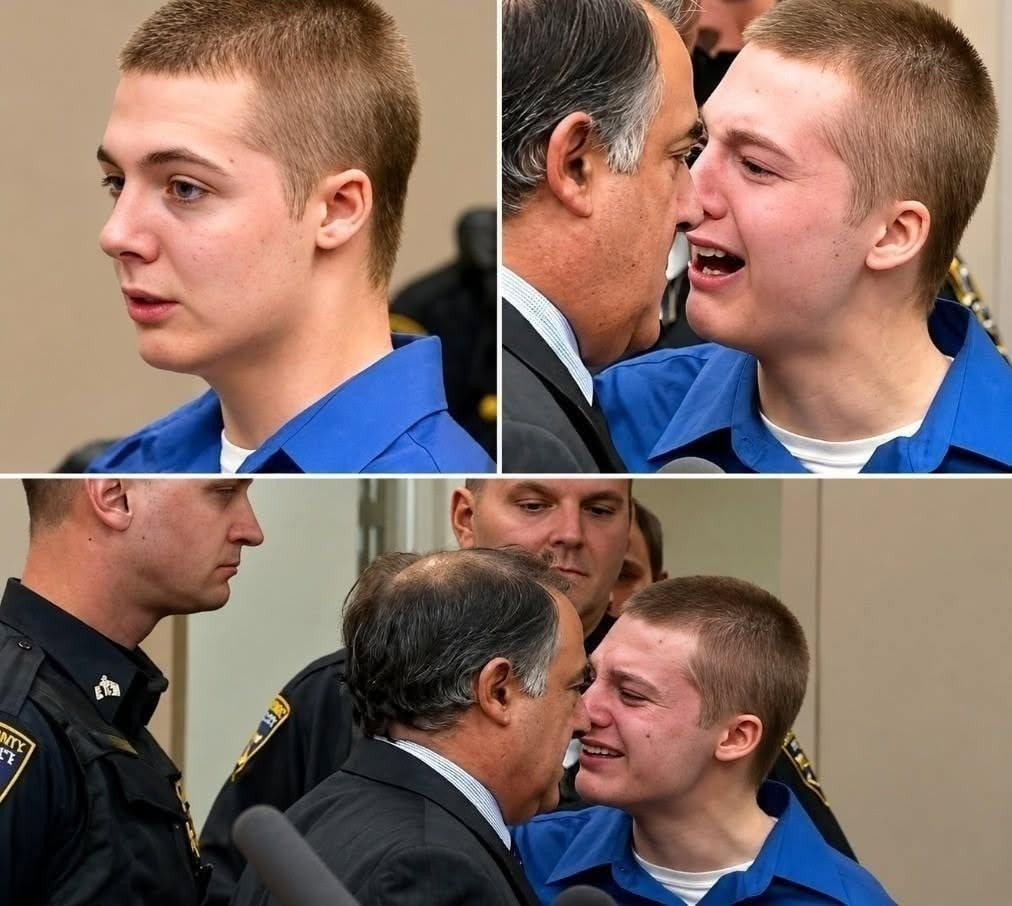
A young man is seen crying in a courtroom. An older man leans toward him, appearing to offer comfort. Police officers stand nearby, and the young man’s emotional reaction makes the scene difficult to ignore.
Then comes the headline: “Teen Sentenced to 452 Years in Prison After He…”
The number is shocking. The photographs seem to show a real courtroom, and the young man’s reaction encourages viewers to wonder what happened. What crime could lead to such an extraordinary sentence? Why is the young man crying? And is the story being shared online actually true?
Before accepting the headline, it is important to separate the images from the claims attached to them.
Fact-checking reports published in 2026 found that a widely circulated courtroom video associated with the “452 years” claim had been presented out of context. Reporting linked the footage to an earlier legal proceeding and indicated that the person associated with that case received a 15-year prison sentence in 2016, not the alleged 452-year sentence. The viral headline therefore does not accurately describe the documented case associated with the footage.
This story offers an important lesson about viral crime posts, emotional courtroom photographs, and the need to verify extraordinary claims before sharing them.
1. Why Did These Courtroom Images Attract So Much Attention?
The photographs contain several elements that naturally encourage curiosity.
First, the young man appears visibly distressed. His facial expression suggests that he is experiencing a powerful emotional moment.
Second, an older man is leaning toward him. Without additional context, viewers may interpret this as a father comforting his son, a lawyer speaking to a defendant, or a relative saying goodbye.
Third, uniformed officers are standing nearby, reinforcing the impression that the scene comes from a criminal proceeding.
Finally, the headline introduces an extraordinary number: 452 years.
Together, these elements create a compelling narrative before readers know the facts.
However, photographs cannot independently establish what a judge said, why a person was crying, what charges were involved, or how long a defendant was sentenced to prison.
A photograph can document a moment, but the explanation attached to it must be verified separately.
The most important question is not how emotional the scene looks. It is whether the accompanying story accurately explains what happened.
2. Was a Teenager Really Sentenced to 452 Years in Prison?
The viral claim requires careful examination.
Fact-checking reports investigating the widely shared “452 years” courtroom story found that the footage had been misrepresented. The proceeding shown was not the announcement of a 452-year prison sentence, and reporting associated the defendant with a 15-year sentence from 2016.
That distinction changes the meaning of the story entirely.
A courtroom appearance can occur at several different stages of a criminal case. A hearing concerning probable cause, for example, is not the same as a sentencing hearing.
During a probable-cause proceeding, a court considers whether there is a sufficient basis for a criminal case to continue. A sentencing hearing generally occurs after a conviction or an appropriate guilty plea.
Someone reacting emotionally during one proceeding is not necessarily reacting to a final prison sentence.
When a video is separated from its original context, viewers may incorrectly assume that a caption accurately describes the event.
That appears to be the central problem with the viral claim.
3. What Does a 452-Year Prison Sentence Actually Mean?