Warning: People Vaccinated Against COVID-19 May Be at Risk of Kidney Problems? What Science Actually Says
Introduction
The kidneys are among the body’s most important organs. They filter waste products from the blood, regulate fluid and electrolyte balance, help control blood pressure, and support the production of red blood cells. When the kidneys become damaged, waste and excess fluid can accumulate in the body, sometimes leading to serious health complications.
Since the COVID-19 pandemic, questions have circulated online about whether COVID-19 vaccination can affect the kidneys. Some social media posts use dramatic medical images and alarming headlines to suggest that vaccinated people are developing kidney damage.
But what does the scientific evidence actually show?
There is no reliable evidence that COVID-19 vaccination causes widespread kidney damage among vaccinated people. Kidney complications have been reported rarely after vaccination, and researchers continue to study these events. However, an event occurring after vaccination does not automatically mean the vaccine caused it.
It is also important to distinguish between the effects of COVID-19 infection itself and the possible side effects of vaccination. These are different medical situations, and confusing them can lead to unnecessary fear.
Understanding how the kidneys work, recognizing the warning signs of kidney disease, and knowing when to seek medical care are much more useful than relying on frightening social media claims.
1. Can COVID-19 Vaccines Cause Kidney Problems?
COVID-19 vaccines have been administered to billions of people worldwide. Extensive research has established that they can cause temporary side effects, including soreness at the injection site, fatigue, headaches, muscle aches, and fever.
Serious adverse events are much less common.
Medical literature has described rare cases of kidney-related conditions occurring after COVID-19 vaccination. These reports include certain inflammatory kidney disorders and, in some patients, the recurrence or worsening of an existing kidney condition.
However, these reports require careful interpretation.
When a medical condition develops after vaccination, doctors investigate whether the timing, clinical findings, medical history, and other evidence support a possible causal relationship.
Some reported cases may represent genuine vaccine-associated complications. Others may be coincidental events that would have occurred even without vaccination.
At present, the evidence does not support the claim that COVID-19 vaccines commonly damage the kidneys or that vaccinated people generally face a substantially increased risk of kidney failure.
People who already have kidney disease should discuss their individual circumstances with a healthcare professional, particularly if they experience new symptoms or have concerns about previous vaccine reactions.
They should not assume that vaccination has damaged their kidneys simply because they have received a COVID-19 vaccine.
2. What Does the Kidney Image Actually Show?
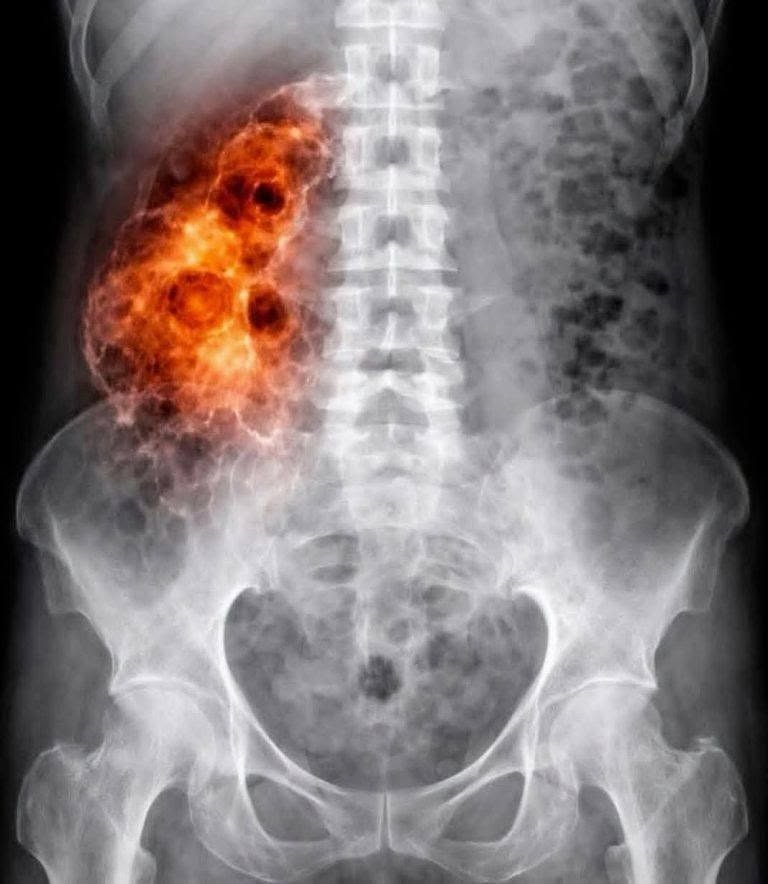
The image accompanying many alarming social media posts appears to show an abdominal X-ray with a digitally added orange or red area over the kidney region.
This visual treatment is important to recognize.
The orange glow is not a standard finding on an ordinary X-ray. It appears to be a graphic overlay intended to draw attention to the kidney area.
An image presented this way cannot establish that the kidneys are inflamed, damaged, infected, or affected by vaccination.
Even a genuine medical image requires appropriate interpretation. Doctors assess kidney health using a combination of medical history, physical examination, laboratory tests, and, when necessary, imaging studies.
A standard abdominal X-ray has limited ability to evaluate kidney tissue itself. It cannot reliably determine whether someone has impaired kidney function or establish the cause of a kidney disorder.
To assess kidney function, healthcare professionals commonly use blood tests measuring creatinine and estimating the glomerular filtration rate, known as eGFR. Urine tests can identify albumin or other abnormalities that may indicate kidney damage.
Depending on the situation, an ultrasound, CT scan, or other imaging study may be appropriate.
A dramatic-looking image is not a substitute for these assessments.
There is also no visible feature in the supplied image that can establish whether the person represented was vaccinated against COVID-19.
3. What Are the Symptoms of Kidney Problems?
Kidney disease can develop gradually, and early stages often cause no noticeable symptoms. This is one reason routine testing is important for people at increased risk.
When symptoms do occur, they may include the following.
Changes in urination
Some people notice that they urinate more frequently, particularly at night. Others may produce less urine than usual.
Urine may appear unusually foamy when protein is present, although foamy urine can also occur for less serious reasons.
Blood in the urine may make it look pink, red, or brown. This should be medically evaluated because it can have several causes, including kidney disease, urinary tract infections, and kidney stones.
Swelling in the legs, ankles, or feet
Damaged kidneys may struggle to remove excess sodium and fluid.
As fluid accumulates, swelling can develop around the ankles, feet, hands, or face.
Swelling is not specific to kidney disease. Heart conditions, liver disease, medications, and other medical problems can also cause it.
Persistent fatigue
Healthy kidneys produce a hormone called erythropoietin, which helps stimulate red blood cell production.
Advanced kidney disease can reduce this hormone’s production and contribute to anemia.
Anemia may cause fatigue, weakness, shortness of breath, and difficulty concentrating. However, these symptoms are common and do not automatically indicate kidney damage.
Nausea and reduced appetite
As kidney function declines significantly, waste products can accumulate in the bloodstream.
This may contribute to nausea, vomiting, loss of appetite, and an unpleasant taste in the mouth.
These symptoms can also occur with many other illnesses, so medical evaluation is needed to identify their cause.
High blood pressure
The kidneys help regulate blood pressure by controlling fluid balance and releasing hormones involved in blood vessel regulation.
Kidney disease can contribute to high blood pressure, while high blood pressure can also damage the kidneys.
The relationship works in both directions.
Because hypertension often causes no obvious symptoms, measuring blood pressure regularly is important.
Pain in the back or side
Pain around the sides of the back, beneath the ribs, can sometimes be associated with kidney stones or kidney infections.
However, most ordinary lower-back pain comes from muscles, joints, or the spine rather than the kidneys.
Severe side pain accompanied by fever, vomiting, or blood in the urine requires prompt medical assessment.
4. COVID-19 Infection Can Affect the Kidneys
One important distinction is the difference between vaccination and infection.
COVID-19 infection itself has been associated with kidney complications, particularly among people who become severely ill.
Researchers have documented acute kidney injury in hospitalized patients with COVID-19. This means kidney function deteriorates over a relatively short period.
Several mechanisms may contribute, including severe inflammation, dehydration, reduced blood flow to the kidneys, complications of critical illness, and abnormalities affecting blood vessels and clotting.
Some patients develop kidney problems as part of a broader illness involving multiple organs.
People with diabetes, high blood pressure, chronic kidney disease, and other underlying conditions may face greater risks of complications from severe COVID-19.
Not everyone who contracts COVID-19 develops kidney damage. Many people recover without lasting kidney problems.
Nevertheless, the established association between severe COVID-19 and acute kidney injury is important when evaluating claims about kidney health.
A social media post that attributes kidney problems exclusively to vaccination while ignoring the potential effects of infection presents an incomplete picture.
Scientists must evaluate both potential benefits and risks using appropriate evidence rather than assuming that every health problem occurring after vaccination was caused by a vaccine.