Cassava: The Food Behind the “Most Dangerous Food in the World” Claim
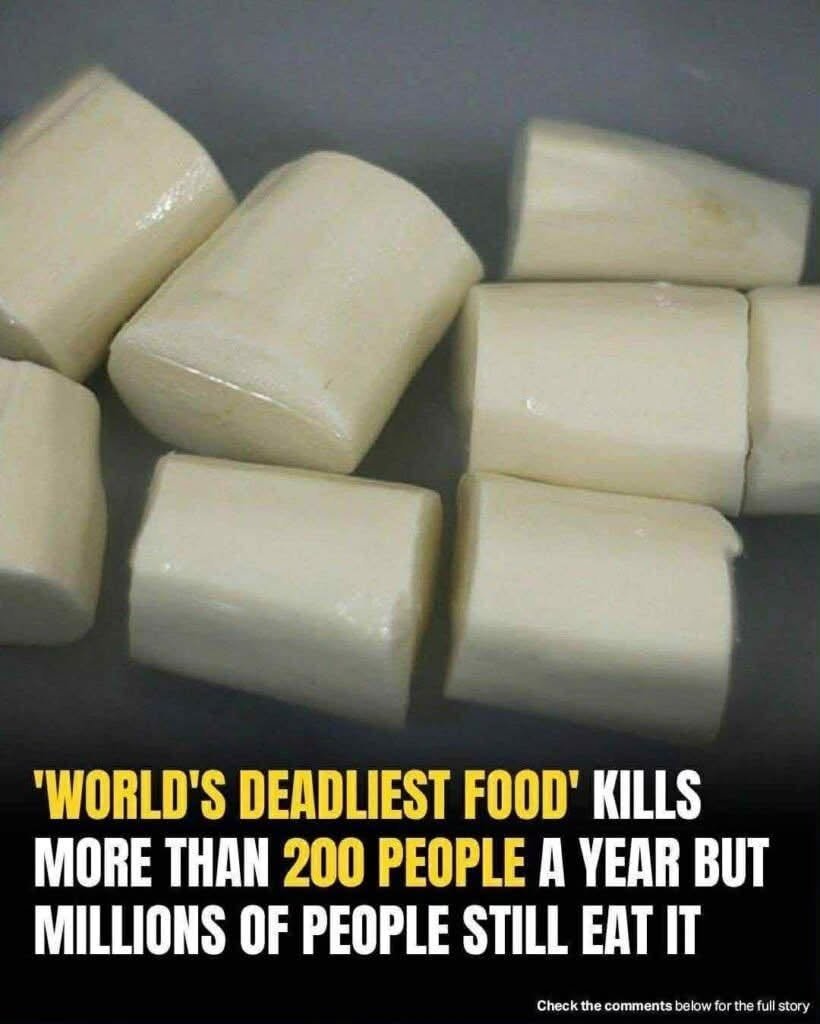
The image shows pieces of cassava, also known as yuca or manioc. It is a starchy root that is eaten by hundreds of millions of people around the world and is an important staple food in many tropical and subtropical regions.
The viral image claims that cassava is “the most dangerous food in the world” and causes more than 200 deaths every year.
That statement is highly misleading.
Cassava is not inherently a deadly food, and millions of people eat it safely. However, cassava does contain naturally occurring compounds that can release cyanide if the root is not properly processed and cooked.
That is the important part of the story.
The danger isn’t that cassava is somehow poisonous every time you eat it. The danger comes from improper preparation, certain varieties, and inadequate processing.
Understanding how cassava works can help explain why this ordinary-looking root has such an unusual reputation.
What Is Cassava?
Cassava is a woody shrub whose underground root is harvested as a food.
It is known by several names around the world, including:
Cassava
Yuca
Manioc
Mandioca
Tapioca plant
The root itself is rich in starch.
When properly prepared, cassava can be boiled, steamed, baked, fried, mashed, or processed into flour and other foods.
Cassava is also used to make tapioca products.
The root has a relatively mild flavor, which makes it versatile in cooking.
It can be served much like potatoes, although its texture is somewhat different.
Why Can Cassava Be Dangerous?
The concern comes from compounds called cyanogenic glycosides.
These naturally occurring compounds are present in cassava.
When the plant tissue is damaged—for example, when the root is cut, crushed, grated, or chewed—enzymatic reactions can release compounds that eventually produce hydrogen cyanide.
Cyanide is toxic because it interferes with the body’s ability to use oxygen at the cellular level.
This sounds frightening, but there is an important distinction:
Properly processed cassava can be safely eaten.
The traditional preparation methods used in communities where cassava is a staple have developed partly because the toxic compounds need to be reduced before consumption.
Not All Cassava Contains the Same Amount
Cassava varieties differ considerably in their cyanogenic glycoside content.
They are often broadly described as:
Sweet cassava
Generally contains lower levels of cyanogenic compounds.
Bitter cassava
Can contain substantially higher levels and requires more careful processing.
The names “sweet” and “bitter” refer to characteristics of the roots, but you should not rely solely on taste to determine whether cassava is safe.
A root’s appearance also cannot tell you how much cyanogenic material it contains.
That’s why proper preparation remains important.
Boiling Cassava Can Help
The cassava shown in the photograph appears to have been cut into pieces and cooked.
Boiling is one of the traditional ways cassava is prepared.
However, simply putting cassava into boiling water for a few minutes shouldn’t automatically be considered sufficient for every variety or preparation method.
The amount of cyanogenic compounds present depends on the variety and processing method.
For safer preparation, cassava is commonly:
Peeled
Cut into pieces
Thoroughly cooked
Prepared using an appropriate method for the variety
For higher-cyanide varieties, additional processing such as soaking, fermenting, grating, pressing, drying, or prolonged cooking may be used.
Why Peeling Matters
Much of the cyanogenic material is concentrated in the outer portions of the cassava root.
For that reason, peeling is an important preparation step.
The tough outer skin should not simply be left on because the root will eventually be cooked.
After peeling, the root should be washed and prepared appropriately.