Low-Calorie Vegetable Stew: A Filling and Flavorful Recipe for Healthy Weight Management
Vegetable stew is one of the easiest meals to include in a healthy eating routine. It can be packed with colorful vegetables, provide plenty of volume, and make a satisfying meal without requiring large amounts of calories.
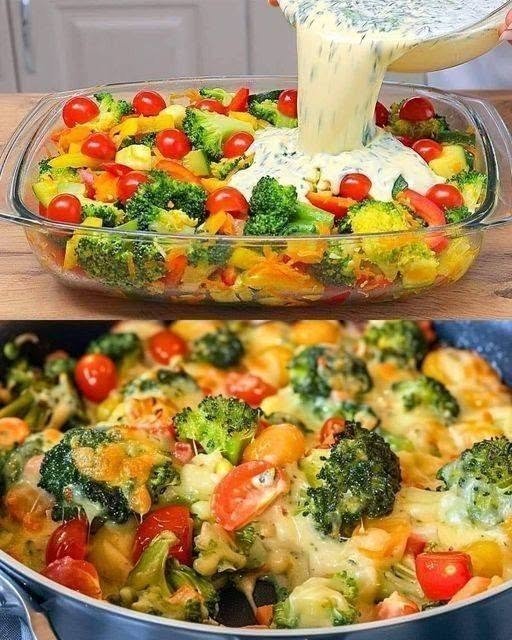
The image shows a colorful vegetable dish containing broccoli, tomatoes, carrots, peppers, and other vegetables covered with a creamy-looking sauce and baked until tender. It is a comforting combination that can be adapted to make a lighter meal while still keeping plenty of flavor.
Although eating vegetable stew can support a weight-management plan, it is important to correct one common claim: vegetable stew does not automatically make you lose weight quickly. Weight loss depends on your overall calorie intake, activity level, sleep, appetite, health, and many other factors.
The advantage of a vegetable-based meal is that it can provide a lot of food volume and nutrients for relatively few calories, especially when the recipe is prepared with moderate amounts of oil, cheese, cream, and other calorie-dense ingredients.
Why Vegetable Stew Can Be Helpful for Weight Management
Vegetables contain water and dietary fiber, which can make meals feel more substantial.
A large serving of vegetables may occupy a considerable amount of space on the plate without providing as many calories as an equivalent amount of foods such as fried potatoes, pastries, creamy pasta, or other highly calorie-dense meals.
This makes vegetables useful when someone is trying to build satisfying meals while managing overall calorie intake.
Broccoli, carrots, tomatoes, peppers, zucchini, onions, cabbage, mushrooms, and other vegetables can all be combined into a hearty stew or baked casserole.
The key is not simply eating vegetables day and night. Instead, the goal is to create balanced meals that provide enough protein, fiber, healthy fats, and other nutrients.
The Vegetables in This Recipe
A vegetable stew can be customized according to what you have available.
For a colorful version similar to the dish in the image, you can use:
2 cups broccoli florets
2 medium carrots
2 medium tomatoes or a handful of cherry tomatoes
1 bell pepper
1 zucchini
1 small onion
1 cup mushrooms
1 small amount of olive oil
Garlic
Black pepper
Paprika
A small amount of salt
Dried herbs such as oregano or thyme
You can also add cauliflower, spinach, green beans, cabbage, or other vegetables.
The combination of different vegetables gives the dish a variety of textures, colors, and flavors.
A Light Creamy Sauce
The image appears to show a creamy sauce poured over the vegetables before baking.
A traditional creamy sauce can become quite calorie-dense if it contains a large quantity of heavy cream, butter, mayonnaise, or cheese.
For a lighter version, you can make a simple yogurt-based sauce.
Ingredients
1 cup plain unsweetened Greek yogurt or natural yogurt
1 small garlic clove, finely minced
1 teaspoon lemon juice
1 teaspoon olive oil
Black pepper
A small amount of salt
Dried herbs
A splash of water or milk if needed to thin the sauce
Mix everything together until smooth.
If the yogurt is very thick, add a small amount of water or milk until the sauce reaches a consistency that can easily coat the vegetables.
This creates a creamy texture without requiring a large quantity of heavy cream.