That Gross Yellow Ring? Here’s How to Actually Get Rid of Toilet Stains
A yellow toilet stain can make a perfectly clean bathroom look dirty.
You scrub. You flush. You clean again.
And somehow that stubborn yellow or brownish ring keeps coming back.
The good news is that yellow toilet stains aren’t always a sign that the toilet is dirty. In many cases, they’re caused by hard-water minerals, iron deposits, dried urine residue, or a combination of different substances that gradually build up on the surface.
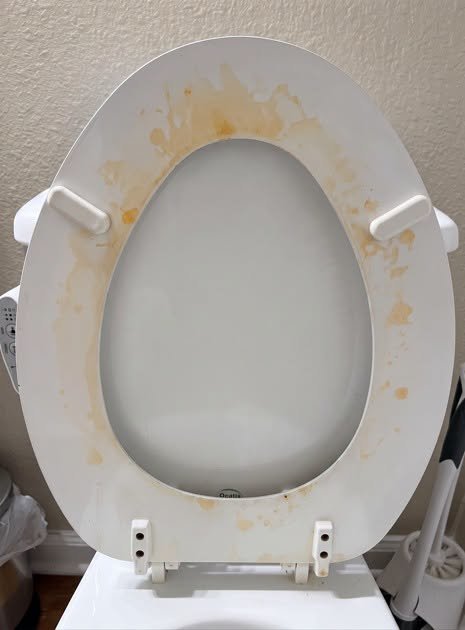
The photo shows yellowish staining on the toilet seat itself, so it’s important to distinguish plastic discoloration from mineral deposits inside the toilet bowl. The cleaning method can be different depending on what you’re dealing with.
Here’s a practical way to identify the stain and remove it without damaging the toilet.
Why Does a Toilet Turn Yellow?
There isn’t just one cause.
1. Hard-water minerals
If your water contains significant amounts of calcium, magnesium, or iron, minerals can gradually accumulate on the toilet surface.
This is particularly noticeable around the waterline.
Over time, a thin mineral film can become a hard, yellowish or brownish deposit.
Once it becomes heavily built up, ordinary soap or disinfectant may not remove it.
2. Urine residue
Urine can contribute to yellow staining, especially around the underside of the seat, hinges, edges, and other areas where liquid can remain.
As residue dries repeatedly, it can combine with minerals from the water and become increasingly difficult to remove.
3. Iron in the water
Water containing iron can leave yellow, orange, or rusty-looking discoloration.
This can be especially noticeable in areas supplied by certain well-water systems.
4. Aging plastic
The yellow color on the toilet seat itself, like the one shown in the photograph, can sometimes be caused by changes in the plastic rather than surface dirt.
Plastic can gradually discolor because of age, light exposure, cleaning chemicals, and oxidation.
When the material itself has changed color, no amount of scrubbing will completely restore its original white color.
First: Determine What Kind of Stain You Have
Before reaching for a cleaner, look closely.
If the yellowing is mostly around the waterline:
It is likely mineral buildup or a combination of mineral and organic residue.
If there are yellow or brown marks around the hinges and underside of the seat:
Urine residue and mineral deposits are possible.
If the entire plastic seat has gradually turned cream or yellow:
The plastic itself may have discolored.
If the stain feels rough or crusty:
Mineral buildup is more likely.
If it feels smooth but the plastic itself looks yellow:
You may be dealing with discoloration rather than a removable deposit.
This distinction can save you a lot of unnecessary scrubbing.
How to Clean a Yellow Toilet Seat
The seat in the photograph appears to have localized yellow staining rather than simply a uniform color change.
Start with the gentlest approach.
Step 1: Remove the Seat If Possible
Many toilet seats can be removed by loosening the fasteners at the back.
Removing the seat makes it much easier to reach:
Hinges
Underside
Mounting points
Edges
Areas around the bumpers
Wear household cleaning gloves.
Place the seat somewhere that can be cleaned afterward, such as a suitable washable surface.
If your particular seat has a special quick-release mechanism, follow its instructions rather than forcing it.
Step 2: Wash Away Surface Grime
Before treating the yellow discoloration, clean the seat with warm water and a small amount of mild dish soap or an appropriate bathroom cleaner.
Use a soft cloth or non-abrasive sponge.
This removes oils, dust, and surface residue.
Rinse thoroughly and dry.
Now you can see whether the yellowing is actually a stain or whether the plastic itself has changed color.
Step 3: Try a Baking-Soda Paste
For stubborn surface staining, make a simple paste using:
3 tablespoons baking soda
About 1 tablespoon water
Adjust the amount slightly until you have a thick paste.
Apply it to the yellow areas.
Let it sit for around 15–20 minutes.
Then gently work the area with a soft cloth or an old soft toothbrush.
Don’t scrub aggressively.
Toilet-seat plastic can become scratched, and scratches can trap future dirt and make the seat look even worse.
Rinse thoroughly afterward.
Step 4: For Mineral Deposits, Use a Mild Acid Separately
If the yellow material appears to be mineral buildup, an acidic cleaner can be more appropriate than baking soda.
White vinegar or a properly diluted citric-acid solution can help loosen mineral deposits.
Apply the appropriate solution to the affected area, allow a short contact time, and then gently wipe or brush the deposit away.
For plastic seats, always check the manufacturer’s care instructions first because different seat materials tolerate cleaners differently.
Don’t leave acidic solutions sitting on the seat for prolonged periods.