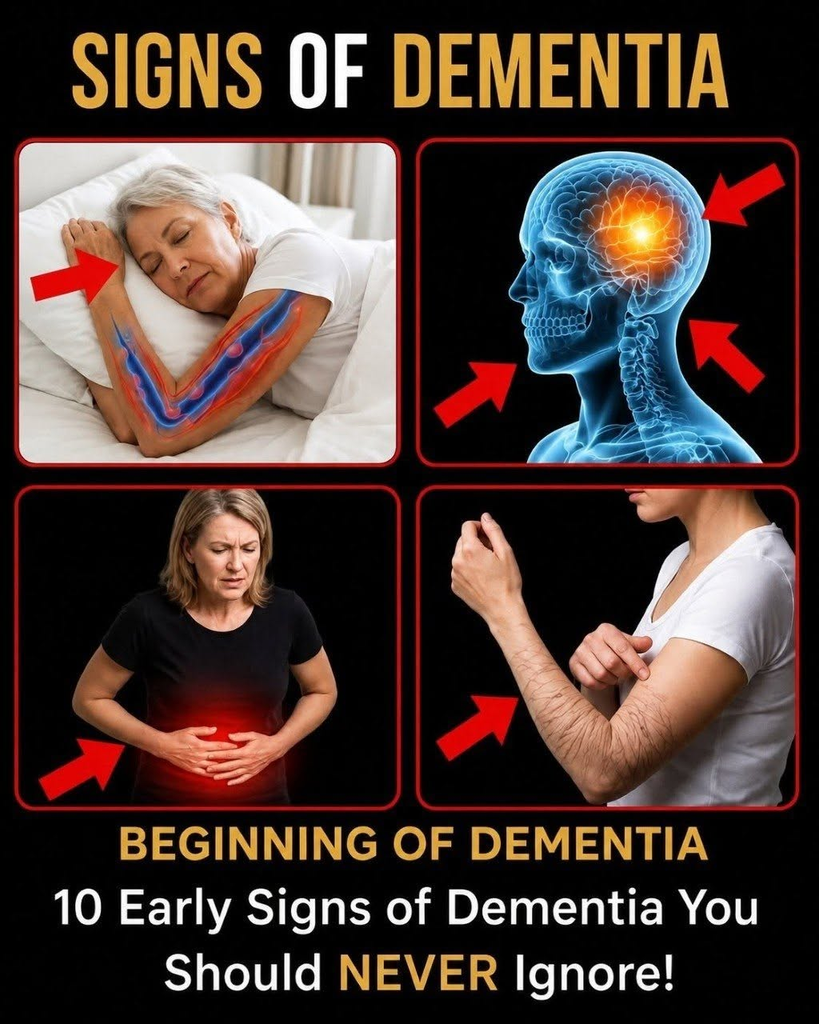
10 Early Signs of Dementia You Should Never Ignore: Symptoms, Causes, and When to Seek Help
Dementia is a general term used to describe a group of conditions that affect memory, thinking, communication, and the ability to manage everyday activities. It is more common as people grow older, but it is not an inevitable part of aging. Recognizing possible warning signs early can help individuals and their families seek medical advice, identify treatable conditions, and plan for the future.
One important thing to understand is that dementia does not always begin with obvious memory loss. Some people first experience difficulties with planning, language, judgment, familiar tasks, or changes in behavior. These symptoms may develop gradually and become more noticeable over time.
However, occasional forgetfulness does not automatically mean someone has dementia. Stress, poor sleep, depression, medication side effects, vitamin deficiencies, thyroid problems, infections, and other health conditions can also affect memory and concentration.
This article explains 10 important early signs of dementia, how they may appear in everyday life, and when medical assessment is necessary.
What Is Dementia?
Dementia is not one specific disease. It is a syndrome caused by different conditions that damage or affect the brain.
The most common cause is Alzheimer’s disease, but dementia can also result from vascular disease, Lewy body disease, frontotemporal degeneration, and other neurological conditions.
Different types of dementia can produce different symptoms.
For example, Alzheimer’s disease commonly affects memory and learning, particularly in its early stages. Vascular dementia may involve difficulties with attention, planning, and processing information. Dementia with Lewy bodies can cause changes in attention, visual hallucinations, movement problems, and sleep disturbances. Frontotemporal dementia may initially affect personality, behavior, or language.
Symptoms vary from person to person, so a professional assessment is important rather than relying on a single symptom or online checklist.
1. Increasing Memory Problems That Affect Everyday Life
Memory difficulties are among the best-known early signs of Alzheimer’s disease.
Everyone occasionally forgets something. A person might misplace their glasses, forget a name, or walk into a room and temporarily forget why they entered.
These ordinary experiences are not necessarily concerning.
A more significant warning sign is a persistent pattern of memory problems that interferes with everyday activities.