10 Early Signs of Dementia You Should Never Ignore: Symptoms, Causes, and When to Seek Help
Another important warning sign is struggling with activities that were previously familiar.
A person might know how to perform a task but begin having difficulty completing it correctly or in the right order.
Examples include:
Forgetting how to operate a familiar household appliance.
Struggling to prepare a regular meal.
Having difficulty following the rules of a familiar game.
Becoming confused while using everyday equipment.
Forgetting the steps involved in personal routines.
For example, someone who has cooked the same meal for many years may suddenly struggle to remember the order of the ingredients or how to use familiar kitchen equipment.
The key issue is a decline from the person’s previous level of ability.
If someone suddenly cannot perform a familiar task, particularly when the change occurs over hours or days, urgent medical evaluation may be needed.
10. Difficulty Understanding Visual Information and Spatial Relationships
Some forms of dementia can affect how the brain processes visual and spatial information.
A person may have trouble judging distances, recognizing objects, navigating familiar environments, or interpreting what they see.
Possible examples include:
Difficulty judging the distance between objects.
Struggling to recognize familiar surroundings.
Having trouble following visual instructions.
Misjudging steps or curbs.
Becoming confused when navigating familiar places.
These symptoms can increase the risk of falls and accidents.
However, vision problems are also common and can produce similar difficulties.
Changes in eyesight, cataracts, medication effects, and neurological conditions may all affect visual processing.
A proper medical and eye examination can help identify the cause.
Can Physical Symptoms Such as Arm Pain, Abdominal Pain, or Visible Veins Be Signs of Dementia?
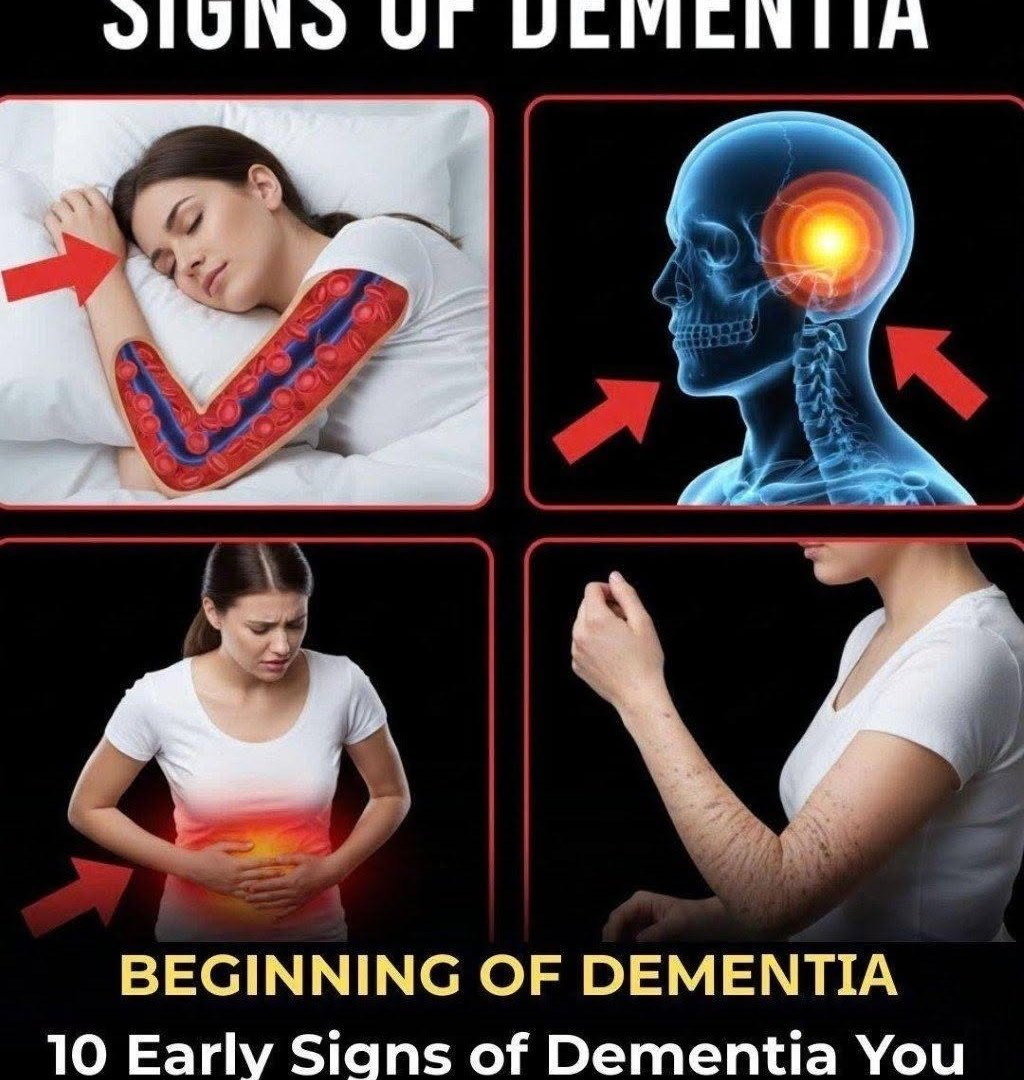
The illustration accompanying this topic shows several physical symptoms, including an arm with visible veins, abdominal discomfort, and an area around the head.
It is important to correct a potentially misleading impression: these physical symptoms are not recognized specific early warning signs of dementia.
For example:
Visible veins in the arms are often related to normal anatomy, aging, low body fat, exercise, or temperature.
Abdominal pain can result from digestive, urinary, muscular, or other medical problems.
Arm pain may be associated with muscle strain, joint conditions, nerve problems, or circulation issues.
Head pain is not, by itself, a typical indicator of dementia.
Some neurological diseases can cause both cognitive and physical symptoms, but that does not mean ordinary abdominal discomfort or visible veins indicate brain degeneration.
Dementia is primarily identified through changes in cognitive abilities, behavior, and everyday functioning.
People should avoid diagnosing themselves based on unrelated physical symptoms shown in social media graphics.
When Should You See a Doctor?
Medical assessment is recommended when memory, thinking, communication, or behavior changes become persistent or begin interfering with everyday life.
It is particularly important to seek help when family members notice a gradual decline compared with the person’s previous abilities.
A doctor may:
Ask about the person’s symptoms and when they began.
Review medical history and current medications.
Perform a physical and neurological examination.
Assess memory, attention, language, and other cognitive abilities.
Request blood tests to investigate possible treatable causes.
Recommend brain imaging when appropriate.
Refer the person to a specialist if further evaluation is needed.
There is no single test that diagnoses every type of dementia.
Diagnosis usually involves combining medical history, cognitive assessment, examination findings, and sometimes laboratory tests or imaging.
Conditions That Can Look Like Dementia but May Be Treatable
Not every memory problem in an older adult is caused by dementia.
Several conditions can produce similar symptoms.
Vitamin B12 Deficiency
Low vitamin B12 levels can sometimes contribute to memory difficulties, confusion, fatigue, and neurological symptoms.
A blood test can help identify a deficiency.
Thyroid Problems
An underactive thyroid can cause fatigue, slower thinking, and concentration difficulties.
Thyroid blood tests may help identify this condition.
Depression
Depression can affect memory, motivation, concentration, and mental processing.
Some people experiencing depression may believe they have dementia because they struggle to remember information or stay focused.
Medication Side Effects
Certain medications can affect alertness, memory, and concentration.
Older adults may be particularly sensitive to combinations of medications.
A healthcare professional should review medication use rather than stopping prescribed treatments independently.
Sleep Disorders
Poor sleep and sleep apnea can interfere with attention, memory, and daytime functioning.
Addressing sleep problems may improve some cognitive symptoms.
Infections and Delirium
Infections, dehydration, and other acute illnesses can sometimes cause sudden confusion, particularly in older adults.
This is known as delirium and requires prompt medical evaluation.
Sudden Confusion Is a Medical Warning Sign
One of the most important distinctions is the difference between gradual cognitive decline and sudden confusion.
Dementia usually develops over time, although the speed of progression varies.
Delirium often develops over hours or days and may cause sudden changes in attention, awareness, and behavior.
Possible causes include infections, medication reactions, dehydration, and metabolic disturbances.
Sudden confusion should be treated as a medical concern rather than assumed to be normal aging or dementia.
If confusion appears suddenly alongside facial drooping, weakness on one side, difficulty speaking, loss of balance, or sudden vision changes, seek emergency medical assistance immediately because these may be signs of a stroke.
How Families Can Support Someone Experiencing Memory Problems
Supporting a loved one with possible cognitive decline requires patience, understanding, and practical adjustments.
The following approaches may help:
Encourage medical evaluation. Arrange an appointment and write down examples of the changes you have noticed.
Use simple reminders. Calendars, written notes, labels, and phone reminders may help with daily activities.
Maintain familiar routines. Regular schedules can reduce confusion and provide reassurance.
Keep communication calm. Speak clearly, allow enough time for responses, and avoid unnecessary arguments.
Make the home safer. Remove tripping hazards, improve lighting, and review potential kitchen or medication risks.
Encourage social interaction. Familiar activities and supportive relationships can help maintain quality of life.
Respect independence. Allow the person to complete tasks they can still manage safely rather than taking over everything immediately.
Family members should also look after their own well-being. Supporting someone with dementia can be demanding, and caregivers may need practical assistance and emotional support.
Can Dementia Be Prevented?
There is currently no guaranteed way to prevent every type of dementia.
However, research suggests that managing certain health and lifestyle factors may help reduce the risk of cognitive decline.
Helpful measures include:
Maintaining regular physical activity.
Managing high blood pressure.
Controlling diabetes when present.
Avoiding smoking.
Limiting alcohol consumption.
Eating a balanced and varied diet.
Getting sufficient sleep.
Treating hearing and vision problems.
Staying socially and mentally active.
Managing cardiovascular health.
These habits support overall health and may contribute to healthier aging.
They do not guarantee protection against dementia, and no vitamin, supplement, or single food has been proven to prevent or cure the condition.
Final Thoughts
Recognizing early signs of dementia can help people obtain medical advice sooner and make informed decisions about their health and future.
The most important warning signs include persistent memory problems, difficulty planning, confusion about time or place, language difficulties, poor judgment, personality changes, withdrawal from activities, and increasing difficulty with familiar everyday tasks.
However, none of these symptoms automatically confirms dementia. Several treatable conditions can produce similar changes, making professional assessment essential.
Remember that visible arm veins, ordinary abdominal pain, and other unrelated physical symptoms should not be presented as specific signs of dementia.
If you or someone close to you experiences persistent changes in memory, thinking, or daily functioning, arrange a medical evaluation. Early investigation can help identify the cause, provide appropriate support, and improve quality of life.
Soften the alarmist headlineReconcile the ten-sign list