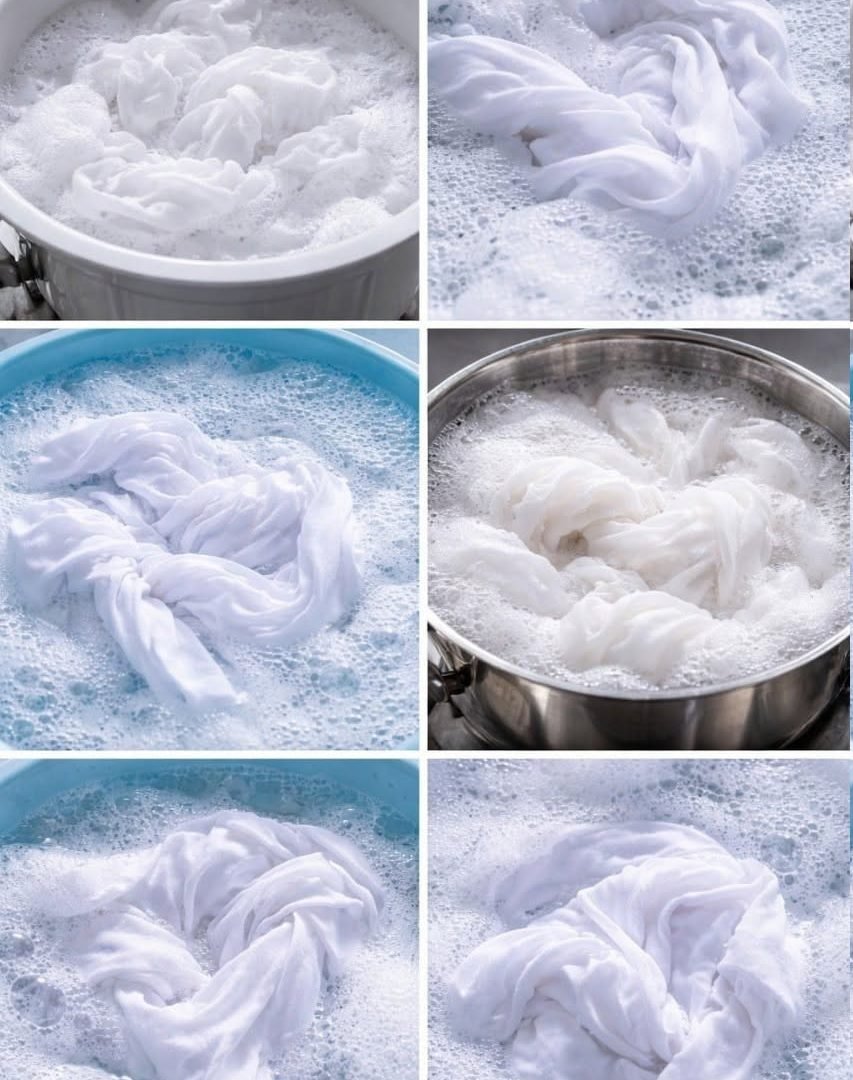
Fresh-smelling towels are mostly about proper washing and drying.
After using a towel, hang it somewhere where air can circulate.
Don’t leave wet towels crumpled on the floor.
Don’t leave them in a closed laundry basket while soaking wet.
After washing, dry them completely.
If you’re using a dryer, make sure the towels are fully dry before storing them.
If you’re air-drying, give each towel enough space for air to circulate.
Moisture is one of the biggest contributors to musty odors.
Can Vinegar Damage Clothing?
Vinegar is acidic, so using large amounts repeatedly is not necessarily appropriate for every fabric.
Delicate fabrics may have different care requirements.
Certain specialized textiles should not be treated with homemade cleaning solutions without checking the care instructions.
The same applies to elastic materials and garments containing specialized finishes.
When in doubt, follow the manufacturer’s care label.
Laundry care labels exist for a reason.
Can Vinegar Damage the Washing Machine?
This question deserves more attention than it usually receives.
Some washing machine manufacturers specifically advise against using vinegar regularly because its acidity can affect rubber seals, hoses, and certain internal materials over time.
Other people use vinegar occasionally without experiencing problems.
Because washing machines vary, there is no universal rule that vinegar is safe for every machine under every circumstance.
The safest approach is to check your appliance manual.
If the manufacturer advises against vinegar, don’t use it simply because a viral laundry post recommends it.
There are commercial washing-machine cleaning products designed specifically for maintaining the appliance.
Vinegar and the Dryer
Vinegar belongs in the washing stage, not the dryer.
Do not pour vinegar directly into a dryer.
Don’t soak dryer components with vinegar.
The dryer is designed for drying clothes, not for applying liquid cleaning products to fabrics.
If you want to clean your dryer, follow the manufacturer’s cleaning instructions.
Regularly cleaning the lint filter is far more important for dryer safety.
What About the Vinegar Smell?
When used in a reasonable amount and properly rinsed, the strong vinegar smell should not remain on clean laundry.
If clothes smell strongly of vinegar after washing, you may have used too much or the laundry may not have rinsed adequately.
An additional rinse can help.
The goal is not to make your clothes smell like vinegar.
The goal is to help reduce residue or odors when appropriate.
A Better Laundry Routine for Whiter Whites
If your main goal is brighter white clothing, focus on the fundamentals.
Separate whites from dark colors.
Treat stains before washing.
Don’t overload the machine.
Use enough detergent.
Choose an appropriate water temperature.
Use oxygen-based whitening products when appropriate.
Follow garment care instructions.
Dry clothes properly.
Vinegar can sometimes help with residue, but it shouldn’t be the centerpiece of your whitening strategy.
A Better Laundry Routine for Softer Towels
For towels specifically, consider this approach:
Wash Towels Separately
Washing towels separately can make it easier to choose the appropriate cycle.
Don’t Overload
Give towels room to move.
Use Moderate Detergent
More detergent is not necessarily better.
Reduce Fabric Softener
Fabric softener can interfere with towel absorbency.
Use an Extra Rinse
An additional rinse can help remove detergent residue.
Dry Thoroughly
Don’t put damp towels away.
Avoid Leaving Them in the Washer
Remove them promptly after the cycle.
Consider Vinegar Carefully
If your washing machine manufacturer allows it, a modest amount of distilled white vinegar during the rinse cycle can be useful for some laundry situations.
The Biggest Mistakes People Make With Vinegar
Mistake 1: Using Too Much
A large quantity doesn’t automatically mean better cleaning.
Mistake 2: Mixing It With Bleach
This can create dangerous fumes.
Mistake 3: Expecting It to Bleach Stains
Vinegar is not a substitute for a whitening agent.
Mistake 4: Using It With Every Load Without Checking the Machine
Some manufacturers advise against regular vinegar use.
Mistake 5: Using It Instead of Detergent
Vinegar is not a complete laundry detergent.
Mistake 6: Expecting It to Disinfect Everything
It should not be treated as a universal disinfectant.
Mistake 7: Using It on Every Fabric
Some fabrics require specialized care.
Final Thoughts
White vinegar can be a useful household laundry ingredient, but the viral claim that it is the secret to perfectly white clothes and incredibly soft towels is overstated.
Its real value comes from its acidity and its ability to help with certain residues, mineral deposits, and odors.
For towels, it may help remove buildup that contributes to stiffness and poor absorbency. But the biggest improvements usually come from good laundry habits: using the correct amount of detergent, avoiding excessive fabric softener, not overloading the washing machine, rinsing thoroughly, and drying towels completely.
For white clothing, vinegar can help with some residue and dullness, but it should not be expected to replace a proper stain remover or whitening product.
Most importantly, never mix vinegar with chlorine bleach. Keep cleaning products separate and follow the instructions for your washing machine and fabrics.
Used thoughtfully, vinegar can have a useful place in a laundry routine. Used excessively or mixed with incompatible products, it can create problems rather than solve them.
The secret isn’t simply adding vinegar.
The real secret is knowing when to use it, how much to use, what not to mix it with, and when a different laundry product is the better choice.