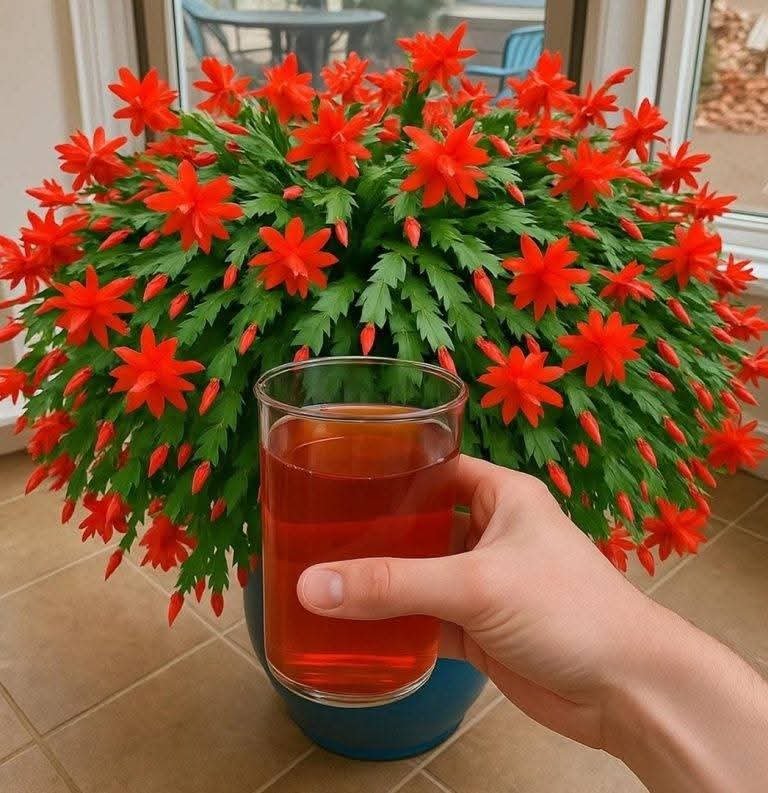
5 Things to Do with Your Christmas Cactus in September for Maximum Blooms
Christmas cactus generally benefits from moderate temperatures.
As autumn approaches, slightly cooler conditions can contribute to the seasonal flowering process.
The plant should not, however, be exposed to extreme cold.
Avoid placing it directly next to a freezing window, heating vent, radiator, or air-conditioning outlet.
Large temperature fluctuations can create stress.
A stable environment is usually preferable.
Humidity Can Help
Unlike desert cacti, Christmas cactus comes from a much more humid natural environment.
Normal household humidity can sometimes be quite dry, particularly during winter when indoor heating is operating.
Moderate humidity can help the plant maintain healthy growth.
However, extremely wet conditions combined with poor air circulation can encourage fungal and other problems.
You don’t need to create a tropical greenhouse inside your home.
Simple measures such as grouping plants together or using an appropriate humidifier can sometimes help if indoor air is exceptionally dry.
What If Your Christmas Cactus Has No Buds?
Don’t immediately assume that the plant needs fertilizer.
A lack of flower buds can have many explanations.
The plant may not be receiving enough light.
The nighttime environment may be too bright.
The temperature may not be providing the seasonal cues it needs.
The plant may have been recently repotted.
Watering may be inconsistent.
The plant may simply be following a different flowering schedule.
The variety also matters.
Some plants sold as “Christmas cactus” are actually related Schlumbergera hybrids that may flower around different times.
Therefore, comparing your plant’s flowering schedule with another person’s plant isn’t always useful.
How to Recognize Healthy Flower Buds
As the plant prepares to bloom, you may notice small structures developing at the ends of its segments.
These can eventually enlarge into flower buds.
At this stage, resist the temptation to constantly touch or move them.
Bud development is an exciting sign, but the plant still needs stable care.
Continue providing suitable light and water without making dramatic changes.
If the plant is suddenly moved from a bright room to a dark corner, or if watering changes dramatically, it may react poorly.
Don’t Overwater Because You See Buds
A common mistake is thinking that more water will help flowers develop.
Not necessarily.
Roots need both water and oxygen.
When soil remains saturated, the root system can become stressed.
Instead of increasing watering because the plant has buds, continue monitoring the growing medium.
Water when appropriate and allow excess moisture to drain.
The plant should not be treated like a water-loving aquatic plant simply because it is flowering.
What About Coffee Grounds?
Coffee grounds are another popular homemade gardening remedy.
While used coffee grounds contain organic material and some nutrients, simply dumping large quantities onto the surface of a potted Christmas cactus is not a reliable flowering strategy.
They can alter the physical characteristics of the growing medium and may contribute to moisture problems if used excessively.
If you want to use compost or organic fertilizer, use products designed for plants and apply them appropriately.
What About Banana Peels?
Banana peels are also frequently promoted as a source of potassium.
Although banana peels contain nutrients, placing fresh pieces directly into a plant pot is not a controlled fertilizer application.
They can decompose, attract insects, produce odors, and create an uneven nutrient environment.
If organic fertilization is desired, properly processed compost or a formulated organic fertilizer is much easier to manage.
Five September Tasks at a Glance
If you want a simple checklist, focus on these five things:
1. Check the light
Give your Christmas cactus bright, suitable light without exposing it to damaging intense sunlight.
2. Give it a consistent dark period
Allow natural longer nights as autumn approaches and avoid unnecessary bright artificial light throughout the night.
3. Adjust watering carefully
Water when appropriate for the soil conditions and make sure excess water can drain.
4. Avoid excessive fertilizer
Use an appropriate fertilizer at the recommended rate rather than adding large amounts of homemade ingredients.
5. Inspect the pot and roots
Make sure the container drains properly and repot only when there is a genuine reason to do so.
These five steps are much more useful than searching for a single secret ingredient.
What Not to Do in September
Sometimes knowing what to avoid is just as important.
Don’t:
Drench the plant every day.
Add large amounts of fertilizer.
Pour random household ingredients into the soil.
Keep the plant in complete darkness all day.
Expose it suddenly to intense sunlight.
Move it repeatedly from one room to another.
Repot it unnecessarily.
Cut away large sections just before flowering.
Leave water sitting in the pot’s drainage tray.
Assume that yellow leaves automatically mean the plant needs fertilizer.
Good plant care is about balance.
What Happens After September?
As autumn progresses, the plant may begin showing signs that flowering is approaching.
You may notice small buds forming at the ends of the segments.
Once buds appear, the goal becomes maintaining stable conditions.
Continue providing appropriate light and careful watering.
Avoid sudden changes.
When the flowers eventually open, you can enjoy the display without dramatically changing the plant’s care routine.
After flowering, the plant can enter another growth phase, during which pruning and propagation may become more appropriate depending on the plant’s condition.
Final Thoughts
September can be an important month for Christmas cactus because the plant is moving toward its seasonal flowering period.
But there is no need for complicated tricks.
The most effective approach is to provide the conditions the plant naturally responds to: appropriate light, longer uninterrupted nights, careful watering, moderate nutrition, healthy roots, and stable temperatures.
If the plant is healthy, avoid the temptation to “force” flowering with excessive fertilizer or homemade mixtures.
A spectacular Christmas cactus covered in flowers is usually the result of months of good care rather than one magical treatment.
The five simple tasks are straightforward:
Give it the right light. Allow consistent darkness at night. Water carefully. Avoid excessive fertilizer. Check the pot and roots without repotting unnecessarily.
With patience and consistent care, your Christmas cactus can enter the flowering season strong, healthy, and ready to produce the colorful display that makes this plant such a favorite during the cooler months.