Never Uproot This Plant If It Appears in Your Garden — But First, Make Sure You Know What It Is
A surprising green plant appearing in the middle of a garden can be easy to dismiss as an ordinary weed. Many people see an unfamiliar rosette of leaves and immediately pull it from the soil.
But viral gardening posts often tell a different story: “Never uproot this plant if it appears in your garden.”
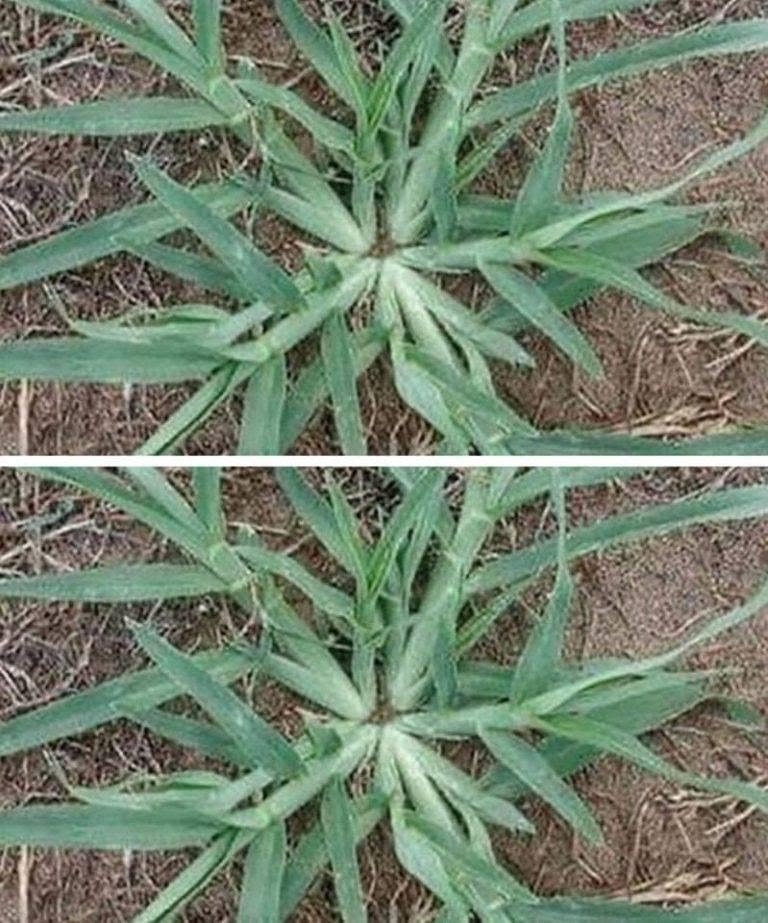
The plant in the photograph appears to resemble horseweed, also called marestail or Canada fleabane (Erigeron canadensis), particularly because of its narrow leaves and basal rosette. However, a photograph alone isn’t enough to make a definitive identification, and several plants can look similar during their early growth stages.
That distinction matters.
Some plants that spontaneously appear in gardens can be useful to wildlife, soil, or even the kitchen. Others are simply weeds that compete with vegetables and flowers. And some wild plants should never be eaten unless they have been positively identified.
So before reaching for the garden gloves, here’s what you should know.
What Is the Plant in the Picture?
The plant shown has a characteristic rosette-like arrangement of narrow green leaves radiating outward from the center.
Those features are consistent with the young growth stage of horseweed (Erigeron canadensis), an annual plant in the sunflower family, Asteraceae. Extension sources describe horseweed as forming a basal rosette of hairy leaves before eventually producing an upright stem.
As it matures, the plant changes dramatically.
Instead of remaining as a low rosette, horseweed can develop a tall, upright stem, sometimes reaching several feet in height. Small white flower heads eventually appear toward the upper portions of the plant.
This is one reason gardeners may fail to recognize the mature plant as the same plant they saw earlier in the season.
Why Does It Look So Different as It Grows?
Many weeds have more than one recognizable stage of growth.
Horseweed is a particularly good example.
Early stage
The young plant forms a relatively flat rosette close to the ground. The leaves can look much broader and more noticeable at this stage.
Later stage
The plant sends up a central stem and becomes increasingly upright. The leaves along the stem become narrower.
Mature stage
Small flowers appear near the top, followed by seeds equipped with fine hairs that can be carried by wind.
North Carolina State University Extension notes that horseweed can produce abundant seed and recommends preventing it from reaching the seed-producing stage where control is desired.
Is Horseweed Actually a “Good” Garden Plant?
This is where the viral headline needs some context.
It would be misleading to say that you should never remove horseweed.
Horseweed is classified as a weed by agricultural and horticultural extension sources, and it can become troublesome when allowed to produce large numbers of seeds. (Turffiles)
However, calling every wild plant “useless” would also be inaccurate.
Horseweed can have ecological value.
Its flowers can provide nectar and pollen for native bees, and its dead stems can serve as nesting material or sites for some solitary bees.
So whether you should keep one depends on where it is growing and what you’re trying to accomplish in your garden.
A Weed Can Still Have Ecological Value
The word “weed” doesn’t necessarily mean “dangerous” or “worthless.”
In gardening, a weed is generally a plant growing where it isn’t wanted.
A plant growing in a vegetable bed may be considered a weed because it competes with crops.
The same plant growing in an unused corner of the garden might provide habitat or food for insects without causing any meaningful problem.
This is why gardeners sometimes choose a more selective approach.
Instead of removing every unfamiliar plant immediately, they identify it first.
Why You Shouldn’t Automatically Pull Every Wild Plant
There are several reasons to pause before removing an unknown plant.
1. It may be beneficial to wildlife
Flowers can provide nectar and pollen.
2. It may be native or naturalized
Some spontaneous plants form part of local ecosystems.
3. You may accidentally remove something valuable
Not every plant that appears naturally is a weed.
4. Identification prevents unnecessary work
You may spend time fighting a plant that could simply be managed.
5. Some plants are edible—but identification is essential
This does not mean the plant in the photograph should be eaten.
Never consume an unidentified wild plant based solely on a social-media image.
But There Is Also a Reason to Remove Horseweed
If the plant really is horseweed and it is growing among your vegetables, flowers, or lawn, allowing it to mature may create more work later.
Horseweed reproduces by seed, and the seeds are equipped with structures that help them travel through the air. Cornell University notes that the seeds can disperse considerable distances under suitable conditions.
That means one plant can potentially contribute to many new plants elsewhere.
For gardeners trying to keep beds tidy and weed pressure low, allowing horseweed to flower and produce seed isn’t necessarily a good strategy.