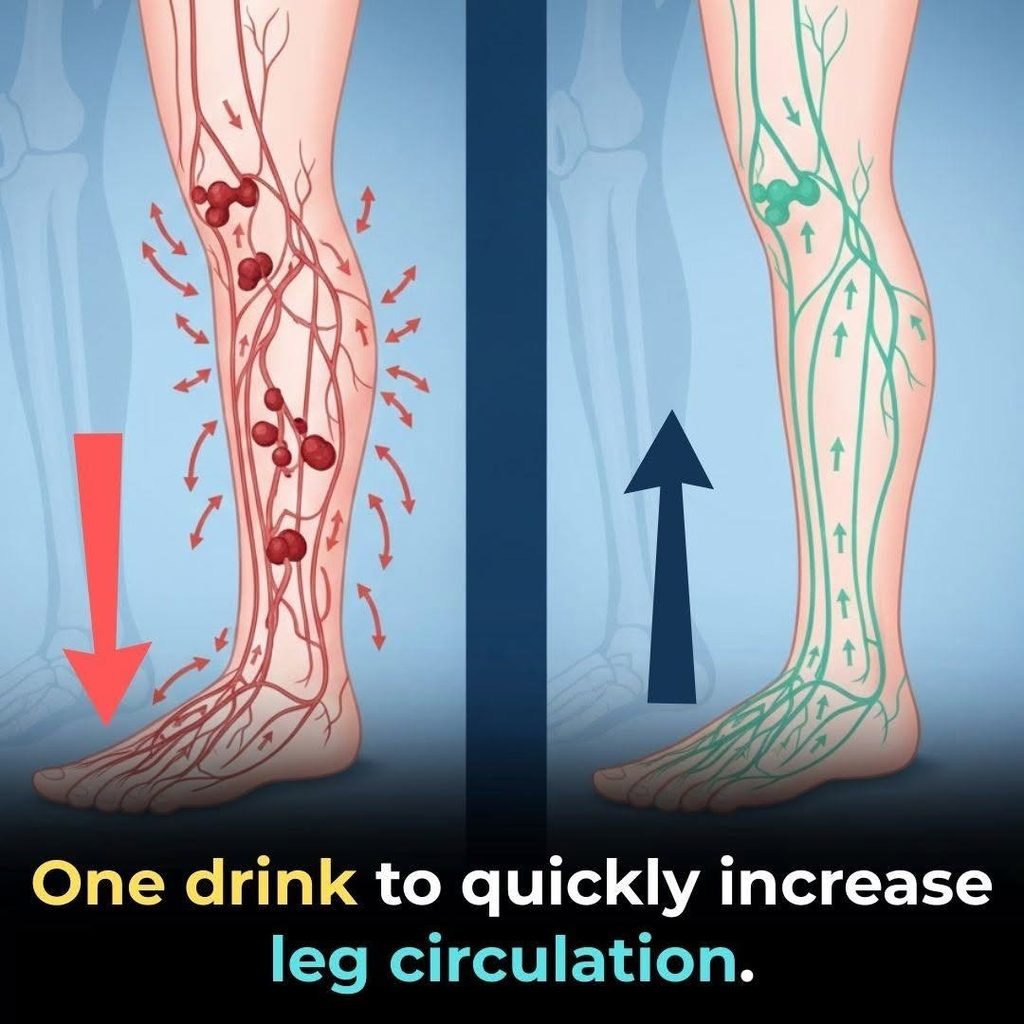
One Simple 3-Ingredient Drink That May Support Better Leg Circulation
Poor circulation in the legs can be uncomfortable. Some people experience heaviness, tired legs, swelling around the ankles, cold feet, tingling, or discomfort when walking. These symptoms can have many different causes, and while a healthy drink may support overall cardiovascular health, there is no drink that can instantly “open blocked blood vessels” or fix a circulation problem in minutes.
However, certain foods contain nutrients and plant compounds that may support healthy blood vessels and normal circulation when they are part of an overall healthy lifestyle.
One simple combination you can try is beetroot, lemon, and ginger.
The 3 Ingredients
You will need:
1 small cooked or raw beetroot
Juice of ½ lemon
A small piece of fresh ginger
About 1 cup of water
Blend everything together until smooth. If the flavor is too strong, add more water.
You can drink it fresh as part of a balanced diet.
Why Beetroot Is Interesting for Circulation
Beetroot contains naturally occurring nitrates.
The body can convert dietary nitrates into compounds involved in the production of nitric oxide. Nitric oxide plays an important role in blood-vessel function and helps blood vessels relax.
This is one reason beetroot has attracted attention in nutrition and exercise research.
Some studies have found that beetroot or nitrate-rich foods can influence blood pressure and exercise performance in certain circumstances.
But this doesn’t mean that drinking beetroot juice will immediately clear blocked arteries or cure poor circulation.
Blood vessels are complex, and circulation problems can have many different causes.
Lemon Adds Vitamin C and Flavor
Lemon is a simple way to add flavor while providing vitamin C.
Vitamin C contributes to normal collagen production and supports the normal function of blood vessels and other tissues.
Lemon also makes the drink more refreshing and can balance the earthy flavor of beetroot.
You don’t need a large amount.
Half a lemon is usually enough for a small serving.
Ginger Adds Flavor and Plant Compounds
Fresh ginger contains naturally occurring compounds such as gingerols.
Ginger has traditionally been used in food and beverages and is often associated with digestive comfort.
It also adds a warm, spicy flavor that works well with beetroot and lemon.
A small piece is enough. You don’t need a huge quantity to make the drink.
How to Make It
Start by washing the beetroot thoroughly.
If you’re using raw beetroot, peel it and cut it into small pieces before blending. You can also use cooked beetroot, which produces a softer and smoother drink.
Add the beetroot to a blender.
Then add the fresh ginger, lemon juice, and water.
Blend until the mixture becomes smooth.
If it is too thick, add more water.
For a smoother texture, you can strain it, although keeping the pulp provides more of the food’s natural fiber.
Drink it soon after preparing it.
When Can You Drink It?
There is no special hour at which this drink suddenly becomes more powerful.
You can have it with breakfast, as part of lunch, or as a refreshing drink during the day.
The important thing is consistency in your overall lifestyle rather than trying to find a magical time to consume one particular beverage.
If you are sensitive to acidic foods, drinking lemon-based beverages on an empty stomach may cause discomfort. In that case, have it with food instead.
What About Swollen Legs?
Swollen legs are not always caused by poor circulation.
Swelling can have many causes, including prolonged sitting or standing, heat, certain medications, vein problems, heart or kidney conditions, and other medical issues.
A drink cannot determine or treat the underlying cause.
If swelling occurs frequently, keeps getting worse, or has no obvious explanation, it is worth discussing it with a healthcare professional.
Sudden swelling in one leg accompanied by pain, warmth, redness, or tenderness requires prompt medical evaluation because a blood clot can sometimes produce these symptoms.
What About Heavy or Tired Legs?
Some people experience heavy legs after spending many hours standing.
Others notice heaviness after sitting for a long time.
Movement can be particularly important in these situations.
Walking regularly activates the muscles of the legs, which helps support the normal movement of blood through the veins.