How to Make Your Jewelry Shine Again: A Simple Cleaning Method
Jewelry can lose its shine over time. Rings, earrings, necklaces, bracelets, and other pieces are constantly exposed to oils from the skin, sweat, dust, soap, lotion, perfume, and everyday dirt. Even jewelry that was once bright and reflective can eventually look dull, cloudy, or slightly discolored.
The good news is that many pieces of everyday jewelry can be cleaned at home using a simple method involving lukewarm water, a small amount of mild dish soap, and a soft brush.
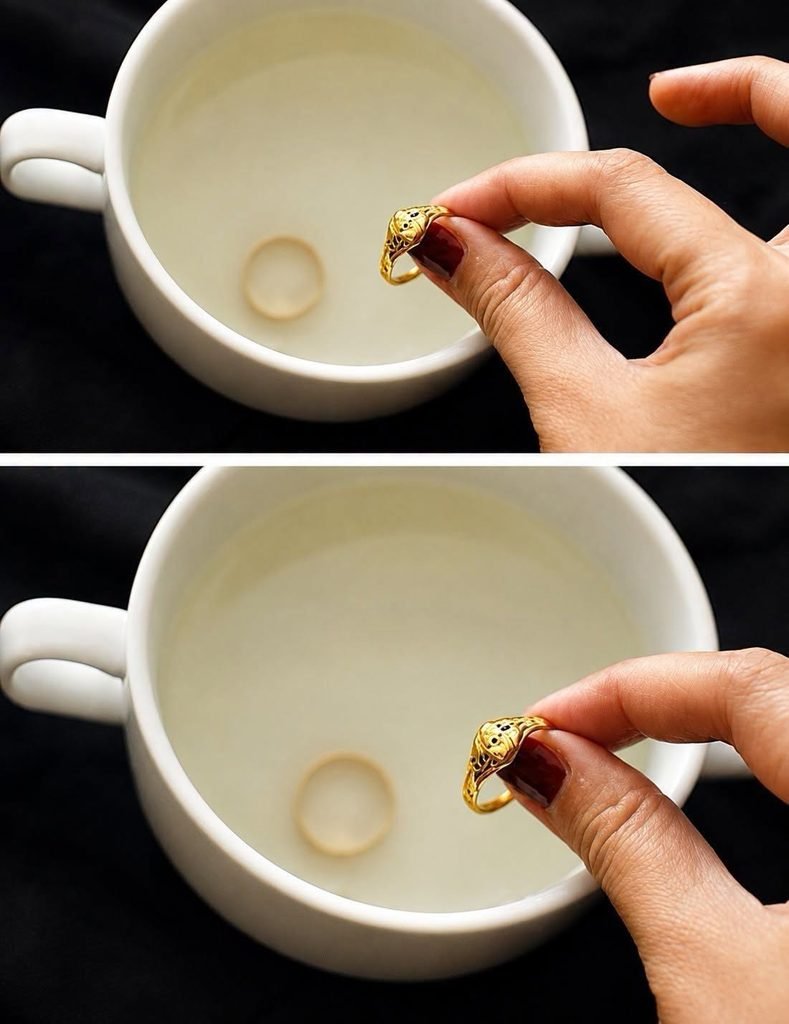
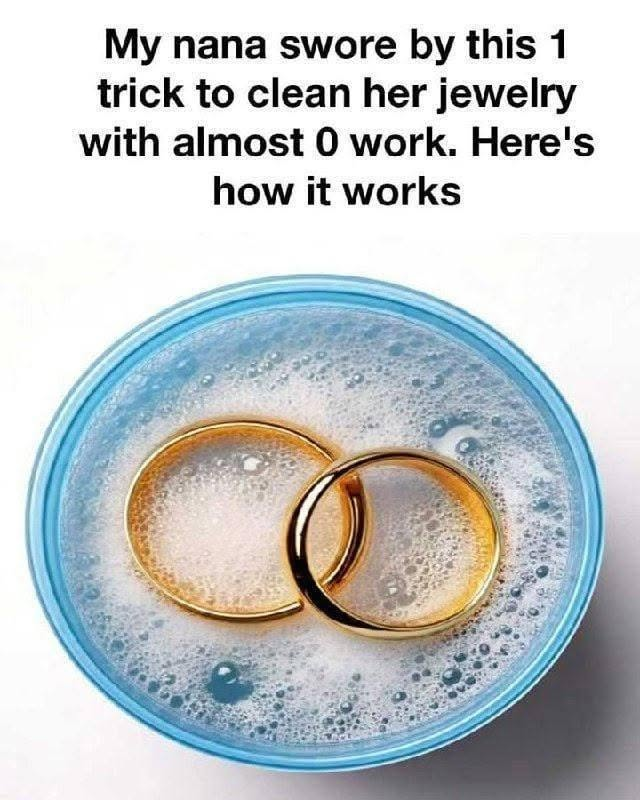
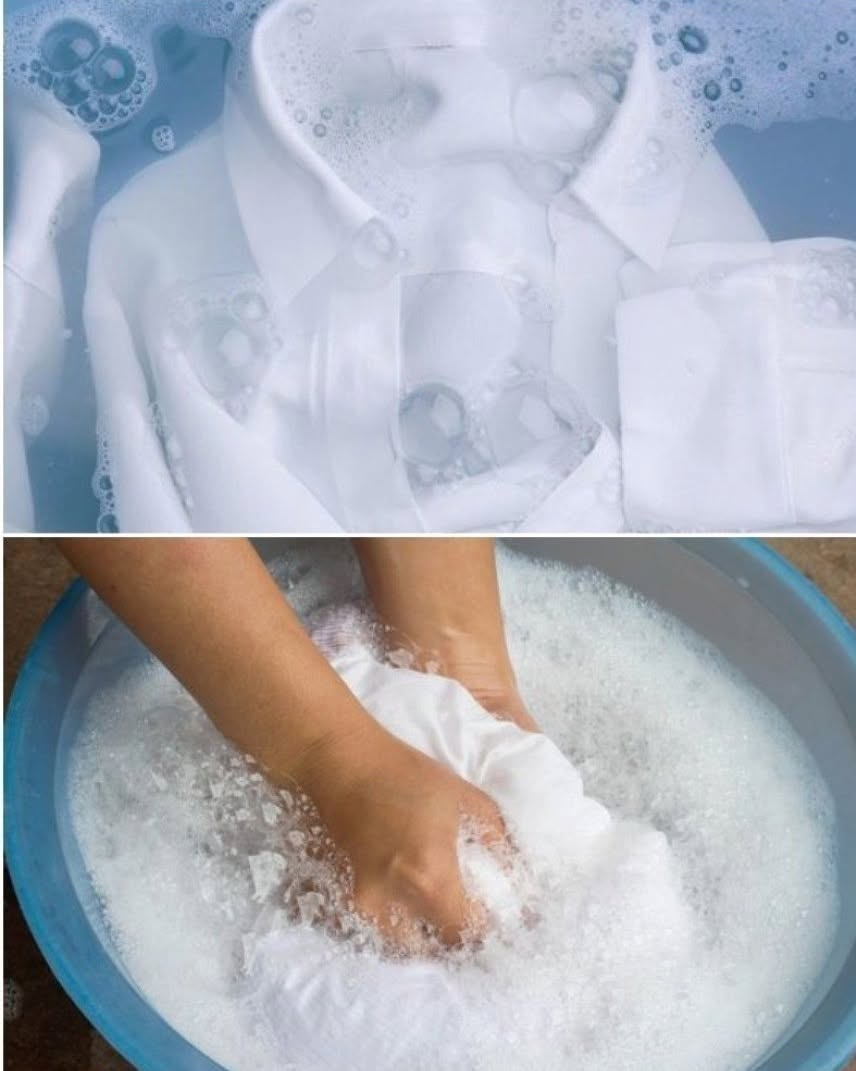
The photograph shows a ring being placed into a bowl of liquid, suggesting a simple soaking method. While soaking can be useful for certain types of jewelry, it is important to remember that not every piece should be soaked in water or cleaned with the same ingredients.
Gold, silver, platinum, stainless steel, diamonds, pearls, opals, turquoise, and other gemstones can have very different cleaning requirements.
The safest approach is to identify the material first and then use the gentlest cleaning method appropriate for it.
Why Does Jewelry Become Dull?
Jewelry doesn’t necessarily become permanently damaged simply because it loses its shine.
In many cases, a layer of everyday residue builds up on the surface.
This residue can include:
Skin oils
Sweat
Dust
Soap
Shampoo
Hand cream
Body lotion
Sunscreen
Makeup
Hair products
Food particles
Environmental dirt
These substances can create a thin film over the metal and gemstones.
The result is less light reflecting from the surface, making the jewelry appear dull.
A thorough but gentle cleaning can sometimes make a surprisingly large difference.
A Simple Cleaning Method for Many Jewelry Pieces
For many solid gold, platinum, and durable gemstone pieces, a basic cleaning solution can be enough.
You need:
A small bowl
Lukewarm water
A few drops of mild dishwashing liquid
A very soft toothbrush or jewelry brush
A clean, soft microfiber cloth
The water should be lukewarm rather than extremely hot.
The cleaning solution does not need to be strong.
In fact, stronger is not necessarily better when cleaning jewelry.
Step 1: Prepare the Cleaning Water
Fill a small bowl with lukewarm water.
Add a few drops of mild dishwashing liquid.
Mix gently until the soap is distributed throughout the water.
Avoid using extremely hot water.
Rapid temperature changes can be problematic for some gemstones, and hot water can also loosen dirt without necessarily being appropriate for every type of jewelry.
Step 2: Inspect the Jewelry First
Before placing anything in the water, examine the piece carefully.
Look for:
Loose stones
Cracked stones
Damaged settings
Loose prongs
Broken chains
Weak clasps
Missing pieces
Severe discoloration
Signs of previous repairs
This step is especially important with rings containing gemstones.
If a stone is already loose, soaking or brushing it could cause it to fall out.
If you notice movement in a gemstone when you gently touch it, it is better to have the piece inspected before cleaning it.
Step 3: Soak When Appropriate
For jewelry that is safe to immerse, place it in the solution for several minutes.
A short soak can help soften accumulated oils and dirt.
There is no need to leave jewelry submerged for hours.
For many pieces, a few minutes is sufficient to loosen ordinary surface buildup.
However, do not assume that every gemstone can safely be soaked.
Certain porous, treated, or delicate stones can be damaged by prolonged exposure to water or cleaning solutions.
Step 4: Gently Brush the Jewelry
After soaking, use a very soft toothbrush to gently clean the piece.
Pay particular attention to areas where dirt commonly accumulates.
These include:
The underside of rings
Around stone settings
Inside chain links
Behind gemstones
Around clasps
Under decorative details
Use light pressure.
You are trying to remove loosened residue, not scrape the metal.
A soft brush is especially useful because jewelry often has small spaces that a cloth cannot reach.
Why the Underside of a Ring Gets So Dirty
The underside of a ring can collect considerably more residue than the visible surface.
Soap, lotion, sweat, skin cells, and dirt can become trapped between the ring and the finger.
This can create a dark or cloudy appearance.
Cleaning the underside can sometimes make the entire ring look dramatically brighter.
This is one reason brushing only the top of a ring may not be enough.