Came Across This in My Girlfriend’s Room and Now I Have More Questions Than Answers — What Is It?
If you came across the device shown in the picture and had absolutely no idea what it was for, you would certainly not be the first person to wonder. Its unusual shape, padded sections, and straps make it look like something complicated, but the basic purpose is much less mysterious than it might first appear.
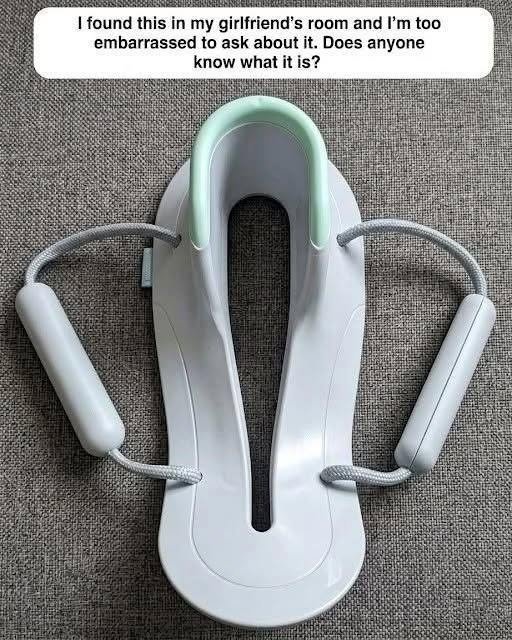
The object appears to be a neck and cervical traction or stretching device. These types of devices are designed to support the head and neck and may be used to provide gentle traction, stretching, or positioning of the cervical spine.
They are sometimes used by people who experience neck stiffness, muscle tension, or discomfort associated with prolonged sitting and certain neck conditions. Similar devices can also be marketed for posture support, relaxation, or at-home cervical stretching.
The exact purpose depends on the particular model, because several different products have similar designs.
What Is a Cervical Traction Device?
Cervical traction is a technique intended to gently lengthen or unload structures around the neck.
The cervical spine is the upper portion of the spinal column and consists of seven vertebrae. Between many of these vertebrae are discs that help absorb shock and allow movement.
Surrounding the spine are muscles, ligaments, joints, nerves, and other tissues.
When the neck is placed under gentle traction, the intention is generally to create a controlled stretching or unloading sensation.
A medical professional may sometimes use traction as part of treatment for certain neck problems. There are also consumer devices designed for home use.
The device in the photograph appears to fall into the latter category.
Why Does It Look So Unusual?
The unusual appearance comes from the way the device is constructed.
The central section appears to provide support around the head or neck, while the padded pieces on the sides are connected by flexible cords or straps.
Depending on the specific design, those side components can help provide positioning, support, or gentle resistance.
Unlike ordinary pillows or massage devices, cervical traction equipment is designed around the anatomy of the neck.
That’s why it can look strange when it is simply lying on a bed, chair, or floor.
Once you understand its intended position, its shape makes considerably more sense.
What Is It Supposed to Do?
The general goal of cervical traction is to gently stretch or unload the neck.
People may use such devices because of:
Neck stiffness
Muscle tightness
Discomfort after prolonged computer use
Poor posture
Certain types of cervical pain
Tension associated with long periods of sitting
A desire for gentle neck stretching
However, the important word is gentle.
A traction device should never be used as though more force automatically means better results.
The neck contains delicate structures, including nerves and blood vessels, so excessive force or incorrect positioning can potentially cause injury or make symptoms worse.
Is It a Massage Device?
Not exactly.
Some neck-support devices may provide a sensation that people describe as relaxing, but cervical traction is different from massage.
Massage primarily involves manipulation of soft tissues such as muscles.
Traction involves positioning and gently applying a pulling or stretching force to the neck.
Some products combine several features, so a particular device may provide both support and stretching.
But the object in the photograph doesn’t appear to be a conventional massage device.
Why Would Someone Keep One in Their Bedroom?
There are plenty of completely ordinary reasons.
Someone may experience neck stiffness after working at a desk.
Another person may spend many hours using a phone or computer.
Some people wake up with neck discomfort because of their sleeping position.
Others may simply enjoy stretching their neck after a long day.
A bedroom is actually a fairly logical place to keep a personal stretching or relaxation device because people may use it as part of their evening routine.
There is therefore no reason to assume that an unusual-looking device has an embarrassing purpose simply because it was found in a bedroom.