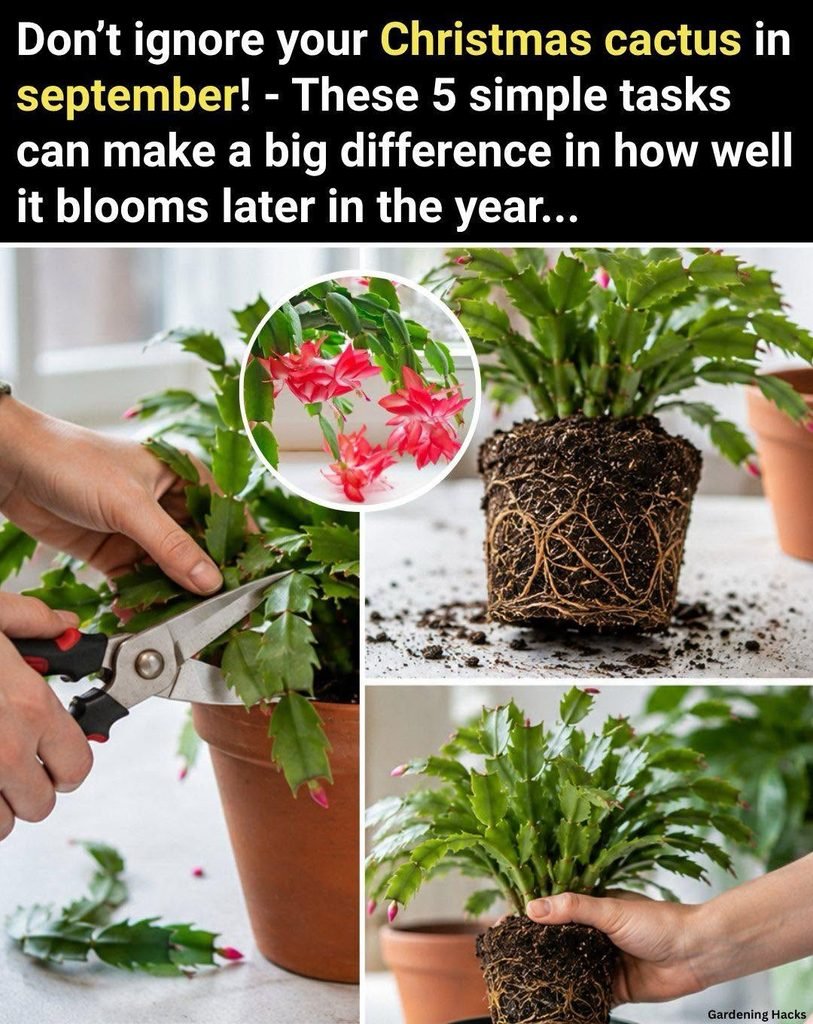
5 Things to Do with Your Christmas Cactus in September for Maximum Blooms
September is an important month for Christmas cactus growers. The plant may still look like an ordinary green houseplant, but beneath the surface it is entering an important stage in its yearly growth cycle. The care it receives during this period can influence how well it develops flower buds later in the season.
Christmas cactus, scientifically belonging to the Schlumbergera group, is different from the desert cacti many people imagine when they hear the word “cactus.” It naturally grows in humid forest environments and has flattened, segmented stems rather than thick, spiny structures.
Its spectacular flowers are one reason it has become such a popular houseplant.
If your goal is to encourage abundant flowering later in the year, September is a good time to start paying closer attention to the plant.
There is no secret fertilizer or miracle ingredient required. Instead, five relatively simple tasks can help create the conditions the plant needs to develop healthy buds.
1. Give Your Christmas Cactus the Right Amount of Light
Light is one of the most important factors affecting flowering.
During the growing season, Christmas cactus generally appreciates bright, indirect light. A location near a bright window can work very well, provided the plant is protected from extremely intense direct sunlight.
Too little light can result in weak, stretched growth and may reduce flowering.
At the same time, suddenly placing a plant that has been growing indoors in intense afternoon sunlight can cause sun damage.
The ideal location depends on your home and climate.
A bright room with filtered light can be excellent. If the plant is near a very sunny window, a sheer curtain can help reduce intense rays.
The goal is to provide enough light for strong, healthy growth without overheating or scorching the plant.
Why light matters for flowering
Plants use light to produce energy through photosynthesis.
That energy supports the production of new stems, leaves, roots, and eventually flowers.
But Christmas cactus has another interesting requirement: flowering is influenced by day length and temperature.
As autumn approaches and nights become longer, the changing environmental conditions help signal the plant that its flowering period is approaching.
This means September can be an important transition period.
Rather than constantly moving the plant around, choose a suitable location and try to keep its environment reasonably stable.
2. Start Paying Attention to Nighttime Darkness
This is one of the most important things to understand about Christmas cactus.
The plant responds to changes in the length of the day and night.
As autumn approaches, naturally longer nights can help initiate flower-bud development.
For this reason, placing the plant somewhere that receives bright artificial light late into the night can potentially interfere with the natural seasonal signal.
You don’t necessarily need to put the plant in a completely dark closet.
Instead, allow it to experience normal day-and-night conditions.
If it sits near a window where outdoor lighting or bright indoor lights remain on throughout the night, consider whether another location would provide a more natural cycle.
The exact response varies between plants and growing conditions, but consistent darkness at night can be helpful when encouraging seasonal flowering.
Don’t constantly change the schedule
One common mistake is moving a Christmas cactus from room to room every few days.
Consistency is usually better.
Give the plant adequate light during the day and a reasonably dark period at night.
If the room naturally becomes dark after sunset, that may be all the plant needs.
3. Be Careful With Watering
Watering is another major factor.
Christmas cactus needs more moisture than many traditional desert cacti, but that doesn’t mean its roots should remain saturated constantly.
The roots still need oxygen.
If the soil stays wet for long periods, the plant can become vulnerable to root problems.
On the other hand, allowing the plant to become severely dehydrated can cause stress, shriveling, and potentially bud or flower problems.
The best approach is to pay attention to the growing medium rather than following a rigid calendar.
Before watering, check the soil.
If the upper portion feels dry and the plant is otherwise healthy, it may be time to water.
When watering, water thoroughly enough that moisture reaches the root zone, then allow excess water to drain away.
Never leave the pot sitting in a tray of stagnant water for long periods.
Why drainage matters
A container with drainage holes is extremely important.
If excess water cannot escape, the soil may remain saturated.
This can reduce oxygen around the roots and create conditions that encourage root deterioration.
A decorative pot without drainage can be especially problematic if the plant is watered directly inside it.
If you use a decorative outer container, make sure the actual growing pot can drain properly.
4. Don’t Over-Fertilize in the Hope of Getting More Flowers