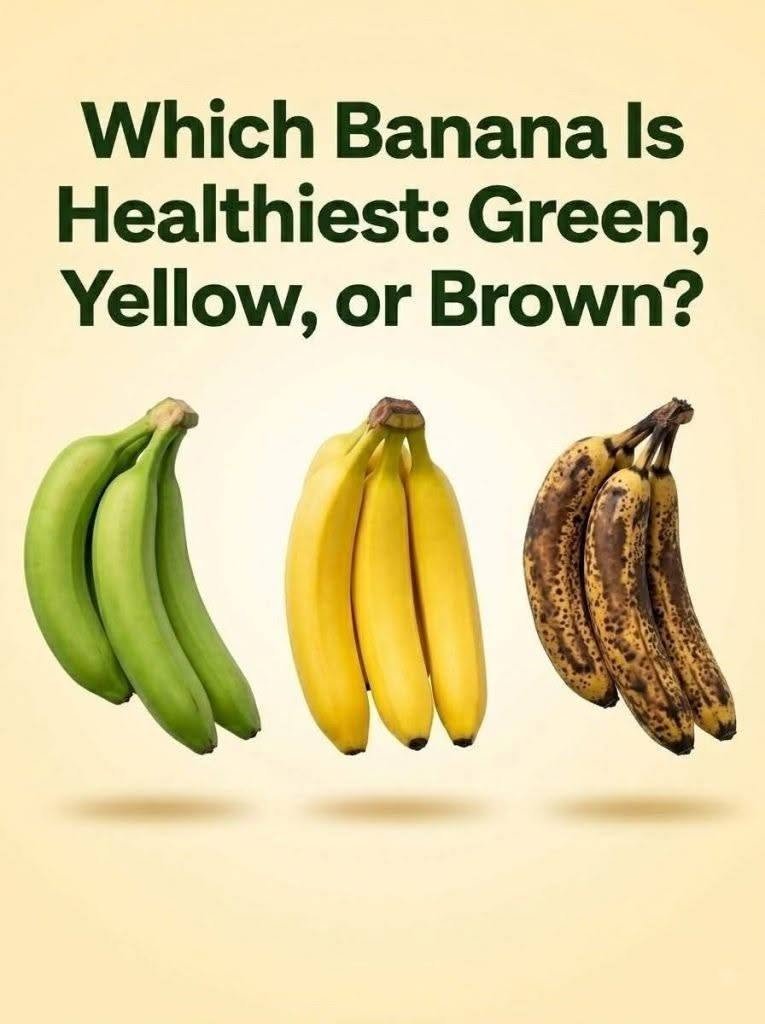
Green, Yellow, or Brown: Which Banana Is Actually the Healthiest?
Bananas are one of the simplest fruits to enjoy, but there is an interesting question that many people overlook: does the nutritional value of a banana change as it ripens?
A green banana, a bright yellow banana, and a heavily spotted brown banana are technically the same fruit at different stages of ripening, yet they can differ noticeably in taste, texture, digestibility, and the type of carbohydrates they contain.
That means there isn’t one color that is automatically “the healthiest” for everyone.
Instead, the best banana depends on what you want from it.
If you are looking for more resistant starch and a firmer, less sweet fruit, a green or slightly underripe banana may be preferable. If you want a softer, sweeter fruit that is easy to digest, a ripe yellow banana may be more appealing. Very ripe bananas are particularly useful for baking and naturally sweet recipes.
Understanding what happens inside the banana as it changes color makes the answer much more interesting.
What Happens When a Banana Ripens?
A banana doesn’t simply change color for appearance.
During ripening, significant changes occur inside the fruit.
An unripe banana contains a large amount of starch. As the fruit ripens, enzymes gradually break some of that starch down into simpler sugars. This contributes to the increasing sweetness and softer texture of the ripe fruit. Research on banana ripening describes this starch-to-sugar conversion as one of the major processes responsible for the changes in sweetness, texture, and eating quality. (PubMed)
At the same time, the peel changes from green to yellow and eventually develops brown spots as chlorophyll breaks down and other pigments become more visible. (PubMed)
So the color of the banana is actually giving you useful information about its stage of ripeness.
Green Bananas
Green bananas are firm, less sweet, and usually more difficult to peel than fully ripe bananas.
They contain more starch, including resistant starch, than ripe bananas.
Resistant starch behaves differently from rapidly digested starch. Some of it passes through the small intestine without being completely digested and can reach the large intestine, where it can be fermented by gut microorganisms.
This is one reason green bananas and green banana products have attracted interest in nutrition research.
Studies have examined green banana and green banana flour in relation to digestive health, blood glucose regulation, and other metabolic outcomes. However, researchers also emphasize that results vary according to the banana variety, preparation, amount consumed, and ripeness. (PubMed)
Green bananas and digestion
The higher resistant-starch content can be beneficial for some people, but that doesn’t mean green bananas are automatically easier to digest.
In fact, some people may experience:
Bloating
Gas
Abdominal discomfort
A feeling of fullness
when they eat large amounts of very green bananas.
This can happen because resistant starch reaches the large intestine and is fermented by gut bacteria.
For someone accustomed to a diet containing little resistant starch, suddenly eating large amounts may be uncomfortable.