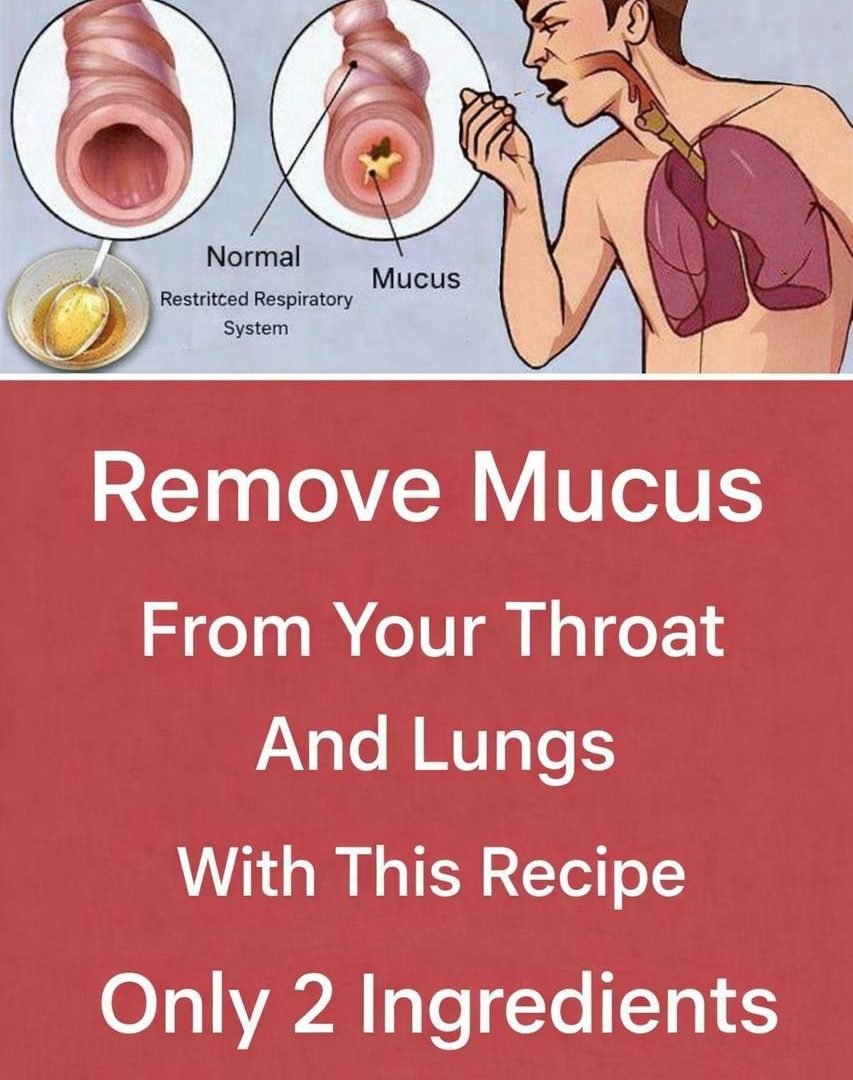
How to Get Rid of Phlegm and Mucus in Your Chest and Throat: 12 Natural Ways to Find Relief
Phlegm and mucus can be frustrating, especially when they make you feel as though something is stuck in your throat or chest. You may find yourself coughing repeatedly, clearing your throat throughout the day, or waking up with a thick, uncomfortable sensation in your airways.
These symptoms are common during colds, respiratory infections, allergies, and other conditions. In many cases, mucus production is a normal protective response that helps the body trap unwanted particles and move them out of the respiratory system.
However, when mucus becomes excessive, thick, or difficult to clear, it can interfere with sleep, speaking, eating, and everyday comfort.
The good news is that several simple measures may help loosen mucus, soothe throat irritation, and make coughing more productive. The best approach depends on what is causing the symptoms, because mucus associated with a common cold may require different management from mucus caused by asthma, allergies, acid reflux, or a chronic lung condition.
There is no single natural remedy that clears every person’s chest and throat instantly. However, staying hydrated, using appropriate humidification, avoiding irritants, and treating the underlying cause can often provide meaningful relief.
This guide explains how mucus works, what you can do at home, which remedies deserve caution, and when symptoms require medical attention.
1. Understand the Difference Between Mucus and Phlegm
Although people often use the words interchangeably, mucus and phlegm are not exactly the same.
Mucus is a slippery substance produced by tissues lining the nose, sinuses, mouth, and respiratory tract. It helps keep these surfaces moist and traps dust, particles, and microorganisms.
Phlegm generally refers to mucus coughed up from the lower respiratory tract, including the airways and lungs.
When you have a cold, your nose and sinuses may produce more mucus than usual. Some of it can travel down the back of your throat, a process known as postnasal drip. This can create a persistent urge to clear your throat or cough.
In other situations, inflammation in the airways can increase mucus production in the chest.
The amount, thickness, and color of mucus can vary. Clear mucus is common, but yellow or green mucus does not automatically mean that you have a bacterial infection or need antibiotics.
The most useful first step is to consider your other symptoms and how long the problem has lasted.
2. Drink Enough Water to Help Keep Mucus Manageable