A Gentle, Science-Backed Guide to the Dryer Sheet Cleaning Hack: Resourceful, Frugal, and Surprisingly Effective!
Household cleaning tips are often passed down from one generation to the next. Sometimes, the simplest ideas turn out to be surprisingly useful, especially when they help us reuse everyday items instead of buying additional cleaning products. One such tip involves using dryer sheets to clean certain bathroom surfaces, including parts of the toilet.
If you have ever wondered whether a used dryer sheet can help remove stubborn marks, reduce the effort required for cleaning, or make household chores easier, you are not alone. This unusual cleaning trick has attracted attention because dryer sheets are designed to reduce static cling and help soften fabrics. Their material and surface properties may also make them useful for certain light cleaning tasks.
However, there is an important distinction between a clever household shortcut and a cleaning method that has been scientifically established to work. Dryer sheets are not designed to disinfect toilets, remove every type of stain, or replace a proper bathroom cleaner.
In this guide, we will explore how the dryer sheet cleaning trick works, where it might be useful, what its limitations are, and how to keep your bathroom clean without wasting money or risking damage to household surfaces.
What Is the Dryer Sheet Toilet Cleaning Hack?
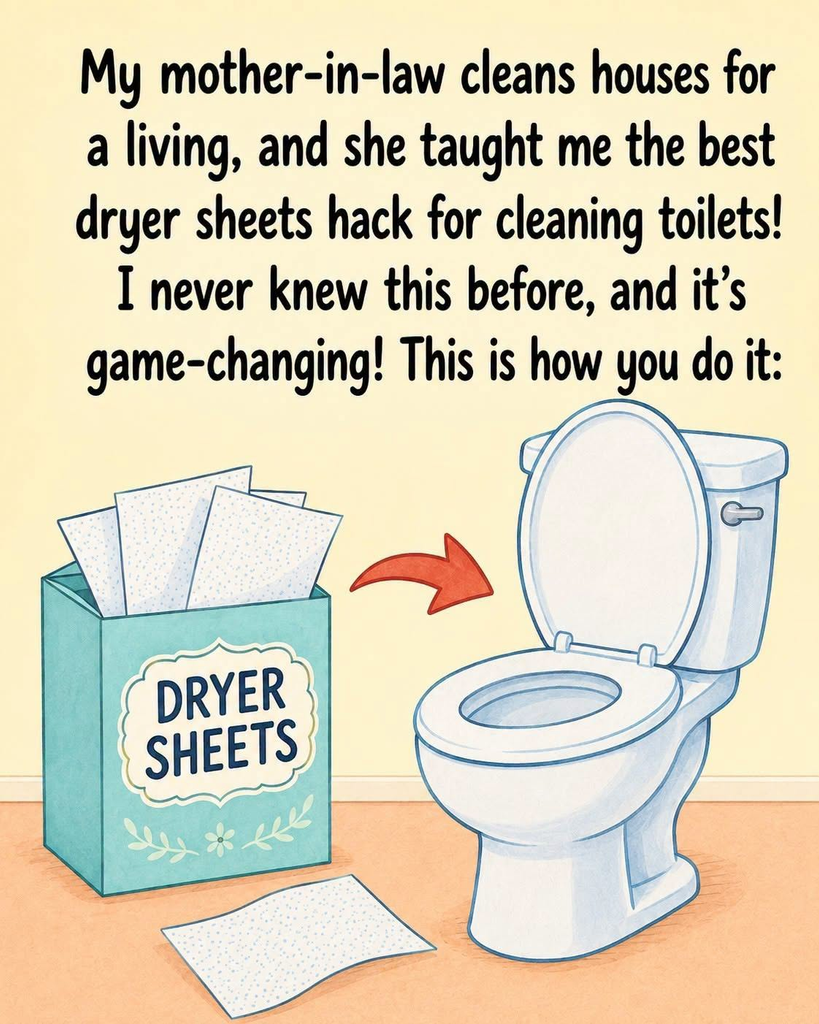
The basic idea is simple: instead of throwing away a used dryer sheet immediately after doing laundry, some people reuse it to wipe away light surface marks.
Dryer sheets are thin sheets of fabric or synthetic material treated with substances that help reduce static electricity and improve the feel of laundry. Depending on the product, these treatments may include fabric-softening agents, lubricating ingredients, fragrances, and other additives.
When used on suitable surfaces, the sheet’s flexible material may help collect loose dust, lint, and certain superficial residues.
Some people use dryer sheets to wipe the exterior of a toilet, clean small marks on bathroom fixtures, or loosen light residue from selected surfaces.
The technique is not a substitute for ordinary toilet cleaning. It is better understood as a possible reuse for a disposable household item when the surface and residue are appropriate.
The key point: A dryer sheet may help with some light surface cleaning, but its effectiveness depends on the material being cleaned and the type of dirt involved.
Why Might Dryer Sheets Help With Cleaning?
To understand this trick, it helps to look at the properties of dryer sheets.
1. Their Surface Can Collect Loose Debris
Dryer sheets are flexible and can make contact with irregular surfaces. Depending on the material and its treatment, they may collect some loose lint, dust, or small particles during wiping.
This can be useful for light cleaning, but it does not mean that a dryer sheet will remove heavy grime or mineral deposits.
For ordinary bathroom cleaning, a washable microfiber cloth is often a more practical option because it can be rinsed, reused, and laundered.
2. Their Ingredients Can Affect Surface Friction
Many dryer sheets contain conditioning agents that help reduce friction between clothing fibers.
These ingredients can leave a thin residue on surfaces. In some circumstances, that residue may change how a mark feels or how easily it wipes away.
However, this is not the same as dissolving a stain. A surface that looks cleaner after wiping may still contain residue that requires removal with an appropriate cleaning product.
The presence of fabric-softening ingredients also means that dryer sheets are not necessarily suitable for every surface.
3. Their Flexible Material Can Reach Small Areas
A dryer sheet can be folded to fit around edges and into narrow spaces.
That may make it convenient for wiping small exterior areas, such as the outside of a toilet tank or the base of certain bathroom fixtures.
Nevertheless, a folded cleaning cloth or soft brush can usually perform the same task without leaving fragrance or fabric-softener residue behind.
4. Static-Reducing Properties Do Not Equal Disinfection
Dryer sheets are designed primarily for laundry care, not for killing microorganisms.
Even if a dryer sheet removes visible dirt from a surface, it should not be considered a disinfectant.
Toilet bowls, flush handles, seats, and surrounding surfaces should be cleaned using products appropriate for those areas. When disinfection is needed, use a product specifically labeled for that purpose and follow its instructions.
A pleasant fragrance is not evidence that a surface has been disinfected.
How to Try the Dryer Sheet Trick on Appropriate Bathroom Surfaces
If you want to reuse a dryer sheet, start with a small, inconspicuous area of a suitable, nonporous surface.
For example, you might test it on a compatible exterior plastic surface that has a light dust mark.
Step 1: Choose the Right Dryer Sheet
A used dryer sheet may still be suitable for collecting loose debris, but its condition matters.
Avoid sheets that are heavily soiled, torn, or contaminated with cleaning chemicals.
If you are sensitive to fragrance, have asthma triggered by scented products, or experience skin irritation from laundry products, avoid handling fragranced dryer sheets unnecessarily.
Unscented products may reduce fragrance exposure, although they can still contain other ingredients.
Step 2: Check the Surface
Before wiping anything, consider what the surface is made of.
A dryer sheet may leave a film, especially on glossy surfaces. That film can affect the appearance of some materials and may attract dust or require additional cleaning.
Avoid using dryer sheets on surfaces where residue could interfere with grip, visibility, or function.
Do not use them on toilet seats or other surfaces that require a reliable hygienic cleaning process.
Step 3: Wipe Gently
If the surface is suitable, fold the dryer sheet and gently wipe the small area.
Do not scrub aggressively or assume that more pressure will improve the result.
If the mark does not come away easily, stop and use a cleaner appropriate for the material.
Step 4: Remove Any Residue
If the sheet leaves a noticeable film, wipe the surface afterward with a clean, damp cloth, provided the material can safely tolerate moisture.
Dry the area as appropriate.
Do not combine the technique with bleach, toilet bowl cleaners, ammonia, or other cleaning chemicals. Dryer sheets are not intended to be mixed with household cleaning products.
Step 5: Dispose of the Sheet Properly
After using a dryer sheet for cleaning, place it in the appropriate household waste.
Never flush a dryer sheet down the toilet. It does not dissolve like toilet paper and can contribute to plumbing blockages.
The same rule applies to wipes, paper towels, cotton pads, and other items that are not designed to be flushed.
Can Dryer Sheets Remove Toilet Bowl Stains?
This is where expectations need to be realistic.
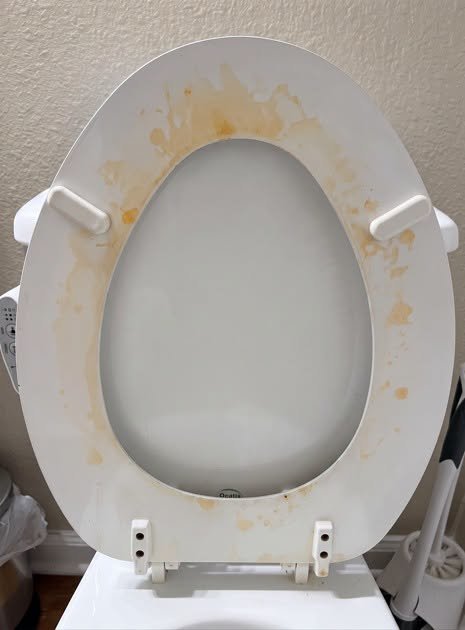
Toilet bowl stains can have several different causes, including mineral deposits, rust, organic material, and buildup associated with hard water.
These substances do not all respond to the same cleaning methods.
A dryer sheet is not formulated to dissolve calcium deposits, remove rust chemically, or disinfect a toilet bowl. Although rubbing might disturb a very superficial mark, it is unlikely to provide a reliable solution for stubborn staining.
For better results, identify the type of stain and choose a suitable toilet cleaner.
Mineral Deposits
Hard water can leave chalky or discolored deposits inside a toilet bowl.
These deposits often require a cleaner formulated to remove mineral buildup. Follow the product label, and never combine acidic toilet cleaners with bleach.
Rust-Colored Stains
Orange or reddish marks may be associated with iron in the water or corrosion-related deposits.
A product labeled for rust or mineral stain removal may be more appropriate than a dryer sheet.
Organic Stains
Organic material generally responds best to ordinary toilet cleaning with a suitable toilet bowl cleaner and toilet brush.
Follow the cleaner’s directions, including any required contact time.
Persistent Discoloration
If a stain remains despite appropriate cleaning, it may be mineral buildup, surface damage, or another issue that requires a different approach.
Repeatedly rubbing the area with an unsuitable material is unlikely to solve the underlying problem.
Why a Toilet Brush and Proper Cleaner Remain Important