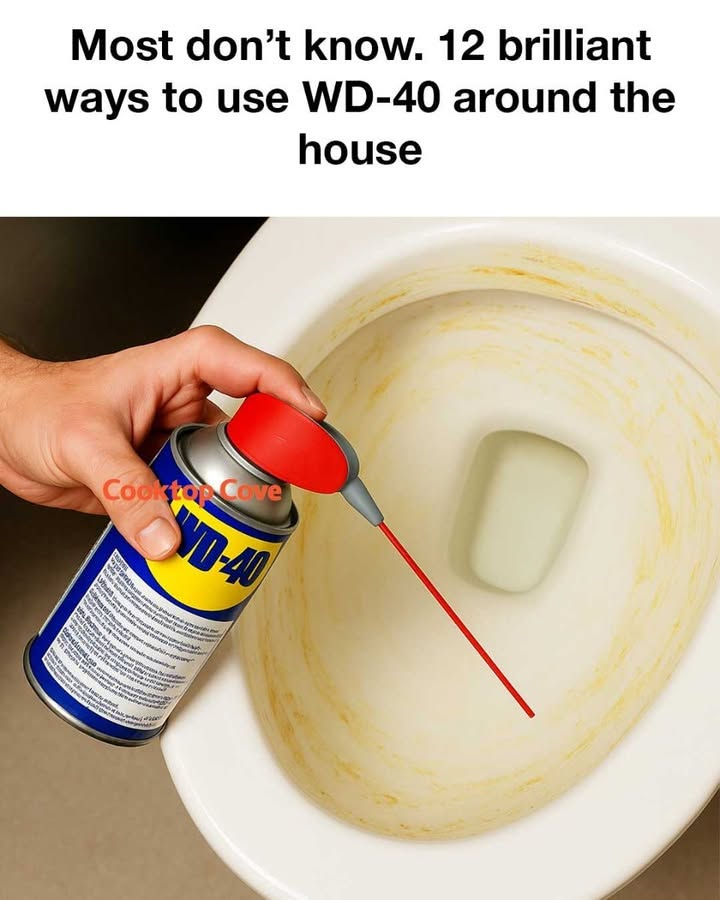
12 Brilliant Ways to Use WD-40 Around the House That Most People Don’t Know
WD-40 is a familiar product in many households, but most people associate it with loosening rusty bolts, lubricating squeaky hinges, or protecting metal tools from moisture. However, this versatile maintenance spray has several other practical uses that may help with everyday household problems.
From removing certain stubborn marks to helping free stuck mechanical parts, WD-40 can be useful in situations where ordinary cleaning products or lubricants may not work as expected. The key is knowing where it is appropriate to use it, which surfaces require extra care, and when a different product would be a safer choice.
Here are 12 household uses worth knowing about, along with important precautions to help you use WD-40 responsibly.
1. Loosen Squeaky Door Hinges
A squeaky door can quickly become annoying, especially when it wakes someone up at night or makes noise every time a family member walks through the room.
WD-40 can help quiet noisy metal hinges by lubricating the moving parts and helping displace moisture. Apply a small amount to the hinge pin and joints, then move the door back and forth several times to distribute the product.
Wipe away excess spray to prevent drips and residue from collecting on the door or floor.
Helpful tip: If the squeak returns frequently, a dedicated hinge lubricant may provide a longer-lasting solution.
2. Remove Certain Adhesive Residues
Sticky residue left behind by labels, tape, and stickers can be frustrating to remove. Sometimes, peeling off a label leaves a stubborn layer of adhesive that attracts dust and dirt.
WD-40 may help loosen some adhesive residues, making them easier to wipe away with a cloth or carefully lift with a plastic scraper.
Before applying it, test a small, inconspicuous area. The product may damage certain painted finishes, plastics, rubber, or delicate coatings.
Avoid using it on food-contact surfaces, children’s toys that may be mouthed, or objects that cannot be thoroughly cleaned afterward.
For glass jars and other washable objects, a suitable adhesive remover or warm, soapy water may be a better first choice.
3. Help Remove Scuff Marks From Some Hard Surfaces