How to Turn Yellowed White Clothes Snow-White Again: Simple Laundry Tips That Really Help
White clothes can look fresh, bright, and elegant when they are new. Unfortunately, after repeated washing, even carefully maintained white garments can gradually turn yellow, gray, or dull. White shirts may develop yellow patches around the collar and underarms, while sheets, towels, and underwear can lose their original brightness.
This can be frustrating, especially when clothes are still in good condition but no longer look clean and white.
The good news is that yellowing does not always mean a garment is permanently damaged. Depending on the cause, you may be able to improve the appearance of white fabrics using a suitable laundry detergent, oxygen-based bleach, the correct water temperature, and a few simple changes to your washing routine.
However, there is no single household mixture that safely restores every yellowed garment. The best method depends on the fabric, the type of stain, and whether the discoloration comes from sweat, detergent residue, body oils, minerals in the water, or the natural aging of the material.
Here is how to approach the problem safely and effectively.
Why Do White Clothes Turn Yellow?
Before trying to whiten clothes, it helps to understand why the discoloration happens in the first place.
Yellowing can develop for several reasons, and identifying the cause can make laundry treatment much more effective.
1. Sweat and Body Oils
Sweat and natural body oils can accumulate in areas that come into frequent contact with the skin.
The underarms, necklines, and collars of shirts are particularly susceptible. Over time, these substances can combine with detergent residue and other materials, producing yellowish stains that become more noticeable after repeated washing.
Ordinary washing may not always remove deeply embedded body oils, particularly when garments are washed in overloaded machines or with an unsuitable detergent.
For these stains, pretreating the affected area before washing may help.
2. Using Too Much Detergent
It may seem logical that adding extra detergent would make clothes cleaner, but this is not always true.
Excess detergent can leave residue on fabrics, particularly when the washing machine is overloaded or the rinse cycle is insufficient.
This residue can contribute to a dull appearance and may trap dirt and body oils.
Follow the detergent manufacturer’s dosing instructions, taking into account the load size, soil level, and water hardness.
More detergent does not automatically mean whiter laundry.
3. Washing White Clothes With Colored Garments
White fabrics can gradually lose their brightness when washed with darker or strongly colored items.
Loose dye, lint, and transferred dirt can settle on white garments, making them appear gray or dull.
For the best results, separate whites from colored laundry whenever possible.
It can also help to separate heavily soiled items from lightly soiled clothing.
4. Hard Water and Mineral Deposits
Water containing high concentrations of calcium and magnesium can affect washing performance.
Minerals may interact with detergent and contribute to deposits on fabrics or inside the washing machine.
Over time, these deposits can make some garments feel stiff or look less bright.
If hard water is a persistent problem, a laundry product formulated for hard-water conditions may help. Follow its instructions carefully and choose a product suitable for your washing machine.
5. Improper Storage
White clothes stored for long periods can develop yellow discoloration, especially when body oils, detergent residue, or other contaminants remain in the fabric.
Humidity and unsuitable storage conditions can also contribute to unpleasant odors and other fabric problems.
Before storing white clothing, make sure it has been properly washed and dried. Keep it in a clean, dry environment away from excessive heat and humidity.
6. Natural Fabric Aging
Sometimes, yellowing occurs because the fabric itself has changed.
Certain fibers, finishes, elastics, and optical brighteners can deteriorate over time. Exposure to heat, sunlight, and unsuitable chemicals may also alter the appearance of the material.
In these cases, cleaning may improve the garment without restoring its original color completely.
The Simple Method: Start With a Proper Soak
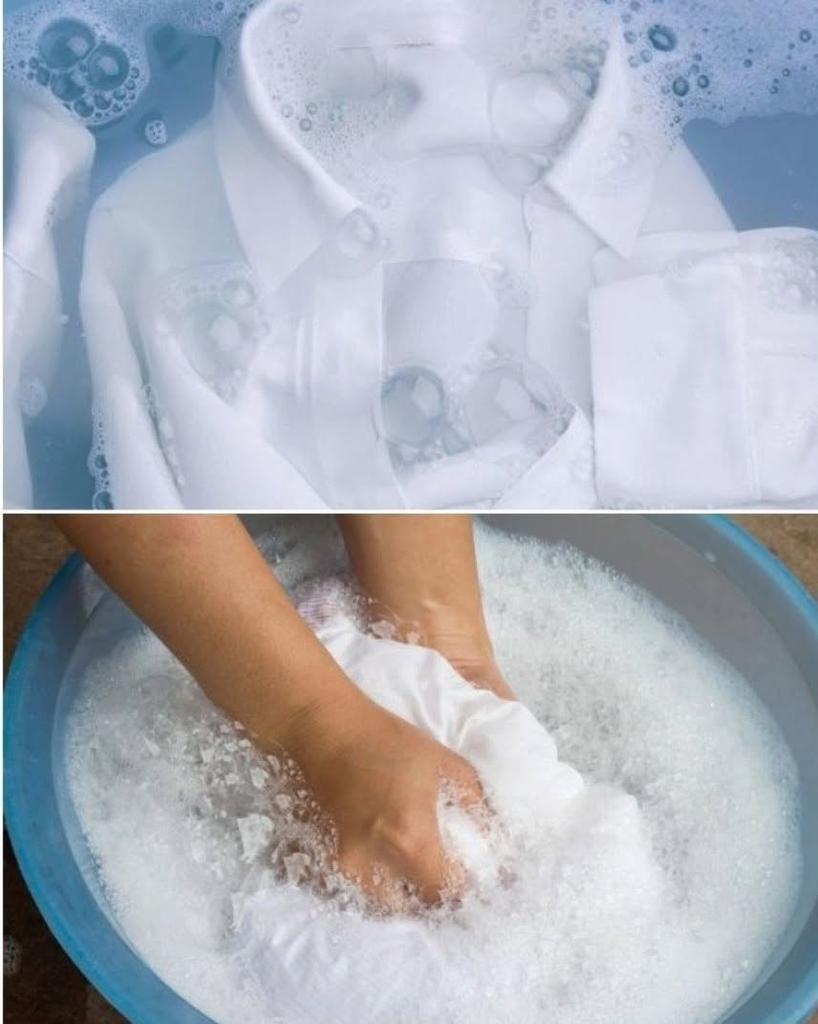
One practical way to improve yellowed white laundry is to soak suitable garments before washing them.
A soak gives an appropriate cleaning solution time to loosen some of the substances trapped in the fabric.
The important point is to choose the correct product rather than relying on an unexplained mixture of household ingredients.