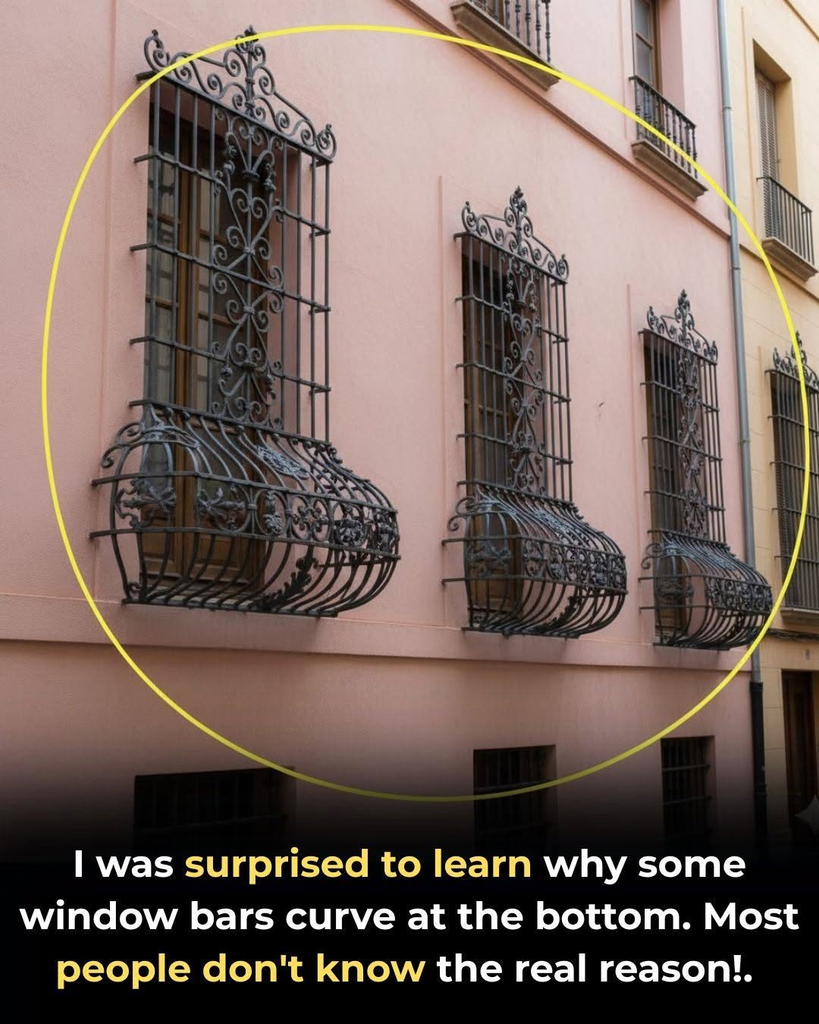
Have you ever walked past an old building and noticed something unusual about its windows? Instead of having ordinary flat iron bars, some windows feature beautiful metalwork that curves outward at the bottom, creating a small rounded structure beneath the window.
These distinctive architectural features are especially common in traditional Spanish buildings, Mediterranean neighborhoods, and historic European homes.
At first glance, they might look like decorative ironwork designed simply to make a building more attractive. However, these unusual window structures have a practical history that goes far beyond decoration.
Known by names such as rejas salientes, bent window grilles, or Juliet-style window guards, depending on their design and location, these structures combine security, functionality, and traditional craftsmanship.
So why do some window bars curve outward at the bottom? The answer reveals an interesting connection between everyday life, architecture, and the way people used their homes centuries ago.
1. The Main Reason: Creating More Space Beyond the Window
One of the most practical reasons for the outward curve is to create additional usable space.
In traditional homes, especially those built close together in narrow streets, interior rooms could be relatively small. Windows were important sources of natural light and fresh air, but ordinary flat window bars limited how people could use the space near them.
By extending the lower portion of the iron grille outward, builders created a small protected area beyond the wall.
This additional space could accommodate flowerpots, decorative plants, or small household items.
In some traditional buildings, the curved structure also allowed residents to place objects near the window without compromising the protective function of the ironwork.
The result was a clever combination of security and practical space.