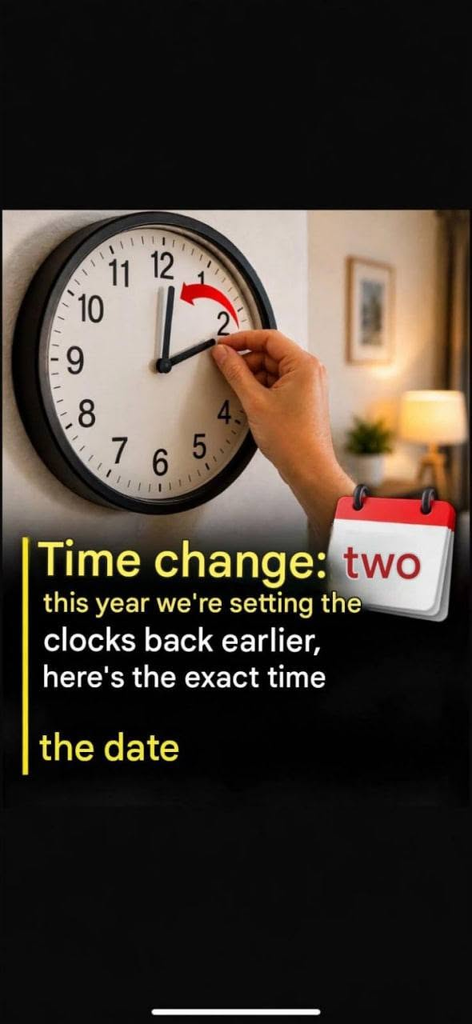
Time Change 2026: When Do Clocks Go Back? Exact Dates and Times Explained
As autumn arrives and daylight hours become shorter, millions of people prepare for one of the most familiar changes of the year: turning their clocks back by one hour.
For some, it means an extra hour of sleep. For others, it signals darker evenings, earlier sunsets, and the beginning of the winter season.
But when exactly do the clocks go back in 2026? Is the date earlier this year? And why do different countries change their clocks on different weekends?
The answer depends on where you live.
In 2026, several countries will end their daylight saving time periods on different dates. The United States, the United Kingdom, and many European countries follow established seasonal schedules, although their exact changeover dates are not identical.
Understanding the dates can help you prepare your schedule, avoid missed appointments, and adjust your sleeping routine.
When Do Clocks Go Back in the United States in 2026?
In the United States, daylight saving time officially ended on Sunday, November 1, 2026.
At 2:00 a.m. local daylight saving time, clocks were turned back one hour to 1:00 a.m. standard time.
This means that the hour between 1:00 a.m. and 2:00 a.m. occurred twice.
People in most participating parts of the country gained an additional hour during the transition.
For example:
1:00 a.m. daylight saving time became 1:00 a.m. standard time.
Sunrise and sunset occurred approximately one hour earlier according to the clock.
Morning daylight became more noticeable earlier.
Evenings became darker sooner.
The change applies to most U.S. states, although Hawaii and most of Arizona do not observe daylight saving time.
When Did the United Kingdom Change Its Clocks in 2026?