A Simple 2-Minute Teeth-Whitening Routine? What Actually Helps Make Teeth Look Brighter
A bright, healthy-looking smile is something many people want, and it is easy to understand why quick teeth-whitening tricks attract so much attention. A photo showing a dramatic difference in tooth color can make a simple home method look almost too good to be true.
But when it comes to whitening your teeth, there is an important distinction between removing surface stains and actually changing the natural color of the tooth. Some household techniques may make teeth appear cleaner temporarily, while other methods can damage enamel or irritate the gums if used incorrectly.
The good news is that you do not need complicated routines to keep your smile looking clean and healthy. A consistent oral-care routine, combined with professionally tested whitening methods when appropriate, is generally a much safer approach.
Why Do Teeth Become Yellow?
Teeth are not naturally pure white.
Healthy teeth can naturally range from very white to slightly yellowish or ivory. The visible color comes from several factors, including the enamel on the outside of the tooth and the dentin underneath it.
Dentin is naturally more yellow than enamel. As enamel becomes thinner over time, more of the underlying dentin can become visible, making teeth appear darker or more yellow.
This means that naturally slightly yellow teeth are not necessarily dirty or unhealthy.
Common causes of tooth discoloration include:
Coffee
Tea
Red wine
Tobacco
Certain strongly colored foods
Poor removal of dental plaque
Aging
Enamel wear
Certain medications
Previous dental injuries
Naturally darker tooth color
Some stains are located mainly on the surface and can be reduced with good cleaning. Others occur inside the tooth and may require professional whitening or other dental treatment.
The Difference Between Cleaning and Whitening
This is one of the most important things to understand.
Cleaning removes plaque, food particles, and some surface stains.
Whitening uses specific agents to lighten the color of teeth.
Brushing your teeth thoroughly can remove material that makes them look dull, but brushing cannot transform naturally colored teeth into an entirely different shade.
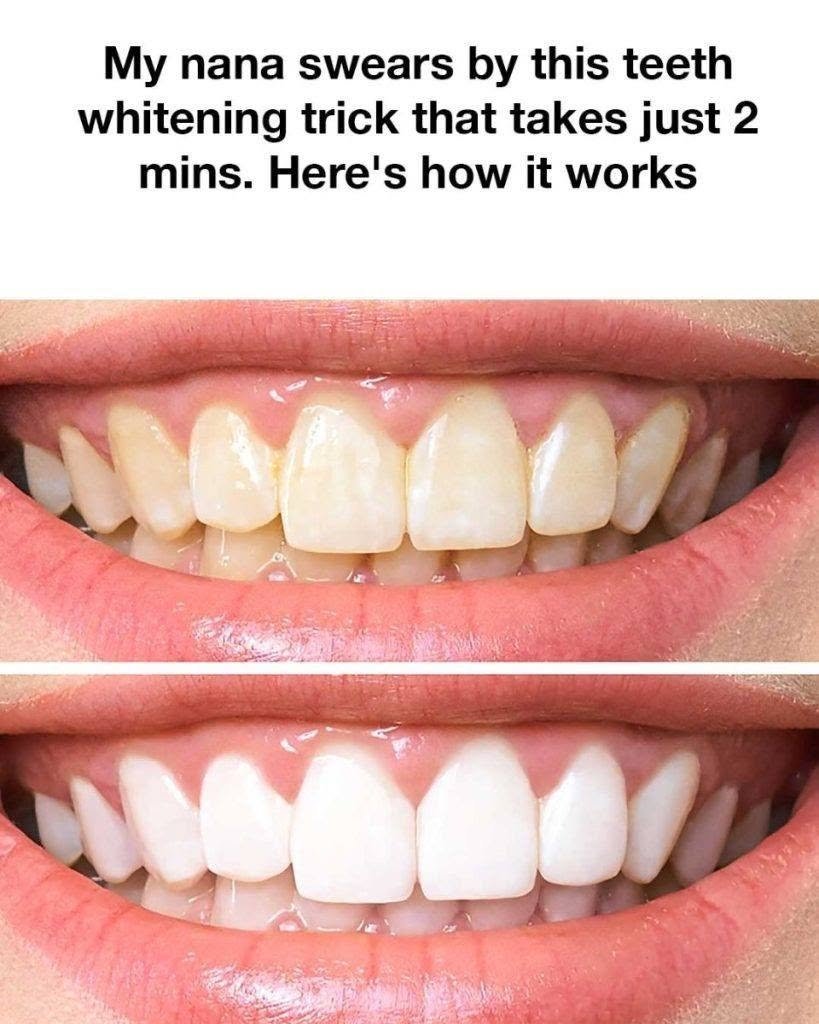
This is why some dramatic “before and after” images should be viewed carefully. Lighting, camera settings, tooth dehydration, editing, and professional dental treatments can all affect how white teeth appear in photographs.
What About a Two-Minute Home Whitening Trick?
The image associated with this topic suggests that a quick household technique can dramatically whiten teeth.
There is no universally proven two-minute kitchen remedy that safely produces professional-level whitening for everyone.
Some popular home methods involve ingredients such as baking soda, lemon juice, vinegar, salt, hydrogen peroxide, or other acidic or abrasive substances.
These methods should not automatically be considered safe simply because the ingredients are common household products.
In particular, acidic substances can soften enamel, while excessive abrasion can wear away the tooth’s protective surface.
Once enamel is significantly damaged, it does not grow back in the same way that skin does.
That is why “stronger” does not necessarily mean “better” when whitening teeth.
Can Baking Soda Make Teeth Look Cleaner?
Baking soda is mildly abrasive and is included in some commercially manufactured toothpastes.
Used appropriately in a dental product, it can help remove certain surface stains and plaque.
However, rubbing concentrated baking soda directly onto your teeth repeatedly is not the same thing as using a properly formulated toothpaste.
Aggressive brushing can contribute to enamel wear and gum irritation.
If you like the idea of baking soda for stain removal, a toothpaste specifically formulated with fluoride and baking soda is a more controlled approach than repeatedly scrubbing your teeth with dry household powder.
Why Lemon Juice Is Not a Good Whitening Shortcut
Lemon juice is sometimes promoted as a natural whitening ingredient because it is acidic.
However, acidity is precisely the reason it can be problematic.
Repeated exposure to acidic substances can contribute to dental erosion. This gradually removes minerals from the tooth surface and can make teeth more sensitive.
Ironically, enamel erosion can eventually make teeth appear more yellow, because thinner enamel allows more of the naturally yellow dentin to show through.
So a method that appears to whiten teeth temporarily could potentially create problems when used repeatedly.
What About Hydrogen Peroxide?
Hydrogen peroxide is used as a whitening ingredient in many professionally developed dental whitening products.
However, concentration and formulation matter.
Using concentrated hydrogen peroxide directly in the mouth without appropriate guidance is not equivalent to using a tested whitening product.
Too much exposure can irritate the gums and soft tissues and may increase tooth sensitivity.
People with cavities, cracked teeth, gum disease, exposed roots, or significant sensitivity should be especially careful about whitening treatments.
The Safest Everyday Way to Keep Teeth Looking Bright
The most effective foundation is surprisingly simple.
Brush twice a day
Use a soft-bristled toothbrush and fluoride toothpaste.
Brush gently for approximately two minutes rather than pressing extremely hard.
Harder brushing does not necessarily clean teeth better. Excessive pressure can irritate the gums and contribute to wear around the teeth.
Clean between your teeth
A toothbrush cannot effectively clean every surface between teeth.
Floss or another appropriate interdental cleaning method can help remove plaque and food particles from these areas.
This can also help reduce the buildup that contributes to an unattractive or dull appearance.
Keep up with dental cleanings
Professional dental cleaning can remove hardened deposits and stains that ordinary brushing cannot completely eliminate.
If your teeth suddenly look much darker because of accumulated tartar or staining, a professional cleaning may make a noticeable difference without any bleaching at all.
Foods and Drinks That Can Stain Teeth
Some foods and beverages contain strong pigments that can gradually stain the tooth surface.
Common examples include:
Coffee
Black tea
Red wine
Cola
Dark berries
Tomato-based sauces
Certain spices
Tobacco products
You do not necessarily have to eliminate all of these foods.
Instead, moderation and good oral hygiene are important.
After consuming strongly colored or acidic foods and drinks, rinsing your mouth with water can help reduce prolonged exposure.
However, after acidic foods or drinks, it is generally better not to brush immediately. Waiting a little while allows saliva to help restore the mouth’s normal environment.
Water Can Help Your Smile
Water is one of the simplest drinks for maintaining oral health.
It helps rinse away food particles and supports saliva production.
Saliva is important because it helps protect teeth from acids and contributes to the natural repair of early mineral loss.
Replacing some sugary beverages with water can therefore benefit both dental health and general health.
Why Saliva Matters
Your mouth is constantly working to protect your teeth.
Saliva helps neutralize acids, wash away food particles, and provide minerals involved in maintaining tooth surfaces.
Dry mouth can increase the risk of cavities and may make the mouth feel unpleasant.
Some medications can cause dry mouth, and certain medical conditions can also affect saliva production.
If you frequently experience dry mouth, mention it to a dental or healthcare professional rather than simply trying to cover the problem with breath fresheners.