I Didn’t Believe This Floor Trick Until I Tried It… Now I’ll Never Go Back
Cleaning the floor can feel like a never-ending job. You mop, the floor looks beautiful for a while, and then fingerprints, footprints, dust, cooking residue, and everyday dirt begin appearing again.
That is why simple cleaning tricks spread so quickly online.
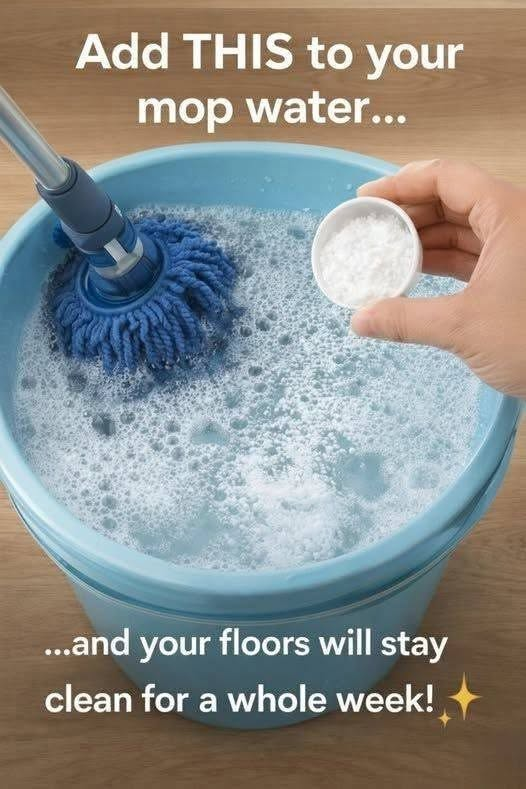
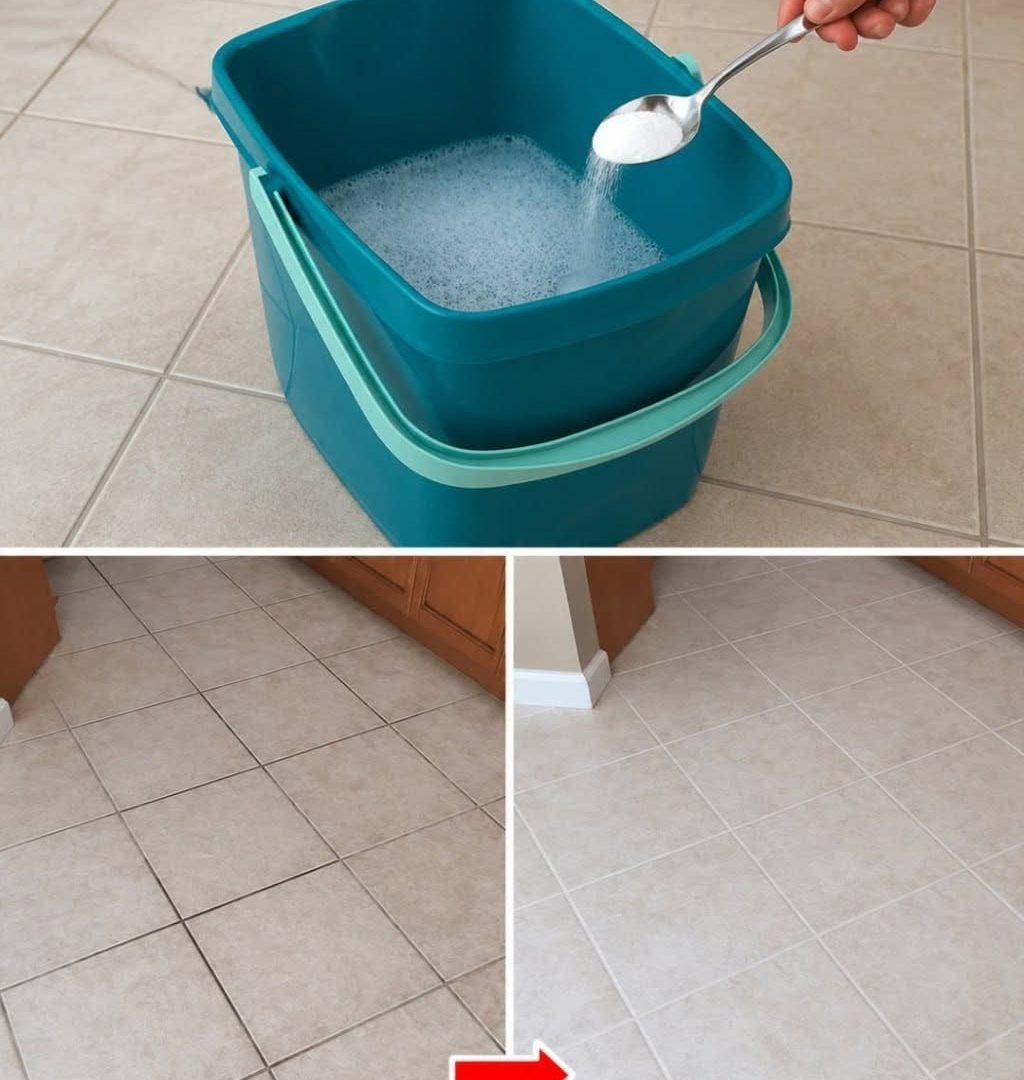
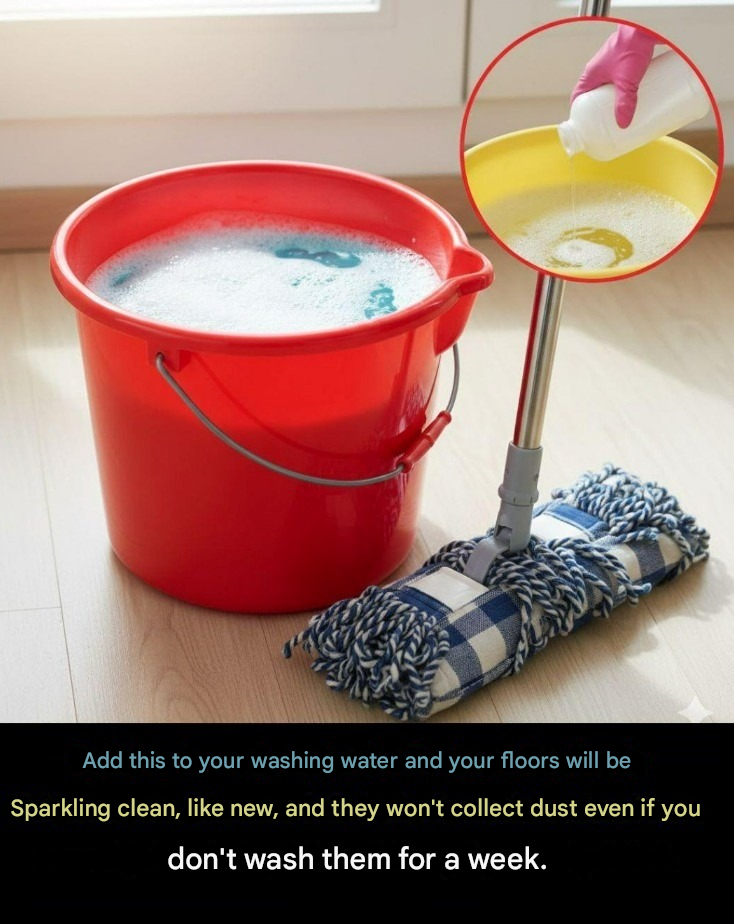
One popular idea involves adding a small amount of baking soda to mop water. The image shows white powder being added to a bucket of soapy water, accompanied by the claim that this can keep floors clean for an entire week.
Baking soda can certainly be useful around the home, but the claim that adding it to mop water will keep every floor clean for a whole week is too broad.
The result depends on the type of floor, the amount of dirt present, the cleaning product being used, and how the floor is maintained afterward.
Still, baking soda can have a useful role in household cleaning when it is used appropriately.
Why Do People Add Baking Soda to Mop Water?
Baking soda, also known as sodium bicarbonate, is a mild alkaline powder commonly used for cooking, deodorizing, and household cleaning.
It can help with certain types of dirt and odors.
When used in a cleaning solution, baking soda may help loosen some residues and neutralize unpleasant smells. It can also provide a very mild abrasive effect when used as a paste.
That doesn’t make it a powerful disinfectant or a magical floor treatment.
Its usefulness comes mainly from its chemical properties and mild cleaning action.
Can Baking Soda Make Floors Stay Clean Longer?
Not literally in the way the viral image suggests.
Adding baking soda to mop water doesn’t create a protective coating that prevents dirt from landing on the floor.
Dust will still settle.
Shoes will still bring in dirt.
Pets may leave marks.
Food and drink can still spill.
And high-traffic areas will naturally become dirty faster.
What baking soda may do is help remove certain residues and odors during cleaning, which can make a floor feel cleaner and fresher.
That’s very different from guaranteeing that the floor will remain clean for seven days.
A Simple Baking Soda Floor-Cleaning Method
If baking soda is appropriate for your particular floor, a simple approach is better than using a large amount.
Ingredients
A bucket of warm water
A small amount of baking soda
A small amount of a suitable floor cleaner, if needed
A clean mop
The exact amount should depend on the floor and the cleaning product.
You generally don’t need to turn the bucket into a thick, heavily concentrated mixture.
More baking soda does not necessarily mean a cleaner floor.
In fact, too much powder can leave a white residue behind.
Step 1: Remove Loose Dirt First
Before mopping, sweep or vacuum the floor.
This step is often skipped, but it makes a major difference.
Dust, sand, hair, crumbs, and other loose debris can act like tiny abrasives when dragged around by a wet mop.
Removing them first means your mop can concentrate on the dirt that actually needs wet cleaning.
For hard floors, vacuuming or sweeping regularly can also reduce the amount of dirt that accumulates between deeper cleanings.
Step 2: Prepare the Solution
Fill a bucket with warm water.
Add only a small amount of baking soda if the flooring manufacturer allows it.
If you are also using a commercial floor cleaner, follow the cleaner’s label rather than assuming that adding extra ingredients will improve it.
More ingredients do not automatically produce better cleaning.
In some cases, combining products can change their performance or leave unwanted residue.
Step 3: Mop With a Well-Wrung Mop
One of the most important floor-cleaning techniques is using the correct amount of water.
A mop that is soaking wet can leave excessive moisture behind.
That’s particularly problematic for flooring that doesn’t tolerate water well.
Use a damp, well-wrung mop rather than flooding the floor.
Work in manageable sections and rinse the mop regularly.
Step 4: Pay Attention to High-Traffic Areas
Not every part of the floor gets equally dirty.
Areas near entrances, kitchens, dining tables, bathrooms, and hallways usually accumulate more dirt.
Spend more time on those areas instead of repeatedly soaking the entire floor.
This can make cleaning faster and more effective.
Step 5: Remove Residue
If the floor looks cloudy or feels sticky after cleaning, there may be too much product residue.
In that case, a clean-water pass may be helpful for a compatible sealed hard floor.
The goal is to remove dirt rather than replace it with a layer of cleaning product.
A floor that feels slightly sticky after mopping is often a sign that too much cleaner was used or that the product wasn’t properly rinsed.
Baking Soda Is Not Suitable for Every Floor
This is one of the most important points missing from many viral cleaning recipes.
“Natural” does not automatically mean “safe for every surface.”
Different flooring materials have different requirements.
Ceramic and Porcelain Tile
Many glazed ceramic and porcelain tile surfaces are relatively durable.
A properly diluted cleaning solution may be suitable for routine cleaning.
However, grout can be more sensitive to certain cleaning practices, particularly if it is old, porous, damaged, or improperly sealed.
Avoid aggressive scrubbing simply because baking soda is mildly abrasive.
Vinyl Flooring
Vinyl can usually be cleaned with mild, manufacturer-approved solutions.
Avoid excessive water and abrasive scrubbing.
If you use baking soda, use it cautiously and don’t assume that a stronger concentration will produce a better result.
Laminate Flooring
Laminate deserves extra caution.
Excess moisture can penetrate seams and potentially damage the underlying material.
Don’t soak laminate flooring.
Use a well-wrung mop and follow the manufacturer’s cleaning instructions.
Hardwood Flooring
Hardwood requires even more care.
Finished hardwood can be sensitive to excessive moisture and inappropriate cleaning products.
Don’t automatically use a homemade baking soda mixture on hardwood simply because it works on another type of floor.
If the flooring manufacturer recommends a specific cleaner, follow those instructions.
Unsealed Stone
Natural stone such as certain types of marble, limestone, and other porous materials requires special care.
Some cleaning substances can damage or dull stone surfaces.
Always check the manufacturer’s recommendations before experimenting with household powders.