I Ignored My Sister’s Cryptic Airport Note and Boarded the Plane—Ten Minutes Later, I Saw the Black Square and Realized My Life Was Over
The dramatic headline attached to this photograph sounds like the beginning of a thriller, but the image itself tells a very different story.
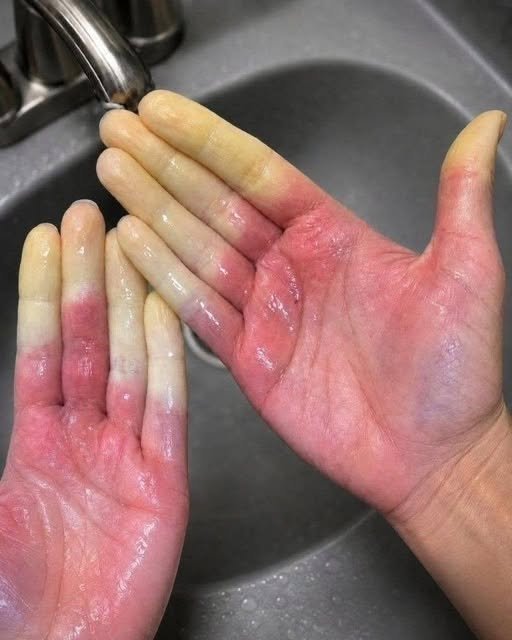
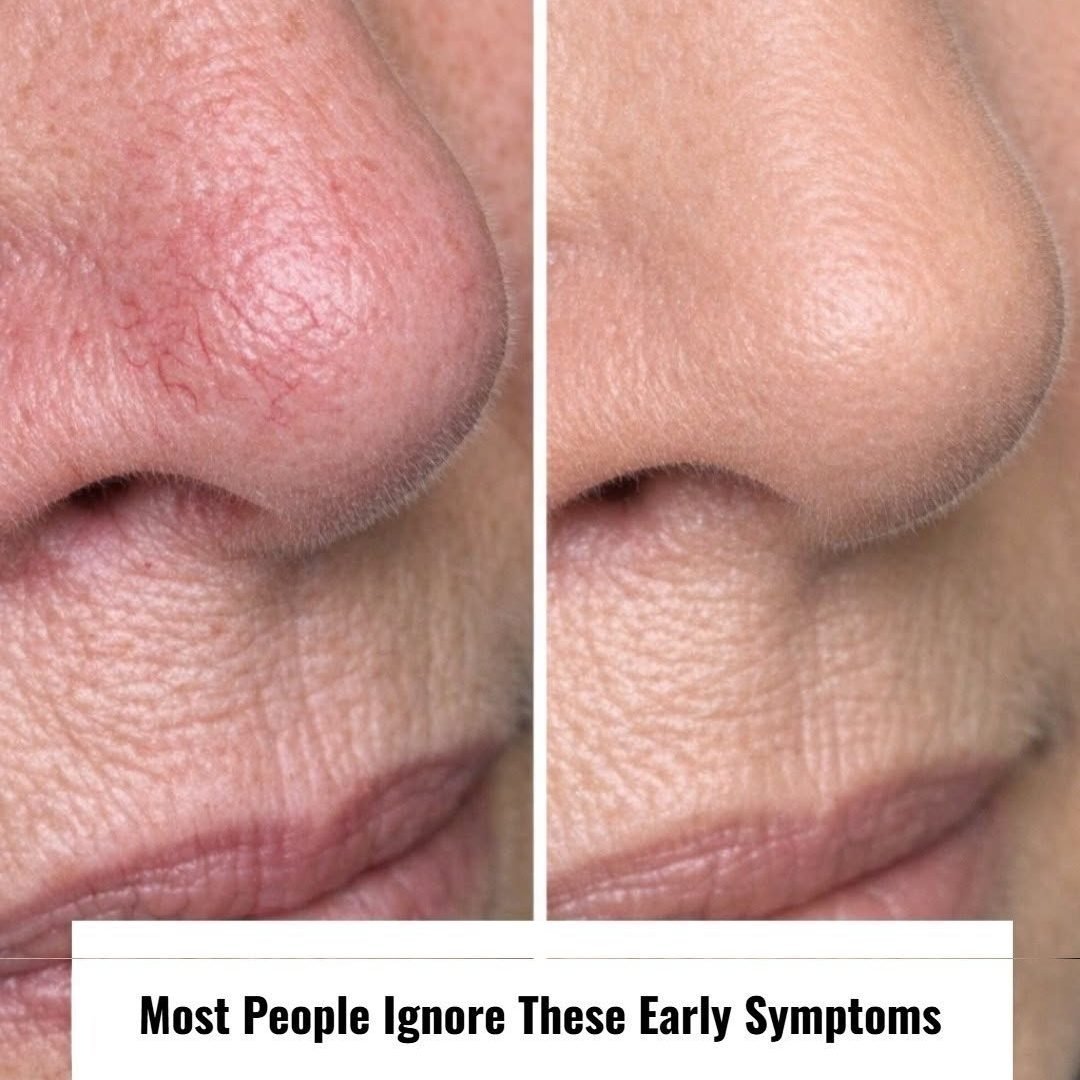
It shows a person’s hands with areas of intense redness and pale, swollen-looking skin, particularly across the fingers and palms. The appearance is consistent with a significant skin injury such as a burn or chemical irritation, but a photograph alone cannot determine exactly what caused it.
The “black square” mentioned in the headline is not visible in the photograph, and there is no reliable way to conclude from this image that the person was exposed to something dangerous at an airport or that a particular event occurred.
Still, the photograph provides an opportunity to discuss something important: what can cause dramatic changes in the skin of the hands, how to recognize a potentially serious burn, and what to do immediately after a chemical or thermal injury.
What Does the Photograph Show?
The hands appear markedly red in several areas, while parts of the fingers look unusually pale or lighter than the surrounding skin.
There also appears to be swelling and a glossy appearance, possibly because the skin is wet or because of a topical substance.
Several different injuries can produce similar appearances.
Possible causes include:
Thermal burns
Chemical burns
Irritant contact dermatitis
Severe skin irritation
Exposure to a corrosive substance
Friction or pressure injury
Certain inflammatory skin reactions
It would be unsafe to identify the exact cause simply by looking at the photograph.
The severity of a burn also cannot always be determined from appearance alone.
Why Can Burned Skin Look Red and White at the Same Time?
Burn injuries can affect different layers and areas of skin.
Redness can occur when blood vessels in the skin respond to injury and inflammation.
Pale or white areas may occur for several reasons, depending on the injury. In some deeper burns, the skin can appear white, waxy, pale, or leathery because deeper tissue has been damaged.
However, temporarily pale skin can also result from pressure, water exposure, swelling, or other factors.
That is why the color pattern in a photograph should not be used to determine burn depth.
A medical professional may need to examine the area directly.
Chemical Burns Can Be Particularly Misleading
One important difference between a thermal burn and a chemical burn is that chemical damage can continue after the initial exposure if the substance remains on the skin.
A person may not immediately understand how serious the injury is.
Some chemicals produce intense pain immediately, while others may initially cause surprisingly little discomfort despite causing substantial tissue damage.
Chemical burns can result from exposure to substances such as strong acids, strong alkalis, industrial chemicals, cleaning products, or other corrosive materials.
This is one reason unknown chemicals should never be deliberately tested on the skin.
What Should You Do Immediately After a Chemical Exposure?
If a potentially corrosive chemical gets onto the skin, the priority is to remove the chemical and flush the affected area with plenty of running water.
Contaminated clothing, jewelry, watches, or other items should be removed if they are carrying the substance, provided doing so does not spread the chemical to unaffected skin.
The affected area should generally be rinsed thoroughly rather than attempting to neutralize the chemical with another household substance.
Trying to “cancel out” an acid with a base—or a base with an acid—can create additional heat or chemical reactions and may make the injury worse.
Do not improvise chemical treatments.
If the exposure is significant, the substance is unknown, or the skin has been seriously damaged, urgent medical evaluation is appropriate.