I Unplugged Almost Everything in My House to Save Money on Electricity – Here’s What I Discovered
For years, I never thought twice about leaving household appliances plugged into electrical outlets. The television stayed connected overnight, phone chargers remained in their sockets, the coffee maker was always ready to use, and several kitchen appliances remained plugged in even when nobody was using them.
I assumed that switching something off was enough to stop it from consuming electricity.
However, after noticing how much electricity my household was using, I started wondering whether all those connected appliances were quietly adding to my monthly electricity bill.
My husband had a different opinion. He believed that unplugging appliances after using them could help reduce electricity consumption. At first, I thought the savings would be so small that the extra effort was hardly worthwhile.
Eventually, I decided to try it.
I started unplugging selected appliances whenever they were not needed, paying particular attention to electronics that might continue consuming electricity in standby mode.
What I discovered was interesting: some appliances really do consume electricity even when they appear to be switched off, while others make very little difference.
The experience taught me that saving electricity is not necessarily about unplugging everything. It is about understanding which devices consume power when they are not being used and making smarter choices around the house.
1. The Hidden Electricity Consumption Nobody Notices
One of the first things I learned was that switching off an appliance does not always mean it stops consuming electricity.
Many modern electronic devices have something called standby power consumption.
Standby power is the electricity an appliance uses while it is connected to an outlet but not performing its main function.
You might recognize this situation:
Your television is switched off, but its little red light remains illuminated.
Your microwave is not being used, but its digital clock is still displaying the time.
Your computer is sleeping rather than completely shut down.
Your gaming console remains connected to the internet.
Your printer is switched off but still plugged into the wall.
These appliances may continue drawing small amounts of electricity.
This phenomenon is sometimes called vampire power or phantom electricity because the energy is consumed without people necessarily realizing it.
One device might use very little electricity, but several devices operating in standby mode can add up over time.
Depending on the appliances in a household, standby consumption can represent a noticeable portion of total electricity use.
2. Phone Chargers: Should You Unplug Them After Charging?
Phone chargers are among the easiest devices to overlook.
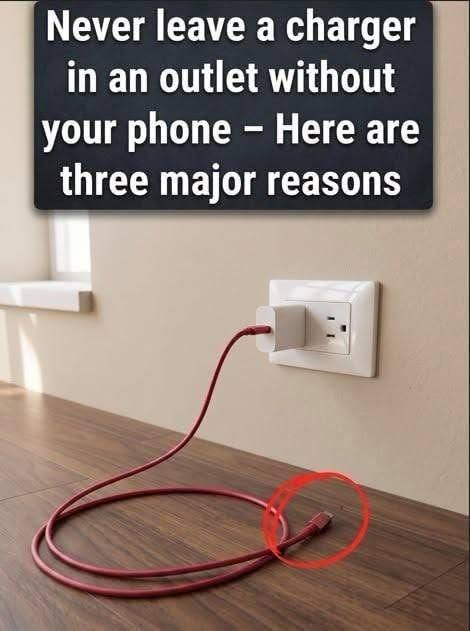
Many people leave their chargers connected to electrical outlets throughout the day, even when their phones are not attached.
Modern chargers generally consume very little electricity when they are not charging a device. However, they can still draw a small amount of power depending on their design.
The actual consumption varies between models.
Unplugging a charger after use is a simple habit that can eliminate this small standby consumption.
There are also practical reasons to avoid leaving unnecessary chargers connected, especially if they are damaged, unusually hot, or poorly manufactured.
My conclusion was simple: removing a charger after charging is easy, takes almost no time, and is a sensible household habit.
3. Television: One of the Devices Worth Checking
Televisions are another common source of standby electricity consumption.
When you turn off your television using the remote control, it may enter standby mode rather than disconnecting completely from the electrical supply.
This allows certain functions to remain available, including:
Receiving commands from the remote control.
Maintaining network connectivity.
Performing scheduled updates.
Supporting quick-start features.
Keeping certain internal settings active.
The amount of electricity consumed depends on the television’s age, model, and settings.
Older televisions and electronics may consume more standby electricity than newer energy-efficient models.
If you do not need remote access, scheduled recordings, or automatic updates, switching off the television completely can reduce unnecessary consumption.
A switched power strip can make this easier, especially when the television is connected to several accessories.
4. Microwave Ovens: Does the Digital Clock Consume Electricity?