Only Young Eyes? The Hidden Face Puzzle That Has Everyone Looking Twice
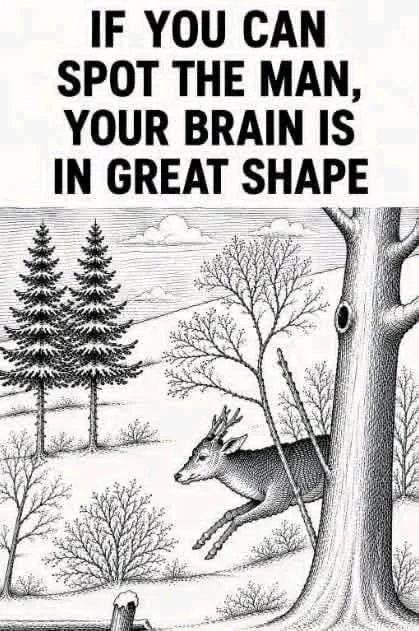
Move your eyes away from the center of the picture and examine the entire illustration.
You can also look at the image from a slightly greater distance. This sometimes makes larger shapes easier to recognize because individual details become less distracting.
Why Are Hidden-Face Puzzles So Challenging?
These puzzles rely on a visual phenomenon called pareidolia.
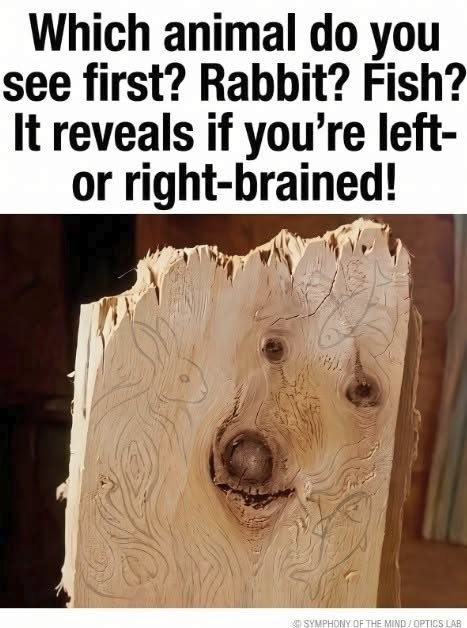
Pareidolia occurs when the brain recognizes familiar patterns, particularly faces, in objects that were not necessarily designed to represent them.
For example, people sometimes see faces in clouds, tree bark, rock formations, or the patterns on household objects.
The brain is especially good at detecting faces, so even a few lines arranged in a particular way may create the impression of eyes, a nose, and a mouth.
However, people do not always notice the same patterns. Lighting, attention, image quality, and individual differences in perception can influence what someone sees.
Does Finding the Hidden Face Mean You Have a Younger Brain?
The image suggests that finding the hidden man proves your brain is still young. However, this is a playful claim rather than a scientifically established test.
There is no reliable evidence that solving a single optical illusion can determine your brain’s age or measure how well your brain is aging.
Visual puzzles can be entertaining and may encourage attention to detail, but failing to solve one does not mean your brain is aging prematurely.
Cognitive health is much more complex than performance on a single picture puzzle.
The Answer: Can You Spot Him?
Look carefully at the illustration, especially the outlines formed by the trees and surrounding details. The challenge is to identify a second face concealed within the existing shapes rather than focusing only on the woman and her carriage.
The hidden image may not be equally obvious to everyone, and the illustration alone does not provide a scientifically measurable test of visual ability.
Did you manage to spot the man’s face, or did you need to look at the picture several times?
Take another look before moving on. Sometimes, once your brain recognizes a possible pattern, it becomes much easier to see it again.