The Simple Washing Machine Trick That Helps Remove Yellow Stains and Unpleasant Odors From Bedding
Different fabrics tolerate different washing temperatures.
Washing heavily soiled bedding at a temperature that is too low for the fabric and detergent may leave some oily residues behind.
On the other hand, using excessively hot water can damage delicate fibers or cause certain stains to become more difficult to remove.
Always check the care label before selecting a washing temperature.
5. Storing Bedding Before It Is Completely Dry
Putting away damp sheets can encourage musty odors.
Moisture trapped in folded bedding provides conditions that can allow microorganisms to grow, particularly when the fabric is stored in a warm, poorly ventilated space.
Make sure your bedding is completely dry before folding and storing it.
If your sheets smell musty immediately after washing, the washing machine itself may also need cleaning.
The Household Ingredient That Can Help: White Vinegar
Distilled white vinegar is commonly used in household cleaning because its acidity can help loosen certain mineral deposits and reduce some odors.
In laundry, it may be useful in particular situations, such as when hard-water deposits or detergent residues contribute to a dull appearance.
However, vinegar is not a universal stain remover.
It does not reliably remove every yellow stain, and it cannot replace a proper laundry detergent.
If you decide to use vinegar, check the washing machine manufacturer’s instructions first. Some manufacturers advise against putting vinegar into the machine because repeated exposure to acids may affect certain rubber components or other materials.
Never mix vinegar with chlorine bleach. The combination can release dangerous chlorine gas.
For routine laundry, a suitable detergent and an appropriate washing cycle are generally the best starting points.
Baking Soda: Is It Useful for Laundry?
Baking soda is another common household ingredient.
It can help with some household cleaning tasks and may be useful for addressing certain laundry odors.
However, it should not be treated as a guaranteed solution for stubborn yellow stains.
If you want to try baking soda, check the care instructions for your bedding and your washing machine’s manual first.
Avoid adding large quantities of household ingredients to the washing machine without knowing whether they are compatible with the appliance and detergent.
It is also important to distinguish baking soda from washing soda. They are different substances and should not be used interchangeably without understanding their properties.
For most ordinary laundry, using the correct amount of detergent is more important than adding several extra ingredients.
How to Wash Yellowed Bedding More Effectively
You can improve the cleanliness and freshness of your bedding by following a few simple steps.
Step 1: Separate White and Colored Bedding
Wash white bedding separately from strongly colored fabrics.
This helps reduce the risk of dye transfer, which can make white sheets look dull or discolored.
If you have particularly delicate or brightly colored bedding, follow its individual care instructions.
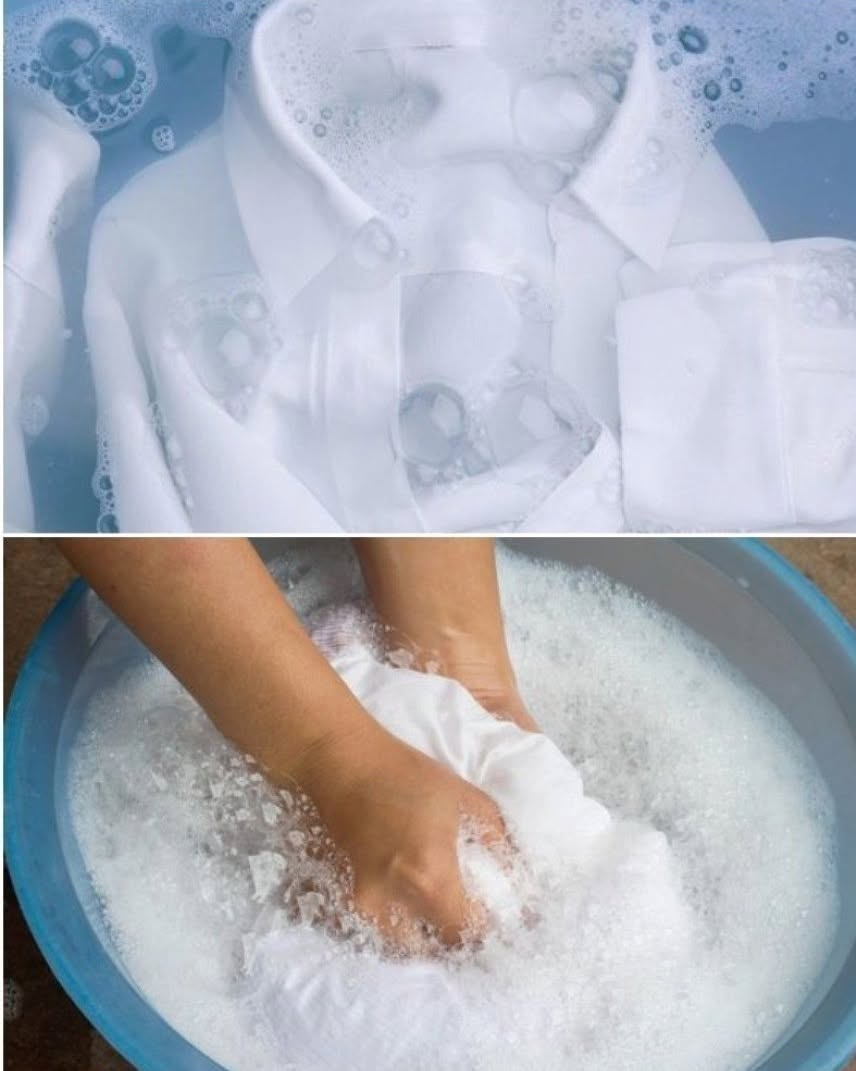
Step 2: Treat Visible Stains Before Washing
Pretreating a stain can make it easier to remove during the washing cycle.
Apply a small amount of suitable liquid laundry detergent directly to the affected area, following the product instructions.
Gently work it into the fabric without scrubbing aggressively.
Allow it to sit for the recommended time before washing.
For older stains, you may need to repeat the process rather than increasing the amount of detergent.
Always test stain-treatment products on an inconspicuous area when appropriate.
Step 3: Choose the Correct Water Temperature
Check the bedding label.
Cotton sheets may tolerate warmer washing temperatures than delicate fabrics, but the correct temperature depends on the specific material and manufacturer instructions.
Using the warmest temperature permitted by the care label can help with certain oily residues, while cooler water may be more appropriate for delicate fabrics or specific stains.
Do not assume that the hottest possible setting will always produce the best result.
Step 4: Measure Your Detergent
Follow the detergent manufacturer’s instructions.
The appropriate amount depends on factors such as the size of the load, the detergent’s concentration, and the hardness of your water.
Too little detergent may not clean heavily soiled bedding effectively.
Too much detergent can leave residues and make rinsing more difficult.
Finding the correct amount is often more effective than adding multiple cleaning ingredients.
Step 5: Avoid Overloading the Washing Machine
Bedding needs enough space to move freely through the wash.
Overloading the machine can prevent water and detergent from circulating properly, making it harder to clean the fabric thoroughly.
If you are washing bulky blankets or large bedsheets, consider washing them separately.
A smaller, properly loaded wash may clean more effectively than a crowded machine.
Step 6: Use an Extra Rinse When Necessary
If your bedding feels soapy after washing or your machine tends to leave detergent residue, an additional rinse may help.
This can be particularly useful when washing bulky bedding or when the water conditions make rinsing difficult.
However, an extra rinse is not a substitute for using the correct amount of detergent.
Step 7: Dry Everything Thoroughly
Once the wash is finished, remove the bedding promptly.
Dry it according to the care label, using a suitable dryer setting or allowing it to air-dry in a well-ventilated area.
Avoid folding or storing bedding while it is still damp.
If you use a dryer, make sure the bedding is fully dry before putting it away.
What About Hydrogen Peroxide for Yellow Stains?
Some laundry products contain oxygen-based bleaching ingredients, and certain stain-removal products use hydrogen peroxide.
These products may help with some organic stains and discoloration on suitable fabrics.
However, they are not appropriate for every material or every stain.
Before using a whitening product, check whether it is designed for laundry and whether it is safe for your bedding.
Follow the label carefully.
Never mix hydrogen peroxide with vinegar, chlorine bleach, or other cleaning products in an attempt to create a stronger solution. Mixing cleaning chemicals can produce hazardous reactions or irritating substances.
If a stain persists, repeat an appropriate treatment rather than combining chemicals at random.