The Vintage Chicken and Onion Recipe My Mother-in-Law Made Every August Since 1971
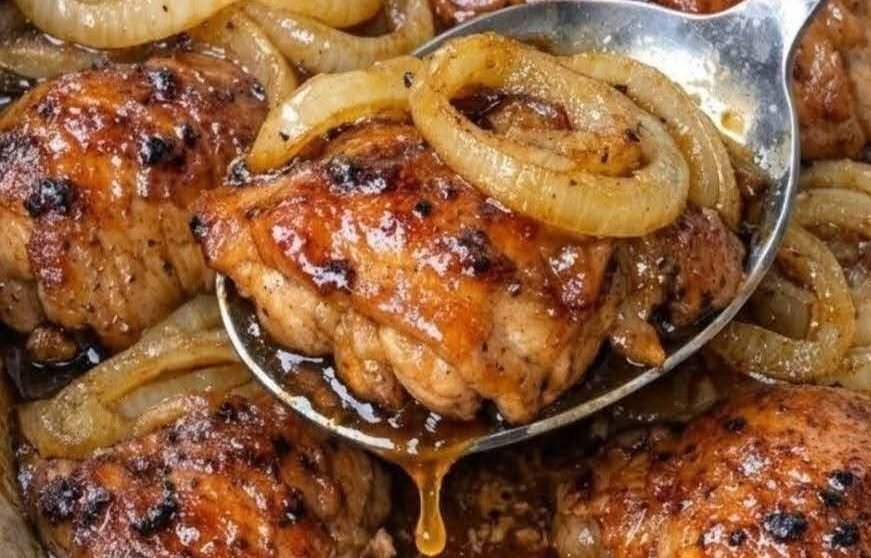
The photograph shows chicken coated in a dark, shiny sauce rather than a thick, creamy gravy.
Achieving that appearance is largely about how the ingredients are cooked.
First, brown the chicken properly. The caramelized surface contributes flavor and color.
Second, allow the onions to soften and develop a golden color. Pale, barely cooked onions will produce a milder sauce.
Third, use enough broth to loosen the browned bits from the skillet without making the sauce excessively watery.
Finally, simmer the sauce uncovered for a few minutes at the end if it needs to concentrate.
The small amount of butter helps give the sauce a smooth appearance.
For an especially glossy finish, remove the pan from the heat and swirl in a small piece of cold butter. This technique can enrich the sauce without requiring cream.
Avoid boiling the sauce aggressively after adding the finishing butter, as excessive heat can cause the emulsion to separate.
The goal is a sauce that lightly coats the chicken and onions while remaining easy to spoon over the accompanying side dish.
What to Serve With Chicken and Onions
One of the advantages of this recipe is that its savory sauce pairs well with many everyday side dishes.
Creamy Mashed Potatoes
Mashed potatoes are a natural choice because they absorb the onion sauce beautifully.
Boil peeled potatoes until tender, drain them thoroughly, and mash them with butter, warm milk, salt, and pepper.
Spoon the chicken sauce over the potatoes just before serving.
The combination is particularly comforting on cool evenings.
Steamed Rice
Plain white rice, brown rice, or long-grain rice provides a simple base for the chicken and sauce.
The rice absorbs the savory juices without competing with the flavors of the onions.
For extra flavor, cook the rice in part broth and part water, adjusting the salt accordingly.
Roasted Vegetables
Roasted carrots, green beans, broccoli, or Brussels sprouts provide color and texture.
Toss the vegetables with a little oil, season them lightly, and roast until tender.
Their slightly sweet or earthy flavors complement the caramelized onions.
Crusty Bread
A loaf of crusty bread is useful for soaking up every last bit of sauce.
Choose a bread with a firm crust and a soft interior.
Warm it briefly before serving for an especially inviting meal.
Buttered Egg Noodles
Egg noodles are another excellent option.
Their soft texture works well with the glossy onion sauce, and they can be prepared while the chicken finishes cooking.
A little chopped parsley adds freshness.
Five Tips for Making This Recipe Taste Even Better
1. Do Not Skip the Browning
The golden crust on the chicken contributes much of the dish’s flavor.
If the pieces are crowded together, they may release moisture and steam rather than brown properly.
Work in batches when necessary.
2. Choose the Right Onions
Yellow onions are an excellent all-purpose choice because they develop a balanced sweetness as they cook.
White onions can also work, while red onions may produce a slightly different flavor and color.
Slice the onions evenly so they cook at approximately the same rate.
3. Keep the Heat Under Control
High heat can burn garlic and onions before they have a chance to soften properly.
Once the chicken has been browned, reduce the heat before cooking the onions.
A gentle simmer is preferable to vigorous boiling when finishing the chicken in the sauce.
4. Adjust the Sauce to Your Preference
For a thinner sauce, use additional broth.
For a thicker sauce, simmer it uncovered or use the optional flour.
For a richer finish, add a small amount of butter.
For a brighter flavor, add a little lemon juice or vinegar at the end.
Small adjustments can make the recipe suit your family’s preferences without changing its basic character.
5. Let the Chicken Rest Briefly
Allowing the cooked chicken to rest for a few minutes before serving helps the juices settle.
Keep the chicken covered loosely so it stays warm.
Avoid leaving cooked chicken at room temperature for extended periods.
Easy Variations on the Traditional Recipe
Although the basic chicken-and-onion combination is delicious on its own, a few variations can add variety.
Garlic butter chicken: Increase the garlic slightly and finish the sauce with an additional small piece of butter.
Herb chicken: Add fresh thyme or rosemary toward the end of cooking for a more pronounced herbal flavor.
Mushroom and onion chicken: Add sliced mushrooms after the onions have softened. Cook until the mushrooms release their moisture and begin to brown before adding the broth.
Lemon chicken: Add a little lemon juice and freshly grated lemon zest at the end for a brighter finish.
Smoky paprika chicken: Replace some of the regular paprika with smoked paprika to introduce a subtle smoky note.
Creamy onion chicken: Stir a small amount of cream into the finished sauce, keeping the heat low. This creates a richer variation, although it will differ from the darker sauce shown in the photograph.
Each version keeps the original combination of browned chicken, softened onions, and flavorful pan juices at the center of the dish.
How to Store and Reheat Leftovers
If you have leftovers, allow them to cool slightly and transfer them to shallow, airtight containers.
Refrigerate the chicken within two hours of cooking, or within one hour if the surrounding temperature exceeds 90°F (32°C).
Refrigerated cooked chicken should generally be eaten within three to four days.
To reheat, place the chicken and sauce in a covered skillet over medium-low heat.
Add a small splash of broth or water if the sauce has thickened during refrigeration.
Heat until the chicken reaches an internal temperature of 165°F (74°C).
You can also reheat individual portions in the microwave using a microwave-safe container. Cover the food, stir or rearrange it as appropriate, and check that it is heated thoroughly.
For longer storage, freeze the chicken with its sauce in a suitable airtight container. The texture of the onions may soften further after thawing, but the dish can still be enjoyable.
Thaw frozen leftovers in the refrigerator and reheat them thoroughly.
A Family Tradition Worth Keeping
There is something special about a recipe that returns to the family table year after year.
The ingredients may be simple. The instructions may fit on a small magazine clipping. The dish may not require expensive equipment or unusual techniques.
Yet the memories associated with it can make it more meaningful than a complicated restaurant meal.
For the family in this story, August became connected with the familiar combination of browned chicken, tender onions, and savory sauce. The recipe was repeated so often that preparing it became part of the family’s rhythm.
When the original cook could no longer make the dish, passing it on offered a way to preserve that connection.
And that is one of the most rewarding things about home cooking: a recipe does not have to remain exactly the same to retain its meaning. Each person who prepares it adds a little of their own experience while carrying forward the memory of the person who came before.
This recreated chicken and onion recipe offers a practical way to bring that kind of meal to your own table.
Serve it with mashed potatoes, rice, or warm bread, gather everyone around the table, and enjoy the sort of comforting dinner that never really goes out of style.
Sometimes, the most treasured family recipes are not the fanciest ones. They are the dishes we remember, the meals we repeat, and the traditions we choose to keep alive.