The Forgotten Utility: The Vintage Button Hook and Shoe Fastener
Before zippers, Velcro, elastic closures, and modern slip-on shoes became everyday conveniences, getting dressed often required a surprising number of small tools.
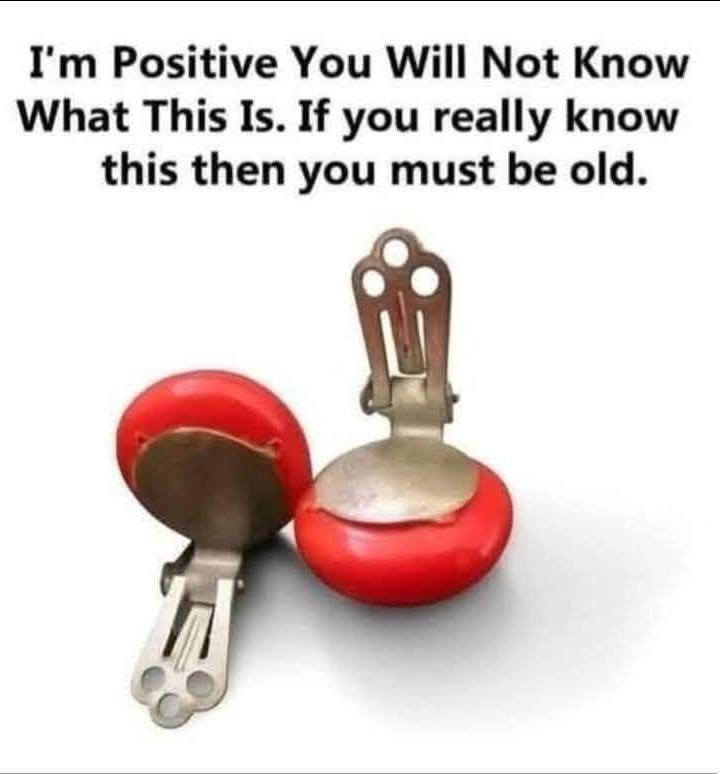
The object shown in the image is a wonderful example of one of those forgotten household accessories: a vintage button hook and shoe fastener.
To someone unfamiliar with older clothing, it can look like a strange little piece of metal attached to a colorful handle. But this simple tool once served a very practical purpose. It helped people fasten clothing and footwear that used small buttons, hooks, and other difficult-to-reach closures.
Today, most people can get dressed without needing a special tool for their shoes or clothing. But there was a time when a button hook could be an everyday necessity, particularly when fashionable shoes and garments contained rows of tiny buttons.
What Is a Button Hook?
A button hook is a small handheld tool designed to help a person fasten buttons.
Instead of trying to push a fingertip through a tiny buttonhole while holding a small button, the user could place the hook around the button and pull it through the opening.
The basic design was remarkably simple.
One end generally had a small hook or gripping mechanism, while the other end served as a handle.
The tool allowed the user to manipulate a button without having to use the fingers directly.
This was particularly useful with small buttons that were difficult to grasp.
Some vintage examples were made specifically for clothing, while others were designed for shoes and boots.
Why Did People Need Such a Tool?
Modern clothing has made dressing considerably easier.
We now commonly use:
Zippers
Snap buttons
Velcro
Elastic
Large buttons
Slip-on designs
Quick-release fasteners
Older clothing often required more effort.
Certain shoes, boots, gloves, dresses, shirts, and other garments could contain many tiny buttons.
Imagine putting on a pair of tall boots with a long row of small buttons.
Each button might need to be individually fastened.
Trying to accomplish that with cold fingers or while rushing to get dressed could be frustrating.
A button hook solved the problem.
The tool gave the user something firm to grip and a small hook capable of catching the button.
Instead of struggling with the button using the fingertips, the person could use the tool to guide it through the buttonhole.
Buttoned Shoes Were Once Fashionable
One of the most interesting parts of this history is footwear.
Modern shoes are overwhelmingly dominated by laces, zippers, buckles, elastic, and slip-on designs.
But earlier footwear could look very different.
High-button shoes and boots became fashionable during various periods, particularly in the late nineteenth and early twentieth centuries.
Some designs featured numerous small buttons running up the side of the shoe or boot.
The result could be elegant, but fastening all those buttons was not especially convenient.
A button hook made the process much easier.
A person could insert the hook around the button, pull it toward the buttonhole, and guide the button through.
The tool essentially transformed a fiddly task into a manageable one.
The Tool Could Also Help With Hooks and Other Fasteners
Although the name “button hook” is commonly associated with buttons, similar tools could have multiple functions.
Some versions were designed with features that helped manipulate shoe fasteners, hooks, laces, or other small closures.
That is why antique examples can look slightly different from one another.
Some have a simple hook.
Others have a more elaborate metal mechanism.
Some were incorporated into combination tools designed to serve more than one purpose.
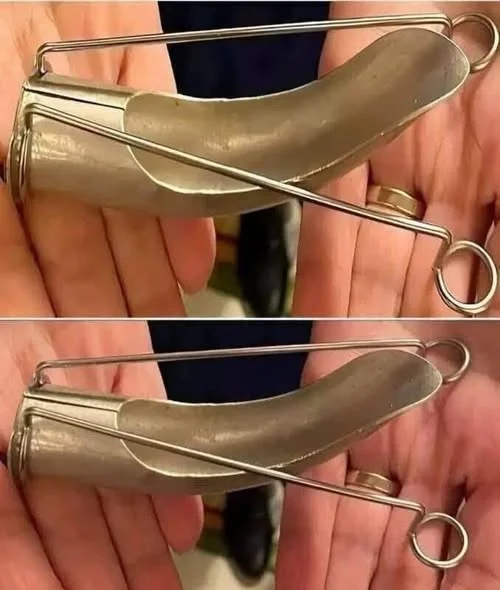
The object in the photograph appears to be one of the decorative vintage styles that combined a small handle with a metal fastening mechanism.
Why Are Some Handles So Colorful?
The red material visible on the pictured examples is part of the handle.
Vintage household tools were not always purely utilitarian.
Manufacturers sometimes made small personal accessories attractive as well as functional.
Handles could be made from materials such as:
Bakelite
Celluloid
Hard rubber
Wood
Bone
Plastic
Metal
Other early synthetic materials
The exact material depends on the age and manufacturer.
Bright colors were particularly popular in many vintage household accessories because they made small objects easier to see and also made them more visually appealing.
Red, black, ivory, brown, green, and other colors can be found in vintage personal-care and clothing accessories.
A Small Tool With a Big Purpose
One of the fascinating things about historical objects like this is their size.
The tool is small enough to fit comfortably in a pocket, sewing box, handbag, or dresser drawer.
Yet it solved a genuine everyday problem.
This was a period when people often owned specialized tools for tasks that today are handled by a single modern object.
A sewing basket might contain:
Needles
Thread
Thimbles
Scissors
Tape measures
Buttons
Hooks
Fasteners
Button tools
Garment brushes
Shoe accessories
Today, many of those objects have disappeared from ordinary households.
The button hook is therefore more than an old piece of metal.
It represents a completely different approach to everyday life.
How Did You Use a Button Hook?
The basic principle is surprisingly easy.
Suppose a garment has a small button attached to one side and a buttonhole on the other.
Instead of trying to push the button through with your fingers, the user places the hook around the button.
The hook then catches the button.
The tool is pulled through the buttonhole, bringing the button with it.
Once the button has passed through the opening, the hook can be released.
The process is particularly helpful when the button is too small to grip comfortably.
With practice, a person could fasten a series of buttons relatively quickly.
Why This Could Be Useful for Older Adults
Button hooks eventually became more than fashion accessories.
They could also serve as practical dressing aids.
People who had difficulty manipulating small buttons could use a button hook to make dressing easier.
This remains true today.
Modern adaptive dressing tools are still available for people who have limited hand strength, reduced finger mobility, arthritis, or difficulty performing fine motor tasks.
The technology has changed, but the basic concept remains remarkably similar.
A tool provides mechanical assistance so that the person doesn’t have to perform a difficult fine-motor movement with their fingertips.