Try These Hacks When Your Car Key Fob Stops Working: 9 Simple Fixes Every Driver Should Know
Sometimes a key fob works inconsistently because of radio-frequency interference.
Wireless devices and other electronic equipment can interfere with a vehicle’s remote signal under certain circumstances.
The effect depends on the devices involved and the environment.
If your key fob suddenly stops working, try moving it away from your smartphone, wireless accessories, or other electronic equipment.
Then stand near the vehicle and press the button again.
You can also try a different location if the remote fails only in one particular parking area.
For example, if the fob works normally at home but not in a specific parking garage, the surroundings may be contributing to the problem.
Electrical equipment, transmitters, and other sources of radio interference can sometimes affect remote operation.
However, the phone is not always the cause, and there is no guarantee that moving it will solve the issue.
If the fob works reliably elsewhere, mention the location-specific problem to a technician if it continues.
6. Check Whether the Car’s Battery Is Dead
A key fob may be functioning properly even when the vehicle does not respond.
If the car’s 12-volt battery is discharged, the central locking system and other electrical components may not operate normally.
This can make it appear that the key fob has failed.
Look for other signs of a vehicle-battery problem, such as:
Dashboard lights that are unusually dim or do not illuminate.
Interior lights that fail to come on.
Electrical systems that behave inconsistently.
A clicking sound when attempting to start the vehicle.
A starter motor that does not turn over.
These symptoms can have several causes, so they are not definitive proof of a dead battery.
If the vehicle’s electrical systems appear completely unresponsive, try the mechanical key to access the car if necessary and safe to do so.
A battery test or professional inspection can help identify the problem.
If a jump-start is needed, follow the vehicle manufacturer’s instructions and use suitable equipment. Incorrect jump-starting procedures can damage electronic systems or create safety hazards.
For hybrid and electric vehicles, remember that the low-voltage battery is different from the high-voltage traction battery. Follow the specific instructions for the vehicle rather than attempting an improvised repair.
7. Check Whether the Fob Has Been Damaged
Key fobs are small electronic devices that are carried in pockets, bags, and sometimes exposed to rain, spills, or accidental drops.
Although many are designed for everyday use, they are not necessarily waterproof or resistant to every type of impact.
A damaged fob may work intermittently, respond only when pressed in a certain way, or stop functioning completely.
Possible causes include:
Damage from being dropped.
Moisture entering the casing.
Corrosion on electrical contacts.
Worn or damaged buttons.
Cracked circuit boards.
Damage caused by an incorrectly installed battery.
If the fob has been exposed to water, avoid repeatedly pressing its buttons or applying heat from a hair dryer.
Remove the battery only if the design allows safe access and the manufacturer’s guidance supports doing so. Otherwise, have the device inspected.
Do not use an oven, microwave, open flame, or other high-heat method to dry it.
If a button has become stuck or the casing is cracked, a qualified automotive locksmith or technician may be able to repair the fob or determine whether replacement is necessary.
8. Check Whether the Key Needs to Be Re-Synchronized
Some key fobs may lose synchronization with the vehicle after particular events, such as battery replacement or an electronic malfunction.
When this happens, the fob may have power but fail to communicate correctly with the vehicle.
The symptoms can resemble those of a dead battery.
However, re-synchronization procedures vary considerably between manufacturers and models.
Some vehicles have a specific sequence involving the ignition and remote buttons. Others require diagnostic equipment or a professional programming procedure.
Avoid following random button combinations found online, particularly if they are intended for a different vehicle.
An incorrect procedure may not work and could create additional confusion.
Check the owner’s manual for the manufacturer’s instructions. If no straightforward procedure is provided, contact an automotive locksmith or dealership.
If the key is no longer recognized by the vehicle’s immobilizer, the problem may require more than simple re-synchronization.
9. Test the Spare Key Fob
If you have a spare key, testing it can help narrow down the cause of the problem.
Try the spare remote from the same location where the original key failed.
If the spare works normally, the original fob may have a weak battery, damaged electronics, or a synchronization problem.
If neither key works, the issue may involve the vehicle’s battery, central locking system, radio receiver, or environmental interference.
This is not a definitive diagnosis, but it helps separate a problem with one remote from a possible problem with the car.
If the spare key has not been used for a long time, its battery may also be depleted.
Replace batteries according to the manufacturer’s specifications and keep the spare key in a safe place where it can be accessed when needed.
What About the Red Button on the Key Fob?
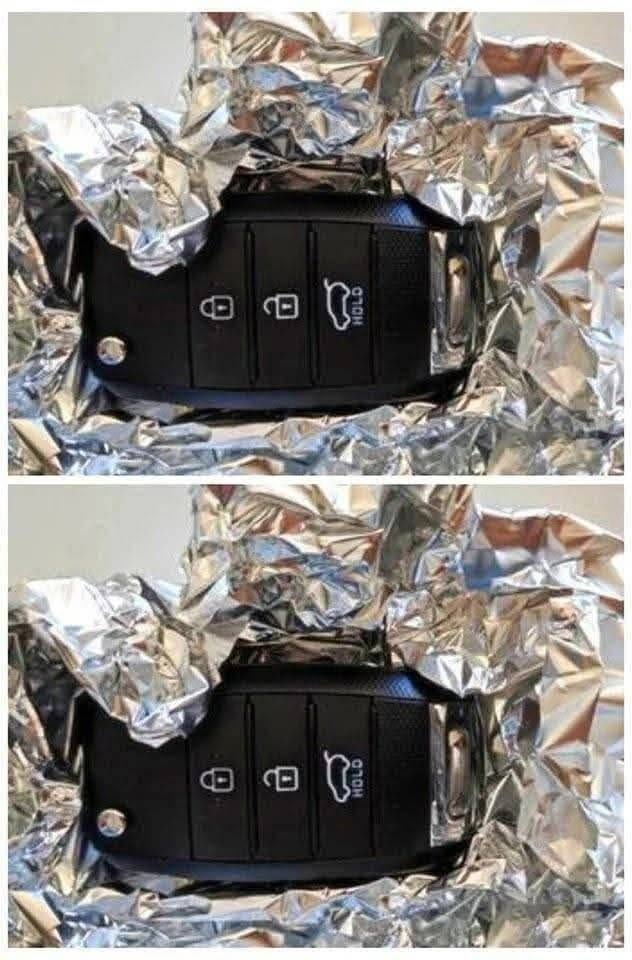
The image shows a remote with lock, unlock, vehicle-access, and red horn-shaped buttons.
On many vehicles, a red button displaying a horn or sound-wave symbol activates the panic alarm.
This feature is generally intended to help attract attention or locate the vehicle in an emergency.
However, the exact function depends on the manufacturer and model.
The red button is not a universal reset button, and pressing it repeatedly will not normally repair a dead battery or restore a damaged remote.
If the panic alarm activates accidentally, use the manufacturer’s instructions to deactivate it.
Do not assume that the third button in the picture has the same function on every vehicle. Similar-looking key fobs can operate differently.
Why You Should Avoid Random Key Fob Tricks
Social media posts sometimes recommend unusual techniques for getting a key fob to work, including holding it against your head or using improvised objects to extend its range.
These tricks are not reliable substitutes for proper troubleshooting.
The key fob’s range depends on its design, battery condition, signal characteristics, and the surrounding environment.
A method that appears to work in one situation may have no meaningful effect in another.
If the remote only works intermittently, the most useful steps are to check the battery, move away from possible interference, test the spare key, and consult the manufacturer’s guidance.
Avoid opening the fob with sharp objects, forcing the door lock, or attempting to bypass the vehicle’s security system.
Modern immobilizers and smart-key systems are designed to prevent unauthorized starting, and attempts to circumvent them can damage the vehicle or compromise its security.
When Should You Call an Automotive Locksmith or Mechanic?