Not everyone feels comfortable using traditional titles.
Some people prefer to use their first and last names without Mr., Mrs., Miss, or Ms.
In that situation, writing your full name is generally acceptable.
For example:
M: Alex Morgan
Modern wedding etiquette increasingly recognizes that guests have different preferences regarding names, titles, and forms of address.
The purpose of the RSVP card is to identify the responding guest, not to make anyone uncomfortable about their personal identity or marital status.
8. Why Is the RSVP So Important?
RSVP is another expression that sometimes confuses people.
It comes from the French phrase “Répondez s’il vous plaît,” which means “Please respond.”
When a wedding invitation includes an RSVP card, the couple is asking guests to confirm whether they will attend.
This information is essential for organizing the wedding.
The hosts need to know:
- How many guests will attend.
- How many meals should be prepared.
- How many seats are required.
- Whether guests have dietary restrictions.
- Whether additional arrangements are necessary.
Even if you cannot attend, responding is considered good etiquette.
It allows the couple to finalize their arrangements without guessing how many people will arrive.
9. Common Mistakes People Make When Filling Out RSVP Cards
Although RSVP cards look simple, guests sometimes make small mistakes.
Here are some things to avoid:
Leaving the name section blank.
Even if you check the attendance box, make sure your name is clearly written.
Forgetting to include your partner.
If the invitation includes your partner and both of you are attending, make sure both names appear.
Assuming you can bring an additional guest.
Do not assume that an invitation automatically includes a plus-one. Follow the names and guest arrangements indicated by the hosts.
Returning the card late.
Wedding planners need final attendance numbers before the event. Always respect the requested response deadline.
Providing unclear handwriting.
Write names clearly so the couple can identify each guest.
10. Is the M Still Used on Modern Wedding Invitations?
Yes, although it is becoming less common in some modern designs.
Traditional wedding invitations often use formal language and established etiquette conventions.
Modern invitations, on the other hand, may simply include:
“Name: __________”
Or:
“Guest name(s): __________”
Some couples also use online RSVP forms where guests enter their names and attendance information electronically.
Despite these changes, the traditional “M” remains familiar to many wedding stationery designers and guests.
It is a small detail that connects modern wedding celebrations with older traditions of formal correspondence.
Final Thoughts
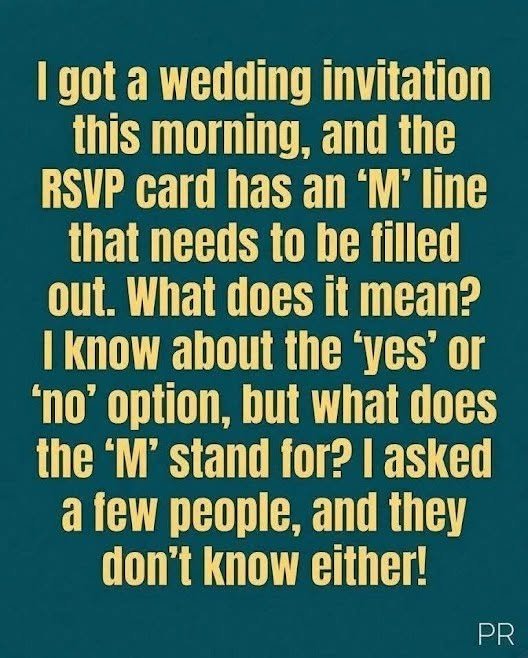
The next time you receive a wedding invitation and notice an “M” followed by a blank line, you won’t need to wonder what it means.
The letter stands for the traditional titles that begin with M, such as Mr., Mrs., Ms., and Miss.
It is not asking whether you are married, and it has nothing to do with the number of people attending.
Simply write your preferred title and name, indicate whether you will attend, and return the RSVP card by the requested deadline.
Sometimes, the smallest details on a wedding invitation have the longest traditions behind them!
Related Posts: