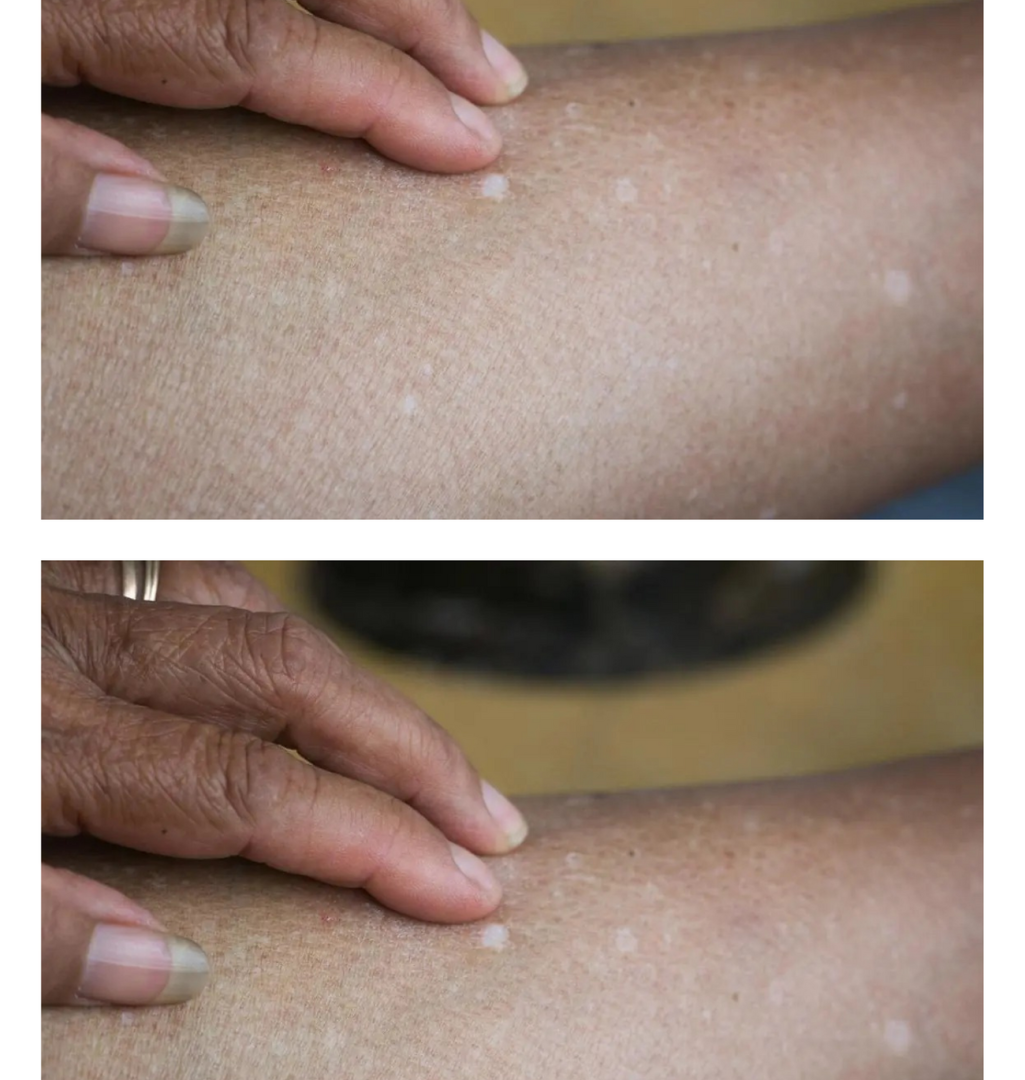
White Spots on the Skin: Which Vitamin Deficiencies Could Be the Cause?
Not every white spot requires urgent medical attention.
However, it is worth getting a professional evaluation if:
The spots are rapidly increasing
Large patches are developing
The skin is completely losing pigment
The spots are itchy or scaly
There is redness or inflammation
The spots appeared suddenly
Hair in the affected area is turning white
The skin is painful
The spots are appearing on the face or around the eyes
You have other unexplained symptoms
A dermatologist can often distinguish different causes simply by examining the skin. In some situations, additional examination or testing may be necessary.
The Most Important Point
White spots on the skin should not automatically be blamed on vitamin deficiency.
Vitamin B12 deficiency can sometimes be associated with changes in skin pigmentation, but white spots have many other possible explanations.
Vitamin D deficiency does not typically present as isolated white spots, and zinc deficiency more commonly causes rashes and other skin changes rather than classic depigmented spots.
Conditions such as tinea versicolor, vitiligo, idiopathic guttate hypomelanosis, previous skin inflammation, and sun-related pigment changes can all produce lighter areas of skin.
The exact appearance matters.
If the spots are tiny and numerous on sun-exposed arms or legs, a benign pigment condition may be one possibility. If they are scaly and spreading, a fungal/yeast-related condition may be considered. If they are sharply defined, completely white patches, vitiligo may need to be considered.
A photograph alone cannot reliably distinguish these conditions.
Final Thoughts
Seeing white spots on your skin can understandably make you wonder whether your body is missing an important nutrient. Although nutrition plays an important role in maintaining healthy skin, white spots are not a reliable home test for vitamin deficiency.
Rather than immediately taking supplements, pay attention to the pattern of the spots, whether they are spreading, whether they have scales or itching, where they appear, and whether you have other symptoms.
A balanced diet containing fruits, vegetables, whole grains, legumes, protein sources, healthy fats, and nutrient-rich foods can help provide the nutrients your skin needs.
And if the spots persist, multiply, change, or look distinctly white rather than simply lighter than the surrounding skin, having them examined by a healthcare professional is the safest way to determine what is actually happening.
Healthy skin depends on much more than one vitamin—and a white spot is a skin finding, not a diagnosis.