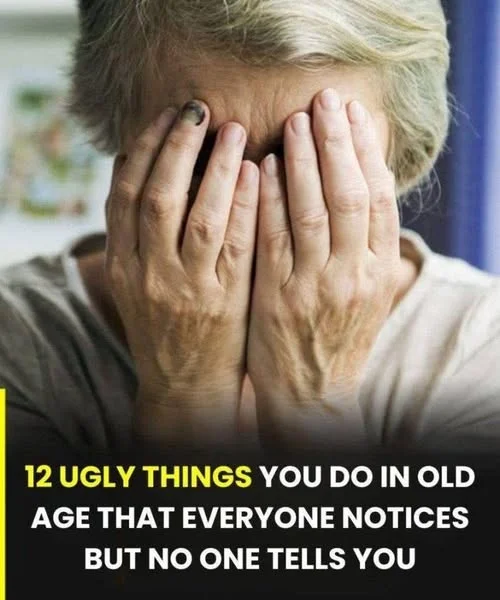
12 Things People May Notice More in Old Age — But Often Feel Too Awkward to Talk About
Some behaviors that appear strange or frustrating to others may have an understandable explanation.
For example, speaking loudly may be connected with hearing loss. Moving slowly may be related to reduced strength. Forgetting things may involve normal aging or something that deserves medical evaluation. Changes in hygiene may result from difficulty physically performing certain tasks.
The most useful response is curiosity rather than embarrassment.
Instead of asking, “Why are you doing this?” it can be better to ask, “Is something making this difficult for you?”
That small change in attitude can make conversations much easier.
When a Change Deserves Extra Attention
Not every change is a warning sign. Aging naturally involves gradual changes in the body.
However, sudden or rapidly worsening changes deserve attention.
Examples include:
Sudden confusion or disorientation
A dramatic change in memory
New difficulty walking
Repeated falls
New problems speaking or understanding speech
Significant changes in personality
Sudden loss of bladder control
Difficulty swallowing
Major unexplained weight loss
Severe or persistent pain
Sudden changes in vision or hearing
A major decline in the ability to manage everyday activities
These symptoms should not simply be dismissed as “old age.”
How Family Members Can Help Without Causing Embarrassment
The way we discuss sensitive changes matters.
Correcting an older person harshly can make them feel humiliated and may cause them to hide problems in the future.
A more respectful approach is to focus on practical solutions.
Instead of saying:
“You always make a mess when you eat.”
Try:
“Would a different plate or utensil make eating easier?”
Instead of:
“You keep forgetting everything.”
Try:
“Would you like me to write the appointment down for you?”
Instead of:
“You’re shouting again.”
Try:
“I think the room is noisy. Would it help if I came closer?”
These small changes preserve dignity while still addressing the problem.
Aging Does Not Mean Losing Independence
One of the most important things older adults can maintain is a sense of independence.
Needing a little help with certain tasks does not mean someone has failed. Everyone needs assistance at different stages of life.
The goal should not be to criticize every imperfection. The goal should be to make daily life safer, more comfortable, and more dignified.
Regular movement, adequate nutrition, good sleep, social interaction, dental care, hearing and vision checks, medication reviews, and appropriate medical care can all contribute to healthy aging.
Most importantly, older people deserve patience.
Everyone will eventually experience changes in their body. The things that seem embarrassing today may become normal parts of our own lives decades from now.
Growing older is not something to hide. It is a natural part of being human, and many of the changes that come with age can be managed with understanding, practical adjustments, and appropriate support.