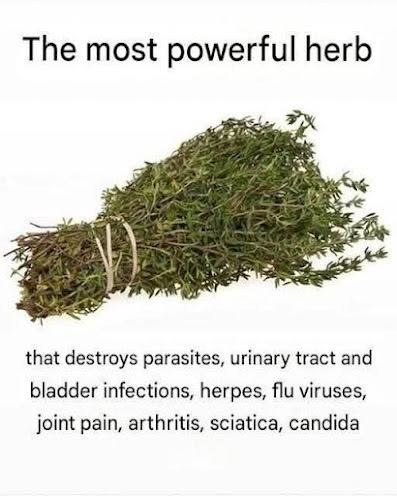
Certain standardized thyme preparations are recognized in European herbal medicine for traditional use in productive coughs associated with colds.
This traditional use should not be confused with evidence that thyme treats pneumonia, serious respiratory infections, or lung cancer.
Oral Care Applications
Thymol is used in some mouthwash formulations because of its antimicrobial properties.
These products are formulated for specific oral hygiene purposes.
They are not equivalent to drinking or applying concentrated thyme essential oil.
8. Can You Use Thyme Every Day?
For most people, thyme used in ordinary culinary quantities is a familiar and generally well-tolerated food ingredient.
You can incorporate it into your meals in several ways.
Add it to soups.
Fresh or dried thyme can provide a pleasant flavor to vegetable and chicken soups.
Use it with roasted vegetables.
Combine thyme with olive oil, garlic, carrots, potatoes, or other vegetables.
Season fish and poultry.
Thyme works particularly well with lemon, garlic, and other Mediterranean herbs.
Prepare a mild herbal infusion.
Some people enjoy thyme tea as part of their usual beverage routine.
However, concentrated essential oils are different.
Do not assume that a product is safe to swallow simply because it comes from a familiar culinary herb.
People who are pregnant, breastfeeding, taking medication, or living with chronic health conditions should ask a qualified healthcare professional before using concentrated herbal preparations.
9. Important Safety Precautions When Using Thyme Essential Oil
Natural products can still cause unwanted effects.
Thyme essential oil is concentrated, and improper use may result in irritation or other reactions.
Keep these precautions in mind:
Do not drink concentrated essential oil.
Swallowing essential oils can cause poisoning and other serious complications.
Avoid applying it directly to the skin.
Undiluted thyme oil may cause irritation or allergic reactions.
Do not put it inside the mouth as a homemade treatment.
Concentrated oils can irritate delicate oral tissues.
Avoid using it as a replacement for medication.
Herbal preparations cannot replace prescribed cancer treatments, antibiotics, or other medically necessary therapies.
Check with your healthcare professional about possible interactions.
People receiving cancer treatment should discuss supplements, herbal extracts, and essential oils with their oncology team before using them.
The fact that a product is natural does not guarantee that it is harmless.
10. Why Laboratory Cancer Research Does Not Mean a Natural Cure Exists
This is perhaps the most important point when evaluating claims about thyme and cancer.
Cancer research involves several stages.
Initially, scientists may examine a substance in isolated cells.
If the results appear promising, researchers may investigate it in animal models.
Only after sufficient laboratory and safety information is available might a substance progress toward carefully controlled human clinical trials.
Many compounds demonstrate interesting effects in laboratory experiments but never become successful medicines.
This happens because the human body is much more complex than a laboratory environment.
A compound may be broken down before reaching a tumor, fail to achieve an effective concentration, or produce unwanted effects in healthy tissues.
The National Cancer Institute explains that essential oils have primarily been investigated in cancer care for supportive purposes, such as helping manage anxiety, nausea, and other symptoms.
It also notes that published clinical trials have not established aromatherapy as a cancer treatment.
This distinction protects people from confusing promising early research with proven medical treatments.
11. What Should People With Cancer Do?
Anyone diagnosed with cancer should receive an individualized treatment plan from qualified oncology professionals.
Depending on the cancer type, stage, and individual circumstances, treatment may involve surgery, chemotherapy, radiation therapy, immunotherapy, targeted therapy, hormone therapy, or combinations of these approaches.
Some patients also use complementary practices to support their comfort and quality of life.
These may include relaxation techniques, gentle physical activity when appropriate, psychological support, and certain forms of aromatherapy.
However, complementary practices should never replace evidence-based cancer treatment.
The National Center for Complementary and Integrative Health specifically advises people not to use unproven products or practices as substitutes for conventional cancer care.
Patients should discuss any herbal products or essential oils with their healthcare team before incorporating them into their treatment routine.
Final Thoughts: Thyme Is Interesting, but It Is Not a Cancer Cure
Thyme is much more than a familiar kitchen herb.
Its essential oil contains compounds such as thymol and carvacrol that scientists continue to investigate for their antimicrobial, antioxidant, and potential anticancer properties.
Laboratory research has produced interesting findings involving certain cancer cell lines, including experimental studies related to lung and oral cancer.
However, these findings do not prove that thyme essential oil kills cancer in people.
There is currently no reliable clinical evidence establishing thyme essential oil as a cure or treatment for lung, oral, or ovarian cancer.
You can continue enjoying thyme as part of a varied and balanced diet, but concentrated essential oils should be used cautiously.
The most important message is simple: natural ingredients can inspire valuable scientific discoveries, but promising laboratory results should never be confused with proven cancer treatments.
When it comes to cancer, accurate information, early medical evaluation, and evidence-based treatment remain essential.