4 Benefits of Putting Vicks VapoRub on Your Feet Before Bed: What Really Happens?
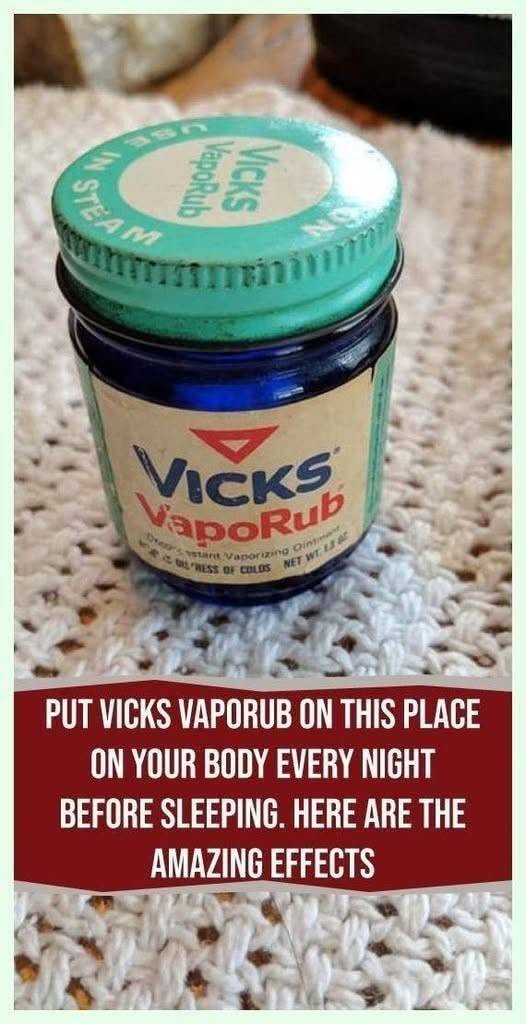
Some home-remedy instructions recommend applying VapoRub to the feet and immediately covering them with socks.
Although clean socks may prevent ointment from transferring to bedding, they do not make the treatment more effective against coughs or colds.
There are also practical considerations.
The ointment can make the soles slippery, so avoid walking barefoot immediately after application. Clean any residue from the floor to reduce the risk of slipping.
If you choose to wear socks, use a clean, comfortable pair that does not fit too tightly.
Do not use tight or airtight coverings unless the product label specifically permits them. Covering topical products can change how the skin is exposed to the ingredients and may increase irritation.
People with sensitive skin should stop using the product if they experience burning, redness, itching, or a rash.
Important Safety Precautions
Although Vicks VapoRub is widely available, it should not be treated as harmless simply because it is a familiar household product.
1. Use it only as directed
Read the packaging carefully and follow the instructions for the exact formulation you own.
Do not apply the ointment to the eyes, inside the nose, inside the mouth, or other sensitive areas. Do not swallow it.
2. Keep it away from young children
Products containing camphor can cause serious poisoning if swallowed. Accidental ingestion requires immediate medical advice.
Use restrictions vary by product and country. Follow the minimum age stated on the label, and ask a healthcare professional if you are uncertain whether the product is suitable for a child.
3. Avoid damaged skin
Do not apply the ointment to open wounds, broken skin, or irritated areas unless a healthcare professional specifically advises you to do so.
Stop using it if you develop a rash, significant redness, or persistent burning.
4. Never heat the ointment
Do not microwave it, heat it on a stove, or add it to hot water for inhalation unless the product’s instructions explicitly permit the intended method.
Camphor-containing products can present serious risks if misused, and heating ointments can also cause burns or expose people to irritating vapors.
5. Be careful around flames
Some ointment formulations may contain ingredients that can contribute to flammability or leave residue on clothing and fabrics. Follow the label’s fire-safety precautions and keep the product away from flames and other ignition sources.
6. Seek advice if you have a medical condition
If you have chronic respiratory disease, sensitive skin, or another condition that may affect your use of topical products, consult a healthcare professional when uncertain.
If you experience an adverse reaction, stop using the product. Severe symptoms require prompt medical care.
What About Other Popular Claims?
Online discussions sometimes suggest that putting VapoRub on the feet can treat fungal infections, eliminate toxins, reduce fever, improve circulation, or cure various illnesses.
These claims should be approached cautiously.
Foot fungus: VapoRub is not a standard first-line treatment for athlete’s foot. Antifungal products specifically formulated for fungal skin infections are generally more appropriate.
Toenail fungus: Some small studies have explored the use of VapoRub for nail changes associated with fungal infections, but the evidence is limited. It should not replace an appropriate assessment and established treatment when needed.
Fever: Applying the ointment to the feet does not reliably lower body temperature or treat the cause of a fever.
Poor circulation: The cooling or warming sensation does not demonstrate improved blood flow. Persistent circulation problems need medical evaluation.
Toxin removal: There is no credible evidence that applying the ointment to the soles of the feet draws toxins out of the body.
Understanding these limitations helps prevent a comforting home routine from being mistaken for a proven medical treatment.
Is It Worth Trying?
For a healthy adult who enjoys the fragrance and has no sensitivity to the ingredients, using a small amount of VapoRub on intact foot skin may be a personal comfort choice, provided the product label does not prohibit that use.
However, there is no established medical reason to apply it to the feet specifically before bed.
If your goal is to soften dry heels, a suitable foot moisturizer is generally the better option. If your goal is to relieve a cold-related cough, use treatments according to their directions and consider whether symptoms require medical attention. If you want to sleep better, consistent sleep habits are more reliable than expecting a topical ointment to produce a special effect.
You do not need to adopt the foot-application trend to benefit from appropriate cold care or a relaxing nighttime routine.
Conclusion
Putting Vicks VapoRub on the feet before bed is a popular home practice, but many claims about its benefits are exaggerated.
The ointment’s fragrance and cooling sensation may feel comforting to some people, and its greasy base may leave intact skin feeling temporarily softer. Nevertheless, there is no strong evidence that applying it to the soles of the feet stops coughing, clears nasal congestion, improves circulation, or treats illness.
For a cough associated with a common cold, follow the directions for the specific product rather than assuming that applying it to the feet provides the same effect. For dry feet, use a moisturizer designed for the skin. For persistent coughs, breathing difficulties, or unexplained symptoms, seek appropriate medical advice.
The most useful approach is to distinguish personal comfort from proven treatment, use familiar products safely, and avoid relying on viral home remedies when a health problem needs proper care.