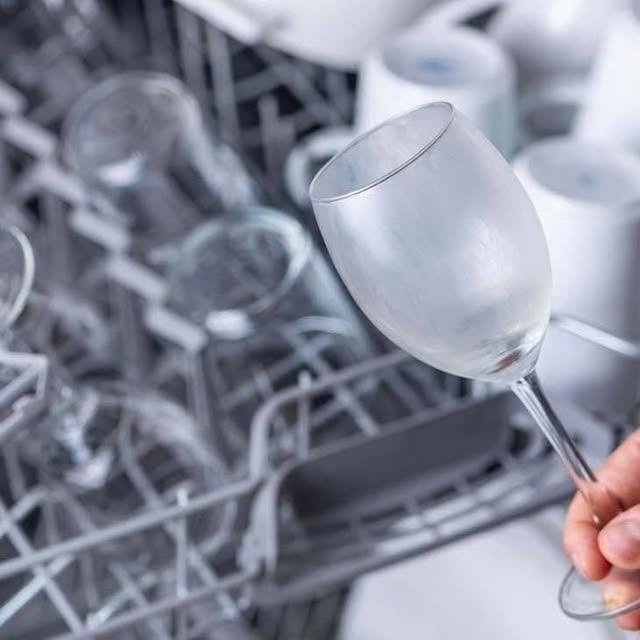
This is particularly important because of the image shown in the post.
Not all glassware is designed to tolerate dishwasher conditions.
Crystal, delicate wine glasses, antique glasses, hand-painted glassware, and very thin glass can be more vulnerable to damage.
A dishwasher exposes glassware to:
Hot water
Rapid temperature changes
Strong water jets
Contact with other objects
Detergent
Vibration during the washing cycle
A glass that already has a tiny crack or microscopic weakness may break when exposed to these conditions.
Even if the glass does not break immediately, repeated dishwasher cycles can gradually make delicate glassware more vulnerable to damage.
Some modern glassware is specifically designed to be dishwasher-safe, so always check the manufacturer’s instructions.
If you’re unsure, hand washing delicate or valuable glasses is usually the safer option.
And when loading ordinary glasses into a dishwasher, make sure they are positioned securely and cannot touch each other.
5. Nonstick Cookware With Special Coatings
Many modern nonstick pans are designed to make cooking and cleaning easier, but dishwasher compatibility varies significantly between products.
Some manufacturers specifically state that their nonstick cookware is dishwasher-safe.
Others recommend hand washing because repeated exposure to high temperatures and strong detergents can shorten the life of the coating.
Even when a pan is technically dishwasher-safe, repeated harsh cycles may eventually affect its appearance or performance.
This is particularly important for older nonstick cookware.
If the coating is already scratched, peeling, bubbling, or deteriorating, replacing the cookware may be safer than continuing to use it.
Avoid using metal utensils on delicate nonstick surfaces unless the manufacturer specifically says they are suitable.
A simple hand wash with a soft sponge can often help extend the useful life of a nonstick pan.
6. Items Made From Certain Plastics
Plastic is one of the trickiest dishwasher categories because some plastics are perfectly suitable for dishwashers while others are not.
The fact that an item is plastic does not automatically tell you whether it belongs in the dishwasher.
Some plastics can soften, warp, deform, or become brittle when exposed to high temperatures.
Thin food-storage containers are particularly likely to change shape if they are not designed for dishwasher use.
Always look for the manufacturer’s dishwasher-safe marking or instructions.
If an item is dishwasher-safe, placing it on the appropriate rack can also matter.
Many dishwashers have areas that become hotter than others. Certain plastic items may be better placed on the upper rack, away from the heating element, when the manufacturer’s instructions permit dishwasher cleaning.
Never assume that every plastic container can handle the same temperature.
7. Insulated Travel Mugs and Thermos Containers
Insulated bottles, travel mugs, and vacuum-insulated containers require special attention.
Many are made from multiple layers, seals, gaskets, coatings, or insulation systems.
The dishwasher may damage some of these components.
In particular, heat and detergent can affect rubber seals or exterior finishes. Some insulated containers can also retain water in areas that are difficult to dry.
More importantly, the manufacturer may specifically instruct users to hand wash the product.
If your travel mug has a removable lid, gasket, or silicone seal, take the components apart when appropriate and clean them according to the manufacturer’s instructions.
A dirty gasket can trap moisture and food residue, so cleaning these small components properly is just as important as cleaning the cup itself.
8. Anything With a Special Finish, Decoration, or Delicate Construction
The final category includes many items that look perfectly ordinary but have special surfaces or decorative details.
Examples can include:
Hand-painted plates
Gold- or silver-trimmed dishes
Decorative ceramics
Vintage dishes
Items with glued components
Certain aluminum cookware
Delicate serving pieces
Some copper cookware
Objects with printed designs
Dishwasher detergent can be surprisingly aggressive.