Millions Use This Medication Every Day—Could It Be Linked to Dementia?
A recent research finding has attracted attention because it reported a possible association between a commonly used type of glaucoma eye medication and a higher risk of developing dementia.
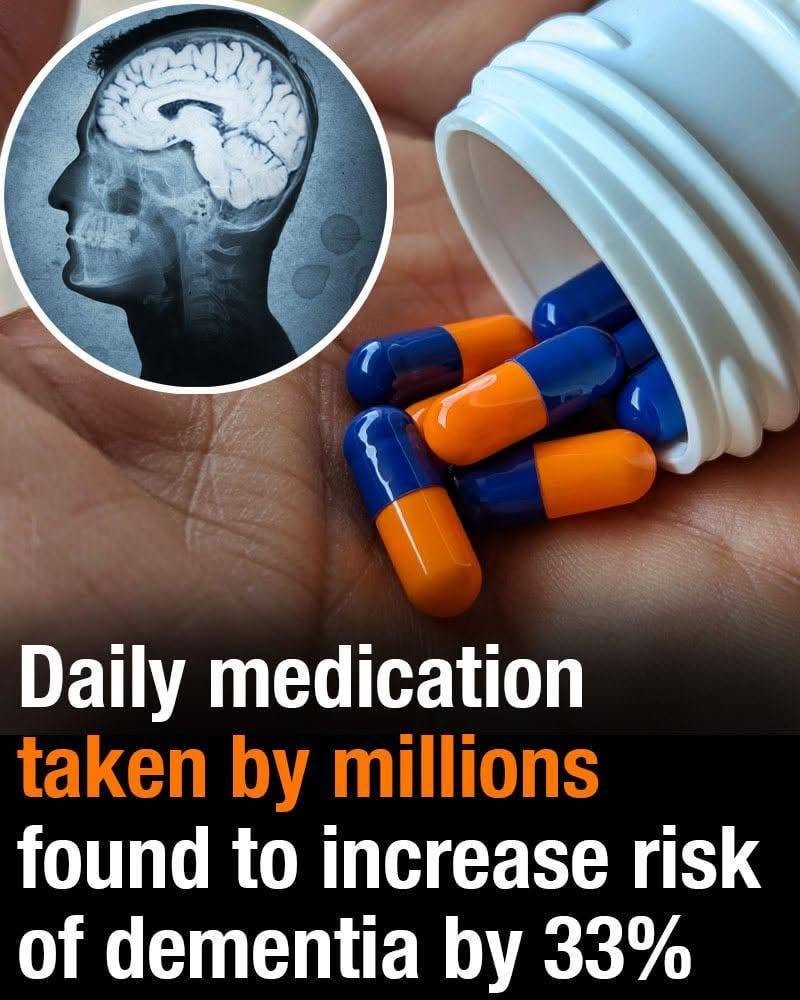
But there is an important detail that can easily be missed in viral posts: the study did not show that the medication causes dementia, and the 33% figure does not mean that people taking the medicine have a 33% chance of developing dementia.
The research looked specifically at alpha-adrenergic agonist glaucoma eye drops, including medicines such as brimonidine and apraclonidine. These medications are used to lower pressure inside the eye in people with glaucoma or ocular hypertension.
The study, published in 2025, followed 521 older adults with glaucoma and found that each additional year of exposure to alpha-adrenergic agonist eye drops within the study’s exposure window was associated with a 33% higher relative risk of all-cause dementia. The researchers themselves described this as an association and said further research is needed.
That distinction is extremely important.
This is not a reason for someone with glaucoma to suddenly stop their eye drops.
In fact, stopping glaucoma treatment without medical advice can allow eye pressure to rise and potentially contribute to vision loss.
Instead, the study gives researchers another question to investigate: could certain glaucoma medications influence dementia risk, or could other factors explain the association?
Let’s take a closer look.
What Medication Is the Study Talking About?
The viral image makes the medicine look like an ordinary capsule or pill.
But the study was actually about topical glaucoma medications, meaning medications administered as eye drops.
The particular class that showed the association was called alpha-adrenergic agonists.
Two medications in this group include:
Brimonidine
Apraclonidine
These medications work by reducing the production of fluid inside the eye and, in the case of some agents, also improving fluid drainage. Their purpose is to lower intraocular pressure. is a group of eye diseases that can damage the optic nerve and lead to permanent vision loss.
Because damage from glaucoma can be irreversible, controlling eye pressure is an important part of treatment.
That means the decision to use or discontinue a glaucoma medication isn’t something that should be made based on a social-media post.
What Did Researchers Actually Find?
The research involved 521 people with glaucoma, with an average age of approximately 78 years.
The participants were cognitively normal when they entered the study and were followed using medical and pharmacy information.
Researchers examined several different classes of glaucoma eye medications, including:
Alpha-adrenergic agonists
Beta-adrenergic antagonists
Prostaglandins
Carbonic anhydrase inhibitors
Miotics
After accounting for several factors and the use of other glaucoma medications, researchers found that each year of alpha-adrenergic agonist exposure within their eight-year exposure window was associated with a hazard ratio of 1.33 for all-cause dementia.
A hazard ratio of 1.33 corresponds to an association with approximately 33% higher relative risk.
But this number needs context.
It does not mean:
“One year of taking this medicine gives you a 33% chance of dementia.”
That’s not what the study showed.
Relative Risk Is Not the Same as Absolute Risk
This is one of the biggest problems with health headlines.
Suppose a hypothetical group has a 2% baseline risk of developing a particular condition.
A 33% relative increase would change that risk to approximately 2.66%.
That’s very different from saying the person’s risk becomes 33%.
The actual absolute risk in an individual depends on many factors, including age, genetics, existing medical conditions, lifestyle and other medications.
Therefore, seeing “33% increased risk” in a headline should not automatically cause panic.
The number is a statistical association observed in a particular research population.