Be Your Own Dentist? What You Should Know About Removing Tartar at Home
That yellow or brown buildup around your teeth can be frustrating, especially when regular brushing does not seem to remove it. Many people search for homemade methods using ingredients such as baking soda, vinegar, lemon, salt, or hydrogen peroxide.
But there is an important distinction that often gets lost in viral posts:
Plaque can be removed at home. Hardened tartar, also called dental calculus, generally cannot be safely removed with household ingredients.
Once plaque has hardened into calculus, trying to scrape it away yourself can damage the enamel or gums. The safest approach is professional dental cleaning, while a good daily routine can prevent new tartar from building up.
What Is That Yellow Deposit on Your Teeth?
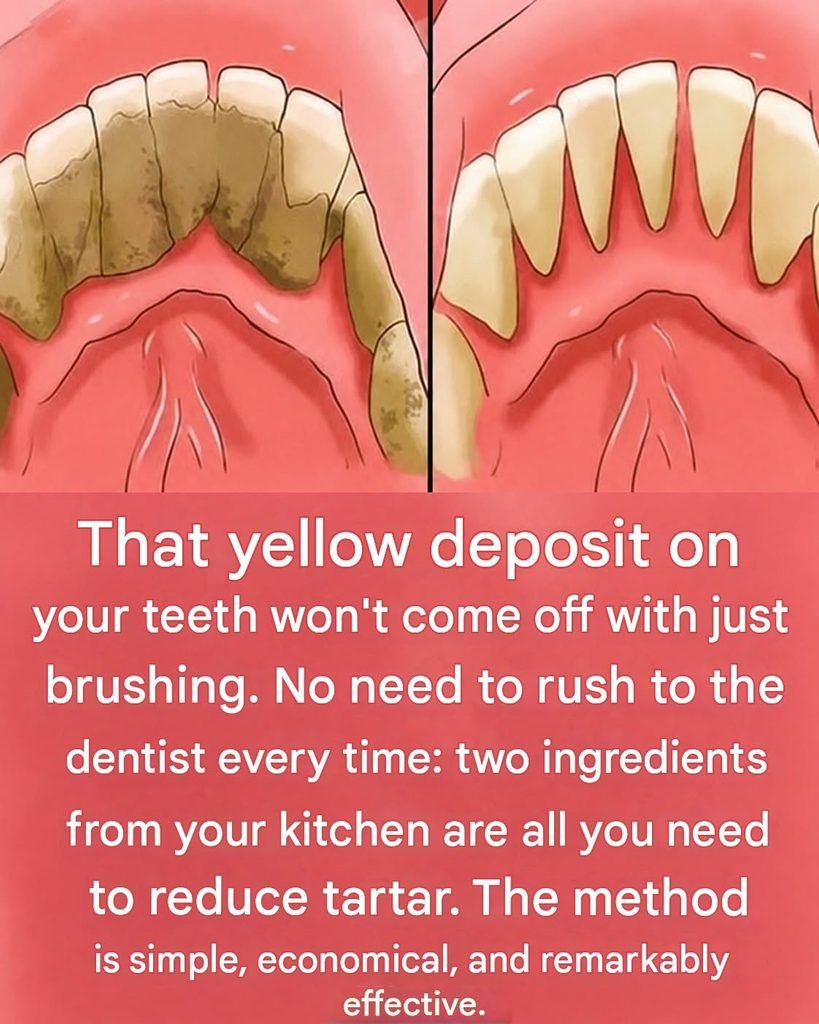
The yellow or brown material shown in the image may be dental calculus, but tooth discoloration can have several causes.
Your mouth naturally contains bacteria. When bacteria mix with saliva and food particles, they form a soft, sticky film called dental plaque.
If plaque isn’t removed regularly, minerals from saliva can cause it to harden.
That hardened material is called tartar or dental calculus.
Unlike fresh plaque, calculus is firmly attached to the tooth surface and can be difficult or impossible to remove completely with ordinary brushing.
It can develop:
Along the gumline
Between teeth
Behind the lower front teeth
Around crowded teeth
Around dental appliances
In areas that are difficult to clean
Tartar can appear yellow, brown, or even darker depending on staining and how long it has been present.
Why Brushing Alone May Not Remove Tartar
Brushing twice a day is extremely important, but brushing is mainly intended to remove plaque and food debris, not thick hardened calculus.
Once plaque has mineralized, the deposit becomes much harder.
Trying to brush harder isn’t necessarily the solution.
In fact, aggressive brushing can irritate the gums and contribute to gum recession or damage, especially when combined with a hard-bristled toothbrush.
The goal should be effective but gentle cleaning, not force.
Can Baking Soda Remove Tartar?
Baking soda is sometimes promoted online as a cheap tartar remover.
Baking soda can have a useful role in oral hygiene because it is mildly abrasive and can help remove some surface stains when used appropriately in a toothpaste.
But it should not be treated as a tool for scraping away hardened calculus.
Rubbing a large amount of baking soda directly onto the teeth repeatedly can be unnecessarily abrasive and may irritate the gums.
It also cannot safely dissolve established tartar in the way many viral recipes claim.
Using baking soda occasionally as part of an appropriate toothpaste is very different from making a concentrated homemade paste and aggressively scrubbing your teeth.
What About Lemon or Vinegar?
This is one of the methods you should avoid.
Lemon juice and vinegar are acidic.
Acid can soften or erode tooth enamel when teeth are exposed repeatedly or for prolonged periods.
The problem is that enamel does not grow back once it has been permanently lost.
Using acidic kitchen ingredients in an attempt to remove tartar can therefore create a new dental problem while failing to remove the hardened calculus.
The same warning applies to other highly acidic homemade mixtures.
A substance being able to dissolve mineral deposits in the kitchen does not mean it is safe to use on teeth.
Your teeth are living structures surrounded by sensitive gum tissue, and their enamel needs to be protected.
What About Salt?
Salt is another traditional home remedy.
Rinsing the mouth with appropriately diluted salt water can be soothing in some circumstances, particularly when the gums are irritated.
But salt water does not magically dissolve hardened tartar.
And rubbing dry salt directly onto the teeth can be abrasive.
If you like salt-water rinses, use them as a simple rinse rather than treating salt as a replacement for brushing, flossing, or professional dental cleaning.
What About Hydrogen Peroxide?
Hydrogen peroxide is sometimes included in homemade teeth-whitening or tartar-removal recipes.
Concentrated or improperly used hydrogen peroxide can irritate the gums and other tissues inside the mouth.
It should not be used casually as a homemade tartar-dissolving treatment.
If a dental product contains peroxide, follow its instructions carefully rather than creating a stronger mixture yourself.
More concentration does not automatically mean better results.
Can You Scrape Tartar Off With a Dental Tool?
You can find inexpensive dental-scraping tools online that are marketed for home tartar removal.
Using sharp metal instruments on your own teeth is risky.
Without proper training and visibility, it is easy to:
Scratch the tooth surface
Cut the gums
Cause bleeding
Push bacteria underneath the gumline
Damage dental restorations
Miss tartar hidden below the gums
Create an infection or irritation
Professional dental cleaning isn’t simply about having the right instrument.
A dental professional knows how much pressure to use, where calculus is located, how to protect the gums, and when a deeper cleaning is necessary.
For that reason, trying to perform your own dental scaling is not recommended.
What You CAN Do at Home
Although you shouldn’t try to remove established tartar yourself, there is plenty you can do to prevent more from forming.
1. Brush Twice a Day
Brush your teeth twice daily for approximately two minutes using a fluoride toothpaste.
Use a soft-bristled toothbrush and gentle movements.
You don’t need to press extremely hard.
A good technique is much more important than aggressive pressure.
2. Clean Between Your Teeth
A toothbrush cannot properly clean every surface between your teeth.
Floss or use an appropriate interdental cleaner once a day.
Interdental brushes can be particularly useful when there are larger spaces between teeth or certain dental work makes traditional floss difficult.
Cleaning between teeth helps remove plaque before it has an opportunity to harden.
3. Pay Attention to the Gumline
The area where your teeth meet your gums is particularly important.
Plaque can accumulate there easily.
Angle the toothbrush gently toward the gumline and clean the area carefully rather than scrubbing aggressively.
Healthy gums generally should not bleed regularly during routine brushing.
If your gums consistently bleed, swell, or feel tender, that’s a reason to have them evaluated.
4. Consider an Electric Toothbrush
An electric toothbrush isn’t mandatory for good oral hygiene, but some people find it easier to clean their teeth thoroughly with one.
Many electric toothbrushes also provide pressure feedback, which can help prevent excessive brushing force.
The important thing is consistency and proper technique.
A manual toothbrush can also work very well when used correctly.
5. Don’t Ignore the Back of Your Lower Front Teeth
The inside surfaces of the lower front teeth are a common place for tartar accumulation.
Saliva from nearby glands can contribute to mineral buildup in this area.
Spend a little extra time cleaning these surfaces without pressing too hard.
6. Drink Water Regularly
Water helps wash away food particles and supports normal saliva function.
Replacing sugary drinks with water can also reduce repeated exposure of the teeth to sugars and acids.
Water isn’t a tartar remover, but good hydration can be part of a healthy oral-care routine.
7. Be Careful With Sugary Snacks
Frequent consumption of sugary foods and drinks can increase the amount of fuel available to bacteria that contribute to dental plaque and tooth decay.
This doesn’t mean you can never eat sweets.
The overall pattern and frequency matter.
Keeping sugary drinks and snacks from becoming an all-day habit can help support oral health.